
The complete guide
How To Choose A Linear LED Chandelier For Your Island Or Dining Table
The problem with lighting a kitchen island
Walk into most kitchens at night and you will see the same thing. There are downlights around the edge of the ceiling, maybe a strip under the wall cabinets, and a dark patch right in the middle where the island sits. Then someone stands at the bench to chop an onion and blocks what little light was reaching the surface.
It happens because ceiling lights are usually planned before the island is. The downlights go in a neat grid, the island goes in later, and nobody checks whether light actually lands on the working surface from a useful angle. The fix is simple. Put a light source directly above the bench, and make it long enough to cover the whole thing.
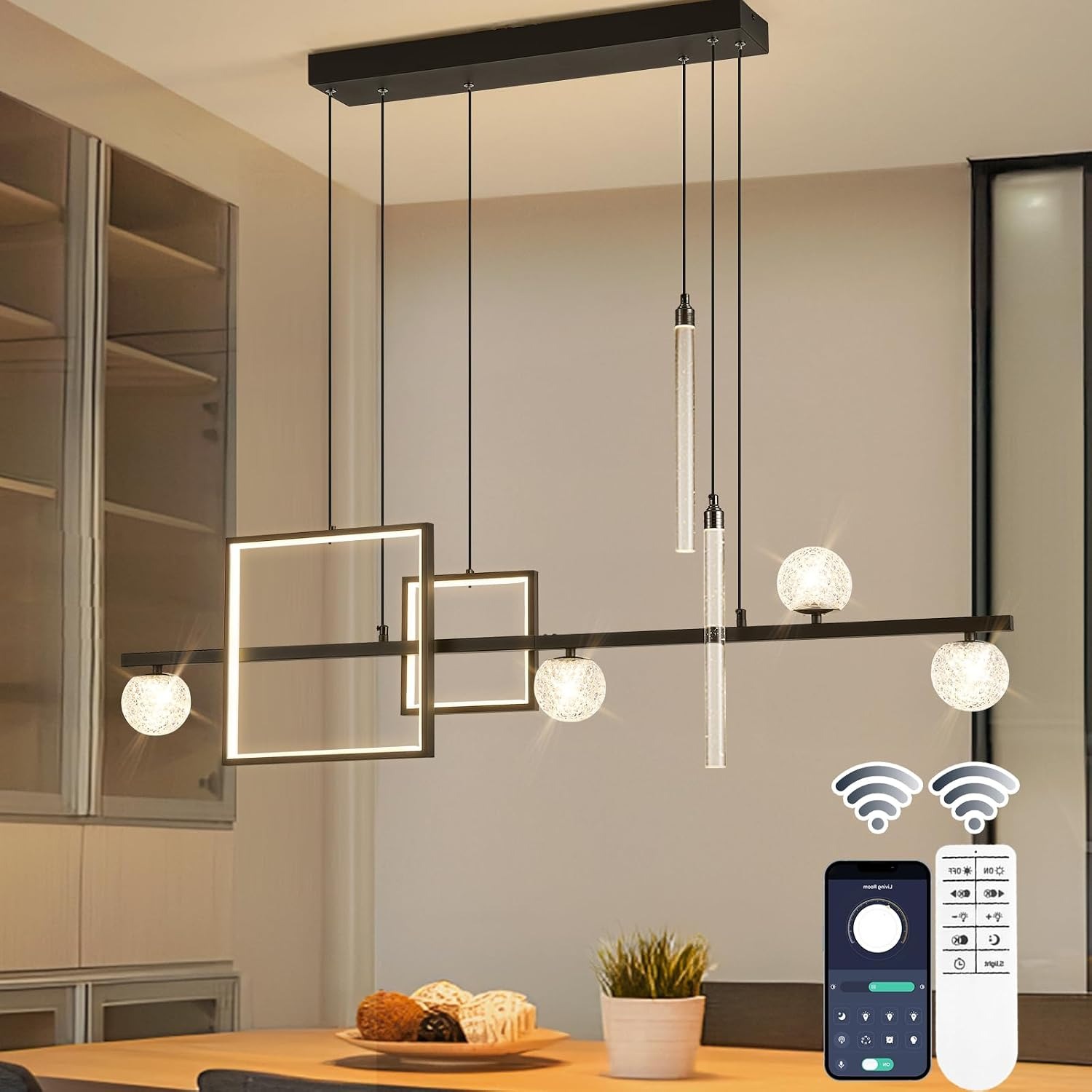
That is what a linear chandelier does. Instead of one bulb dangling from the middle, you get a bar with multiple light points spread along it. The pool of light is wide, the shadows are soft, and you can stand anywhere along the bench without working in the dark.
How a linear LED fitting works
The older way to light a long surface was to hang three separate pendants in a row. It looks good, and plenty of people still do it. The downside is three ceiling points, three sets of wiring, three chances to get the spacing slightly wrong, and three things to clean.
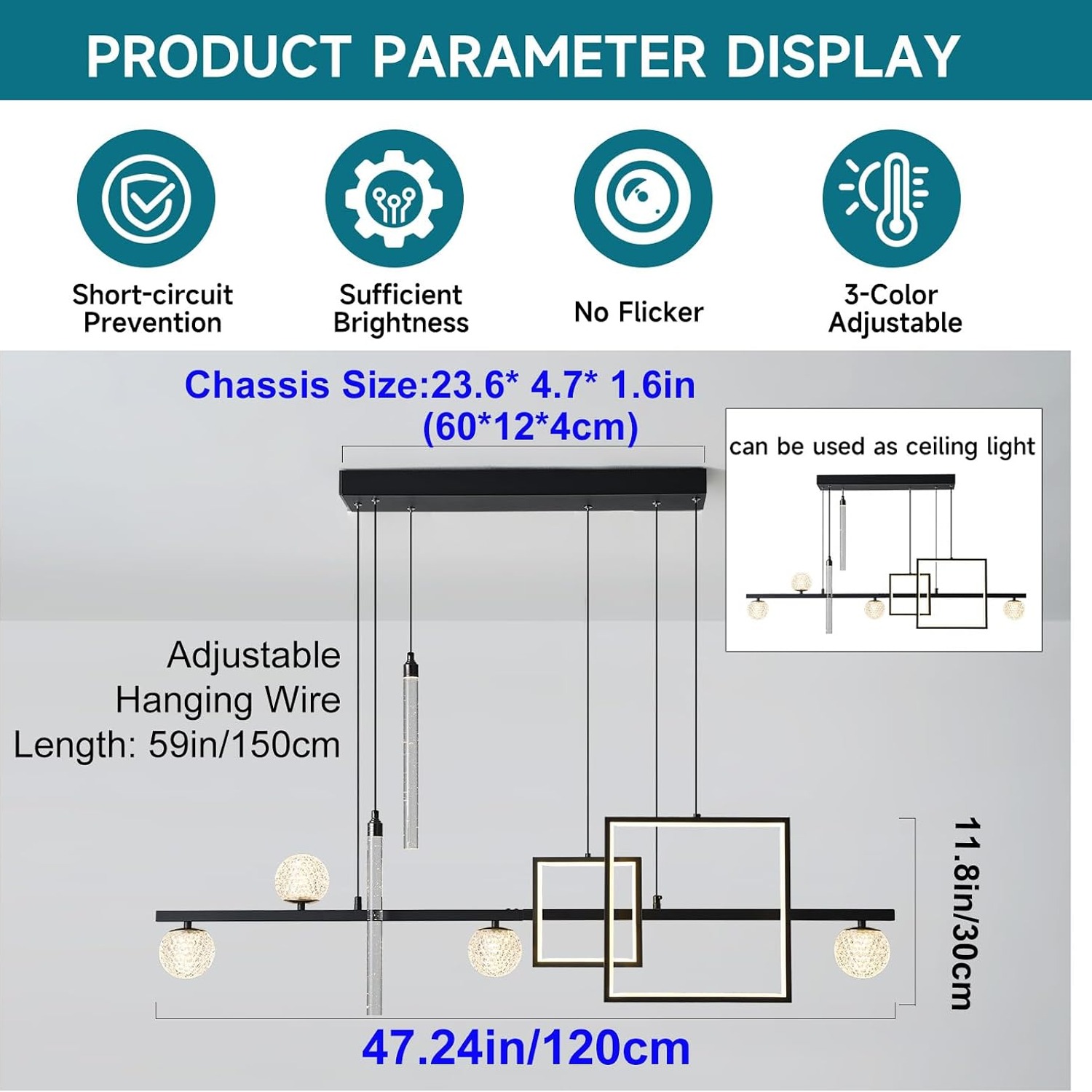
A single linear bar does the same job from one fixing point. This one is 120cm long and carries eight light sources, mixing globes, spotlights, and square diffusers along its length. The total output is 3850 lumens from 55 watts, which is bright enough that most people find they rarely need the under-cabinet lights on at the same time.
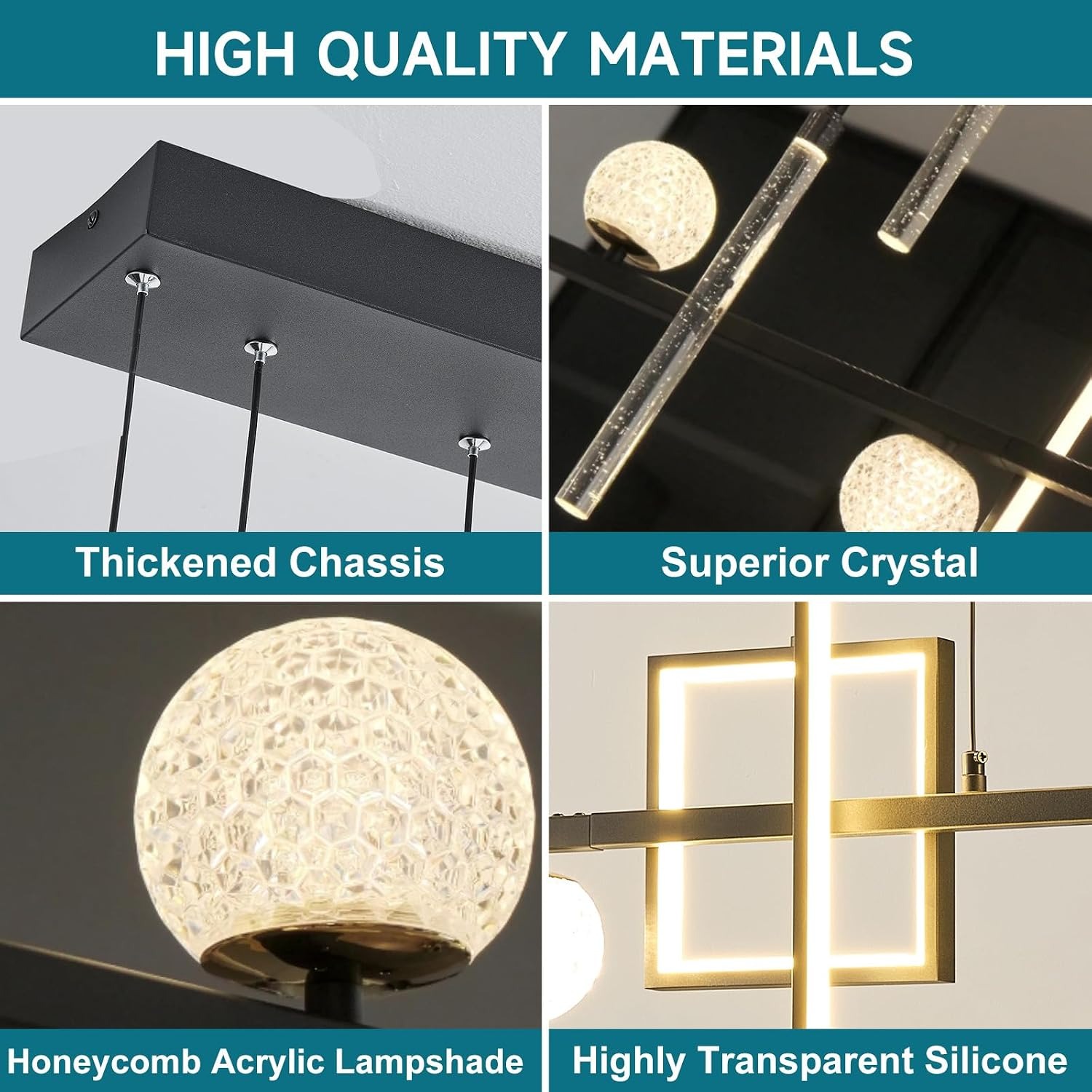
The LEDs are integrated, meaning they are built into the fitting rather than screwed in as separate bulbs. That is standard for this type of light now. The trade-off is that you cannot swap a bulb, but LED chips in this class are rated for tens of thousands of hours and you avoid the slow decline of mismatched bulbs with different ages and tones.
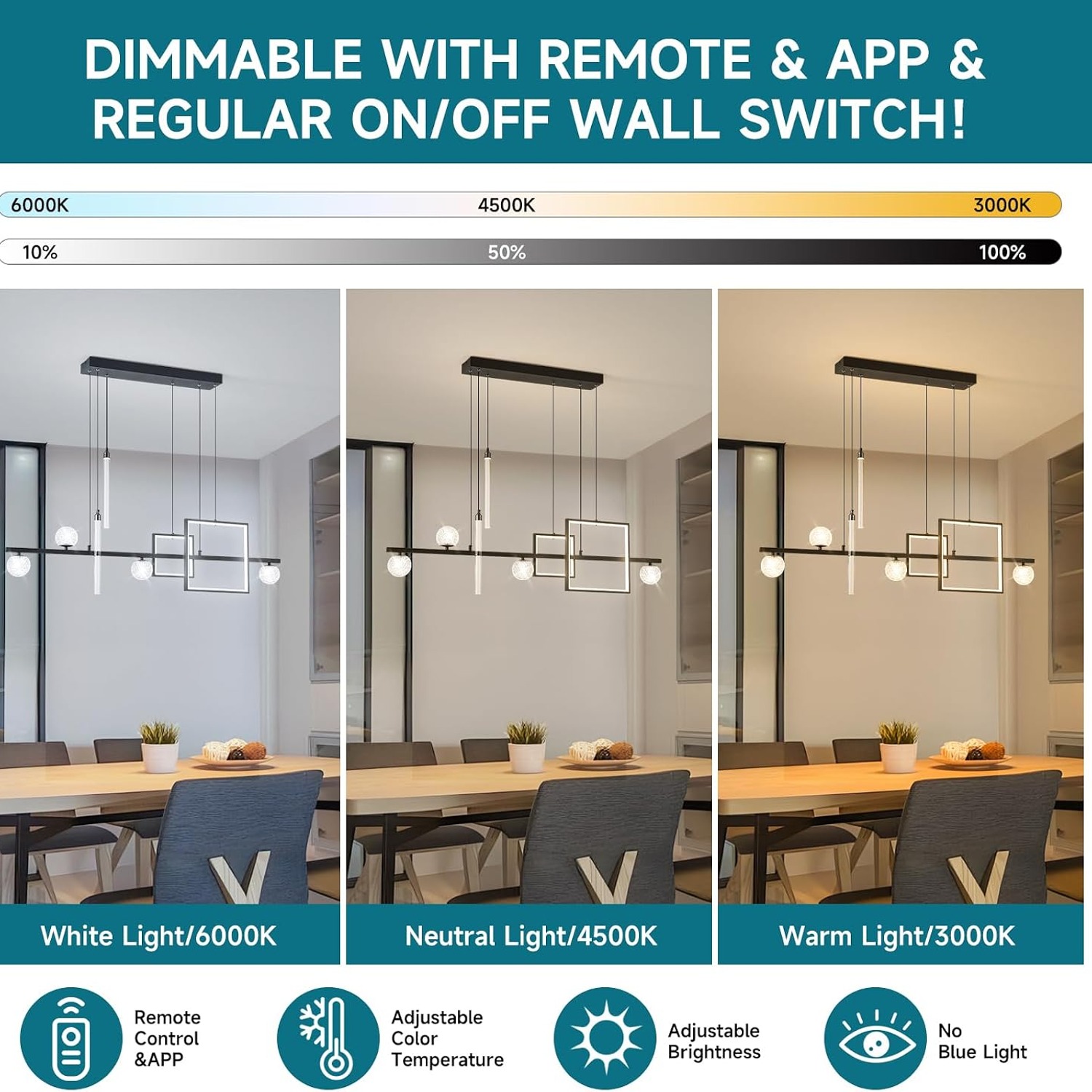
Colour temperature is adjustable from around 3000K to 6500K. In plain terms, 3000K is the soft yellowish light you associate with a relaxed dinner. 6500K is a crisp daylight white that makes it much easier to see what you are doing when you are reading a recipe or checking whether the chicken is cooked through. You move between them with the remote or the app, and brightness adjusts separately on top of that.
The one thing to check before you buy
This fitting does not work with a dimmer wall switch. It needs a plain ON/OFF switch on the circuit, because the dimming happens inside the fixture and is controlled by the remote or the app.
That trips people up, so it is worth checking now rather than on installation day. Go and look at the switch that controls your kitchen or dining ceiling light. If it is a rotary dial or a slider, that is a dimmer and it needs to be swapped for a standard switch. It is a quick job for an electrician, but it is an extra job, and knowing about it in advance saves an awkward phone call.
While you are at it, check your supply voltage. This model is rated at 220V. If you live somewhere running a 110V supply, it is the wrong fitting for you.
Getting the size right
The general rule for a linear fitting is that it should span roughly half to two thirds of the surface below it. Shorter than half and it looks lost. Longer than two thirds and it starts to feel like scaffolding.
At 1.2 metres, this one sits comfortably over an island of around 1.8m to 2.4m, which covers a very large share of kitchens. On a dining table, it suits a rectangular table seating six. If your island is 1.5m or less, the same fitting will look heavy, and you would be better served by a shorter bar or a pair of small pendants.
Height matters as much as length. Most people land somewhere between 75cm and 90cm from the benchtop to the bottom of the fitting. Hang it too low and tall people meet it with their forehead. Hang it too high and the light spreads too wide, losing the focused pool that made you want it in the first place. The 150cm hanging wire gives you room to settle on the right drop, and you shorten it during installation.
One more thing people forget. If your island sits between the kitchen and a living area, think about sight lines. A fitting that hangs at the perfect height for chopping might cut right through the view from the sofa. Stand where you usually sit and check before the electrician makes anything permanent.
Who it suits
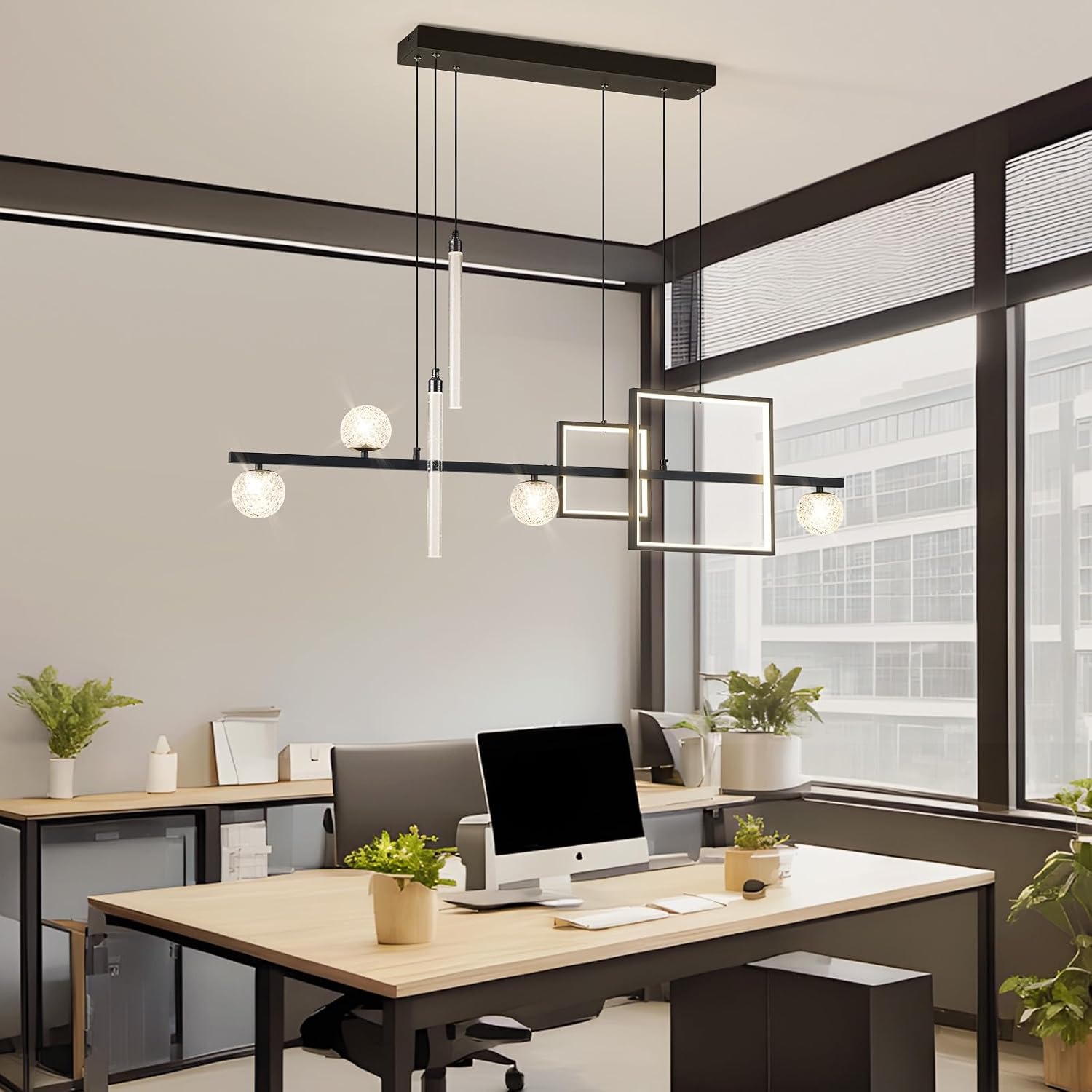
The obvious buyer is someone with an island that is badly lit, or a dining table that currently has one sad bulb above it. Beyond that, the brand lists it for living rooms, bedrooms, home offices, study rooms, and hospitality spaces like cafes and bars.
For a bedroom, the warm end of the colour range is the setting you will live on. For a home office or study, the cool end is better for concentration and reading. The ability to switch between them is genuinely useful in rooms that do more than one job, which these days is most rooms.
It is indoor only and is not water resistant. Keep it out of bathrooms and away from covered outdoor cooking areas where steam and spray reach the ceiling.
Installation and what you get
It arrives assembled. There is no fiddling with arms and shades on the kitchen floor. The box includes the shades, the remote control, an accessory bag, and the instruction manual.
The fitting weighs 4 kg. That is modest, but it is still 4 kg hanging overhead, so the ceiling fixing needs to be into something solid or properly anchored. The electrical connection should be done by a licensed electrician in most countries. Even where the rules are looser, having a second pair of hands while you hold a 1.2 metre bar above your head is not optional.
The fitting is listed as meeting CE, ETL, SAA, and UL standards, and carries a 2 year manufacturer warranty.
Looking after it
Lighting in a kitchen collects more grime than lighting anywhere else, because cooking vapour drifts upward and settles on everything. A quick wipe every month or two keeps the output where it should be.
Switch it off at the wall first and let it cool. Use a soft dry cloth, or barely damp if there is a film on the shades. Skip the spray cleaners and anything abrasive, because acrylic scratches and the scratches show once the light is on. While you have the ladder out, glance at the ceiling plate and the hanging wires to make sure nothing has loosened.
The short version
If you have an island between roughly 1.8m and 2.4m, or a dining table that seats six, a 1.2m linear chandelier is a sensible choice. You get one fixing point instead of three, even light across the whole surface, and the ability to switch between warm evening light and bright working light without changing anything.
Check two things before ordering. Your wall switch must be a standard ON/OFF, not a dimmer, and your supply must be 220V. Get those right and the rest is straightforward. If you want a second opinion on whether 1.2m suits your space, send us the measurements and we will tell you what we think.