
The complete guide
How To Choose A Small Crystal Semi Flush Ceiling Light
The problem with chandeliers in normal houses
Most chandelier photos you see online were taken in rooms with very tall ceilings. The fitting hangs down a metre, the light pools nicely, and everything looks good. Then you try the same idea in a standard house with a 2.4 metre ceiling, and the thing is suddenly at head height in the hallway or dangling over the foot of the bed.
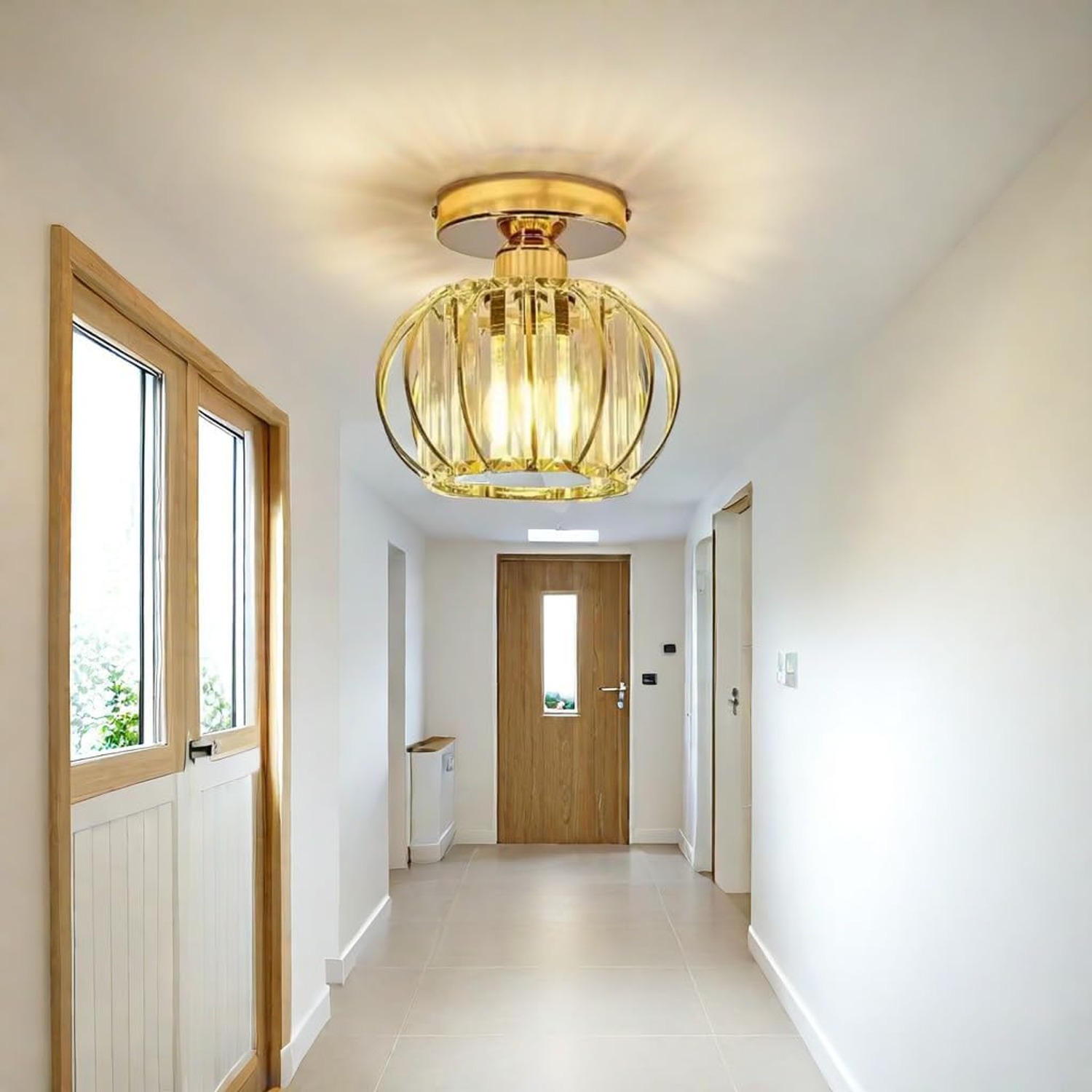
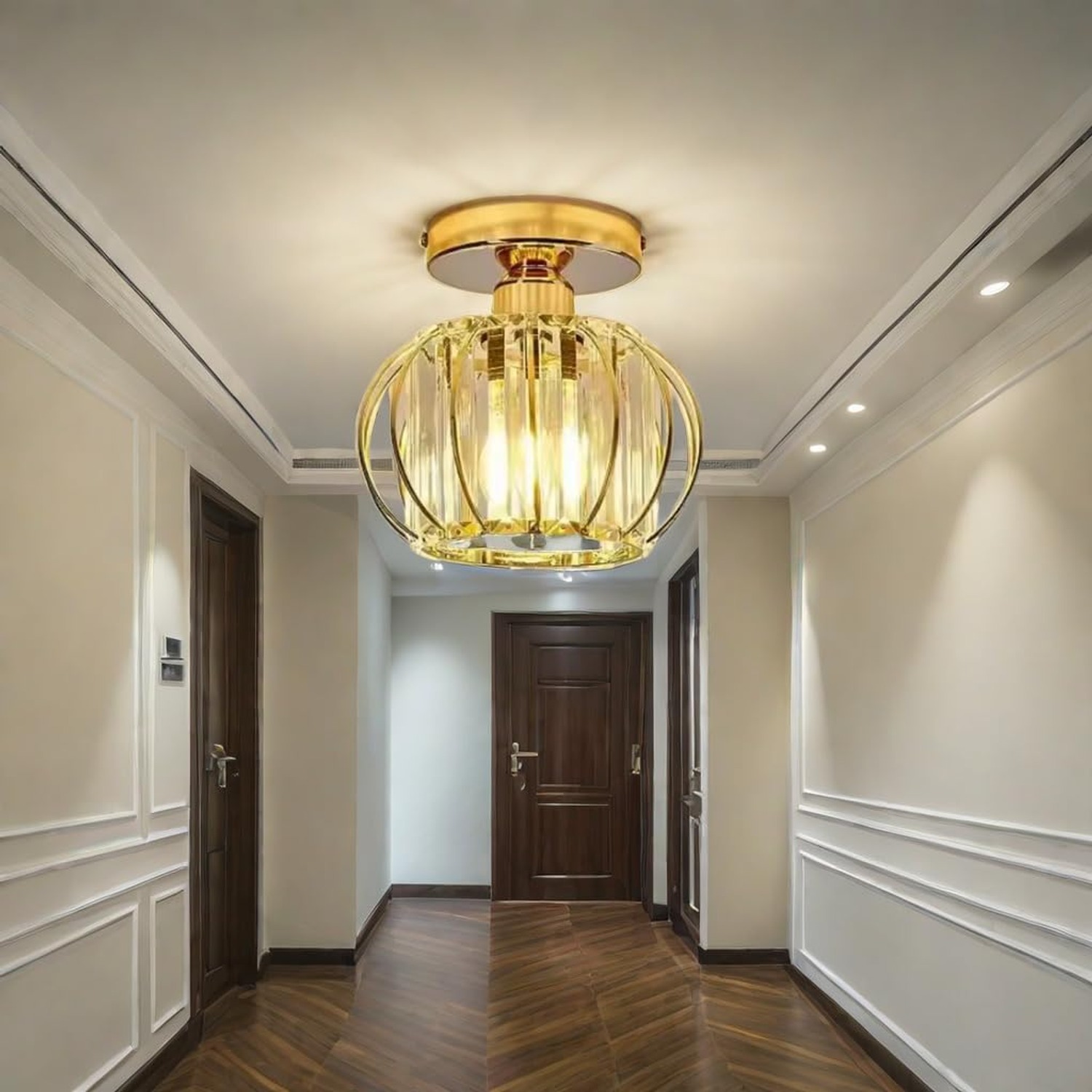
That is the gap a small crystal ceiling light fills. You get the crystal, the metal frame and the scatter of light, without the drop. A semi flush mini chandelier attaches to the ceiling with a short stem, so it steps down only a little into the room. It still reads as decorative when you walk in, but nobody is ducking.
The second problem it solves is scale. Hallways, landings, laundry rooms and small bedrooms do not need a big fitting. A wide chandelier in a narrow corridor looks like a mistake. A compact fixture with one light source fits the space it is actually in.
How this one works
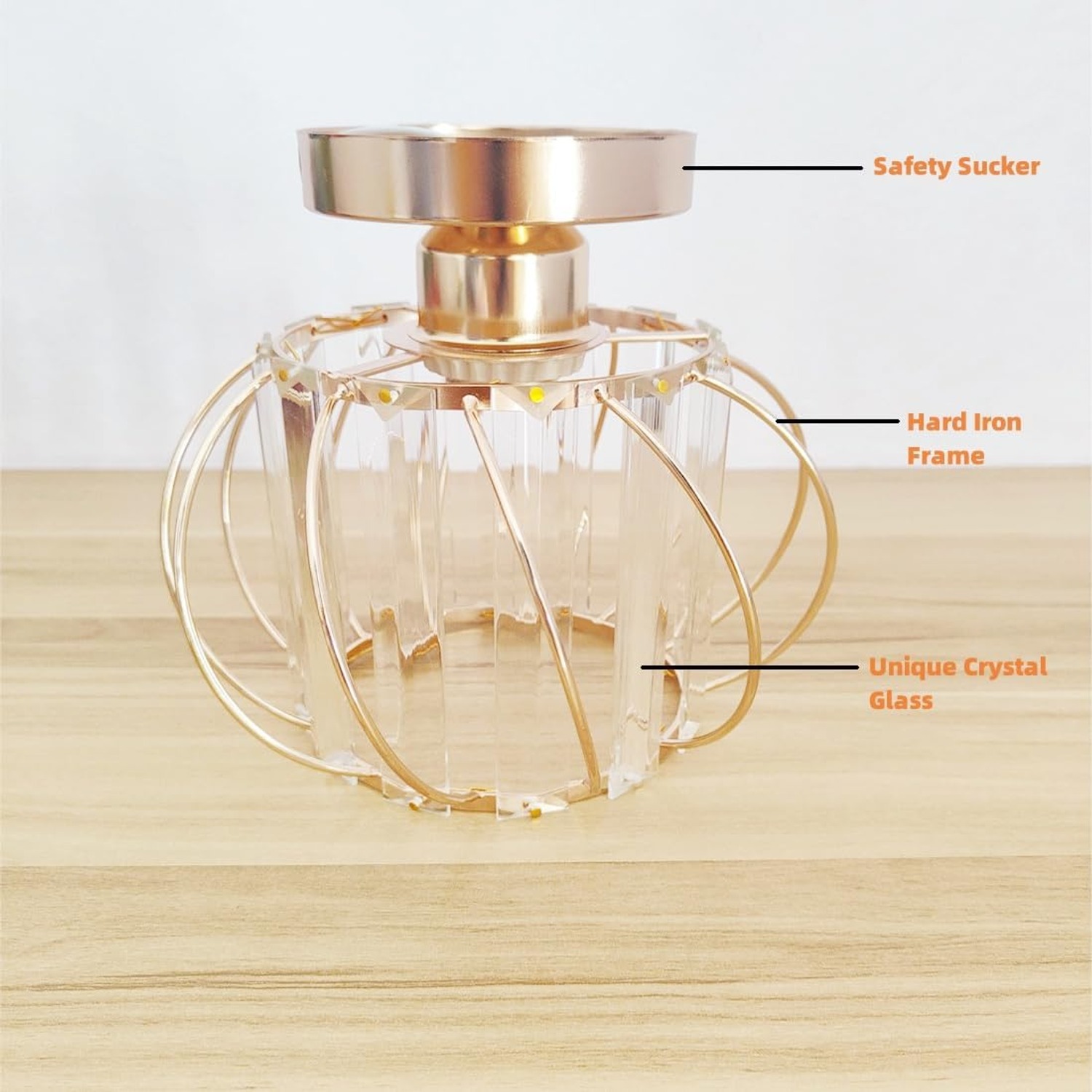
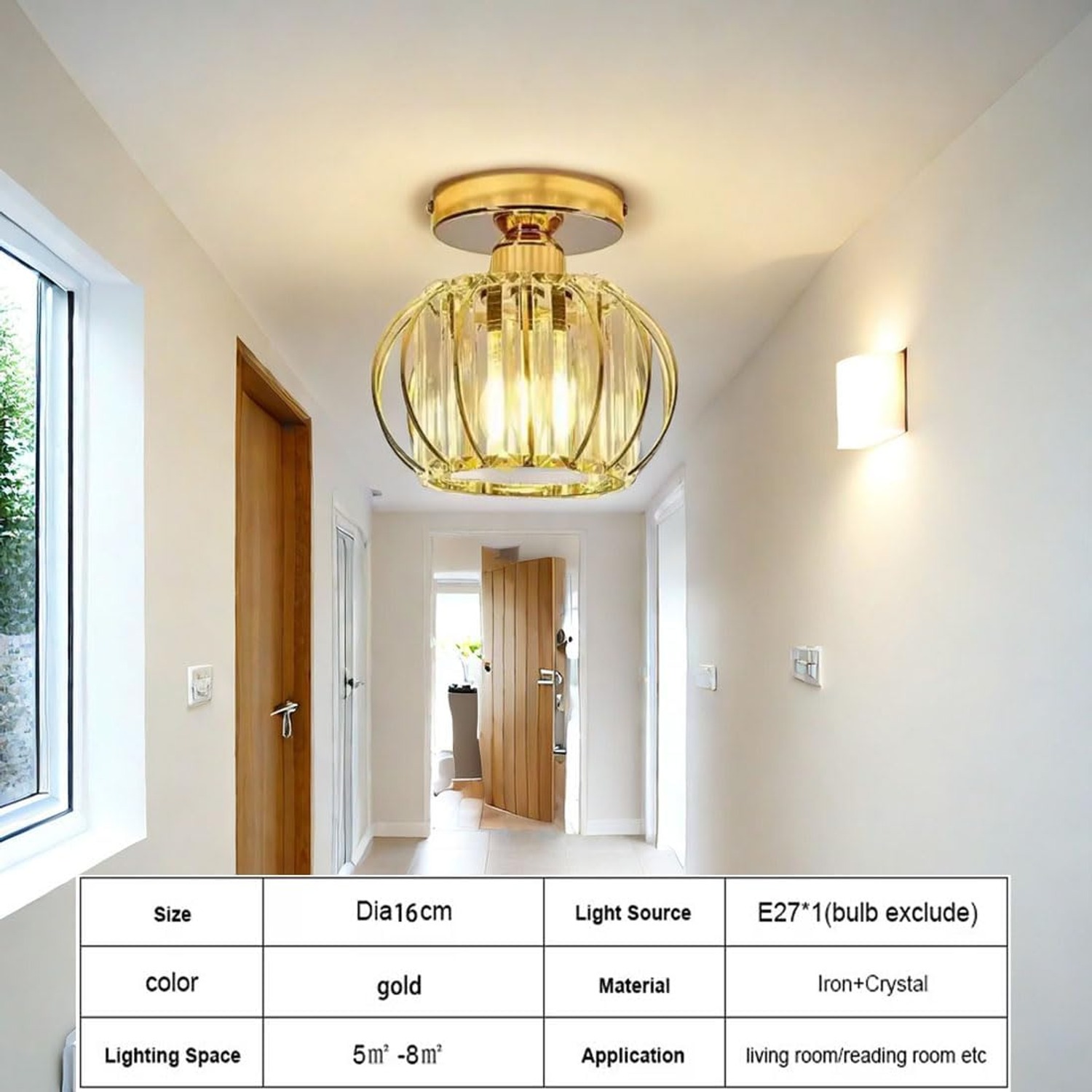
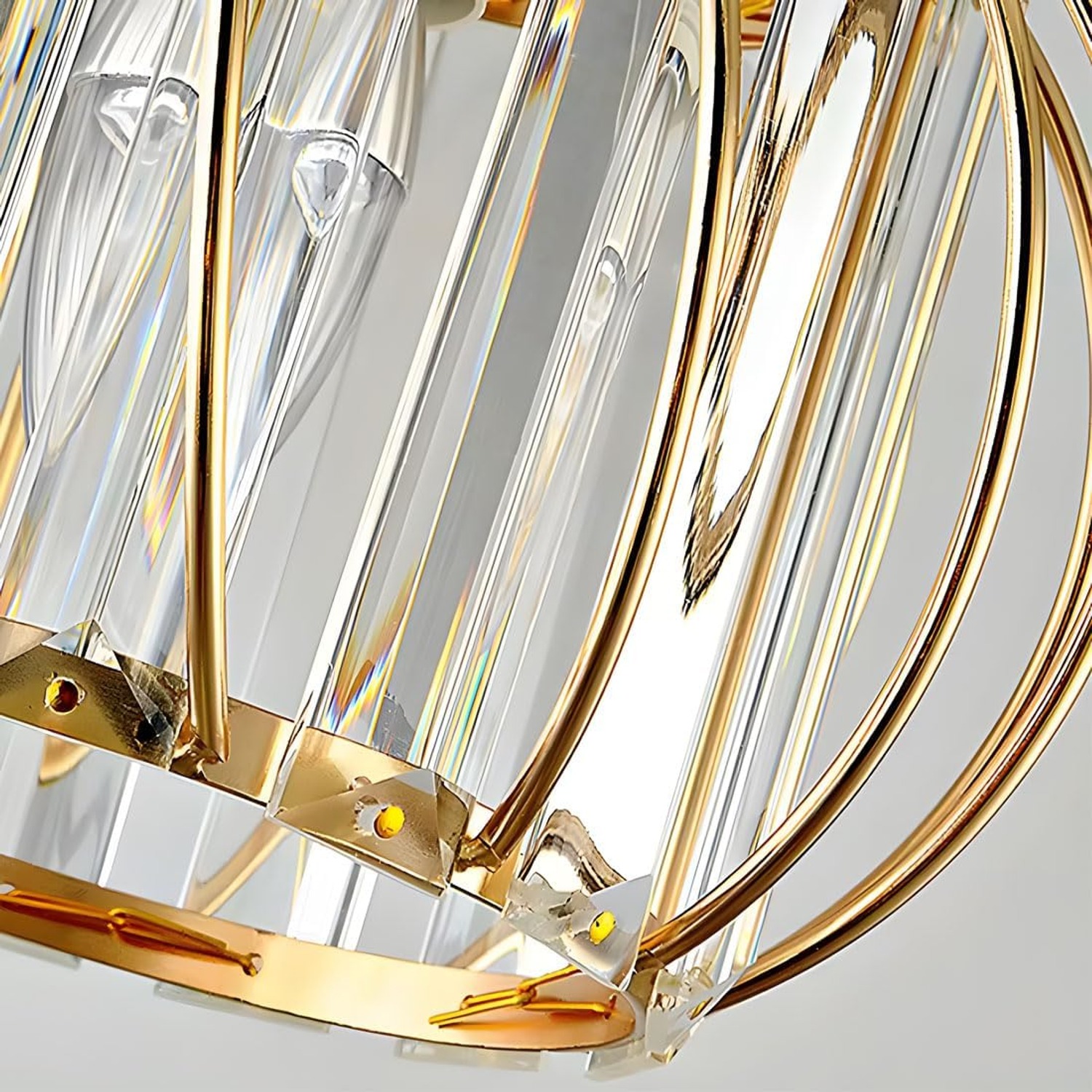
The build is simple. A circular metal frame, finished in gold with an antique look, holds a ring of clear crystal prism rods. Inside sits a single light source with an E26 screw base, rated at 9 watts, giving warm white light. The lighting method is LED and the control is a push button.
Nine watts sounds small if you still think in old incandescent terms. With LED it is a reasonable output for a hallway, a bedroom, a walk-in robe or a small dining nook. For a big open living area you would want more than one fitting, or table lamps alongside it.
The warm white colour is worth paying attention to. Crystal reflects whatever colour you feed it. A cool white bulb through prism rods can look sharp and slightly clinical, a bit like a shop display. Warm white keeps the sparkle but leaves the room feeling calm, which is what you want in a bedroom crystal light.
The prism rods do more than sit there. When the light is on, they break the beam into small bright points that land on the ceiling and nearby walls. In a dark hallway at night, that effect is the whole reason to buy a crystal fitting rather than a plain dome.
Where it belongs, and where it does not
The maker lists this as an indoor fixture with no water resistance. That is a hard line, not a suggestion. Keep it away from shower zones, over baths, covered outdoor areas and anywhere that gets steam sitting on surfaces. Damp gets into fittings, tarnishes finishes and causes problems that are not worth the saving.
Good spots include entry halls, bedrooms, landings at the top of stairs, small dining rooms, walk-in robes and dry laundry spaces. Anywhere you see the fixture up close is where crystal earns its keep. In a high-up vaulted ceiling the detail is wasted.
Power is listed as 220 volts, corded electric. If you are in a country on a different supply, check that before you order. An electrician can tell you in a minute whether it suits your mains.
Choosing the right size and number
Two things decide whether a fitting looks right. Ceiling height and room width.
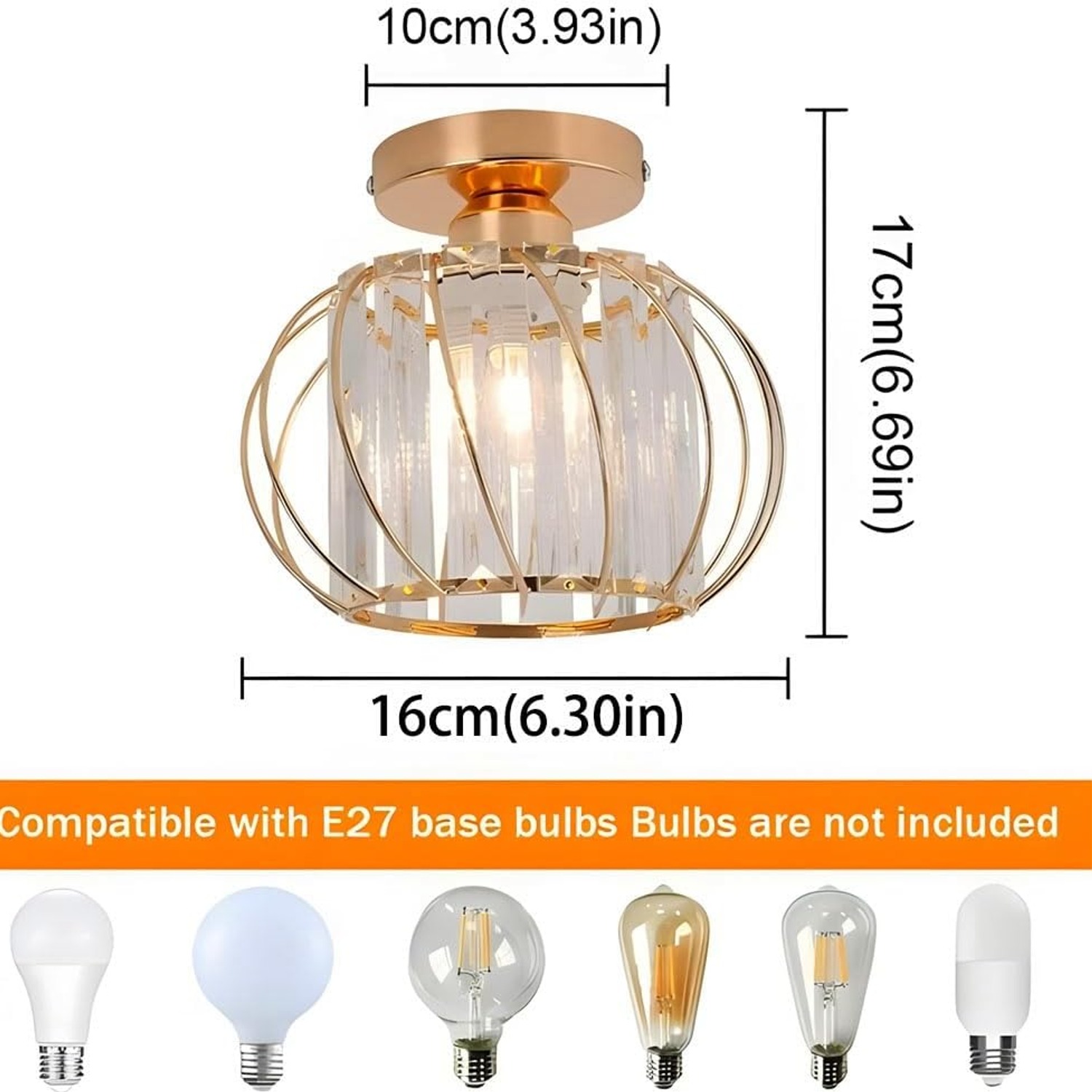
For ceiling height, measure from floor to ceiling and then think about where the bottom of the fixture lands. In a hallway you want clear headroom with plenty to spare. Over a bed, the clearance matters less, but you still do not want to catch it while changing sheets. Exact dimensions for this fixture are not specified by the maker, so if your clearance is tight, ask before buying.
For room width, a single compact fixture suits a small to medium space. In a long corridor, two or three matching fittings spaced evenly down the centre almost always beat one fitting at one end. The light is more even and the corridor looks intentional rather than lit by accident.
If you are comparing this against a full pendant, ask yourself one question. Will anyone walk under it, or sit under it with their head up? If yes, semi flush is the safer choice.
Bulbs and dimming
The base is E26, the common medium screw. Buy a warm white bulb at a wattage suited to the fitting. Fitting a far higher wattage bulb than the fixture is rated for is a bad idea, and with LED there is rarely a reason to.
Dimming depends on the bulb and the switch, not the fixture body. If you want the light to drop to a low glow in the evening, use a bulb marked dimmable and a dimmer switch made for LED loads. Mismatched pairings cause flicker and buzzing, which is a known annoyance rather than a fault with the fitting.
One more practical tip. Buy a spare bulb at the same time and store it with the instructions. When a fitting is on the ceiling, the day the bulb dies is never the day you feel like going shopping.
Installation, honestly
Assembly is required and mounting hardware is included. For anyone who has swapped a ceiling fitting before, this is familiar territory. Power off at the breaker, remove the old fitting, note the wiring, fit the mounting plate, connect, then attach the body and the crystal rods last so you are not handling them while working overhead.
Fit the crystal pieces at the end for a reason. They are the parts most likely to get chipped if they are hanging there while you wrestle with the bracket.
In many countries, hard-wired lighting work must be done by a licensed electrician. Check your local rules. Even where DIY is allowed, if the ceiling box looks old, loose or not rated for the load, get someone in. The cost of a call-out is small compared to a fitting coming down.
Keeping it looking good
Crystal shows dust. That is the trade-off for the sparkle.
Switch the light off and let the bulb cool before you touch anything. Dust the rods and the metal ring with a soft dry cloth. If they need more than dusting, a cloth lightly dampened with water works, dried straight away so no water sits on the metal. Skip household sprays, solvents and abrasive pads, which can strip or cloud an antique finish.
Every so often, check the mounting hardware and the rod fittings are still firm. Doors slamming and floorboards flexing can loosen things slowly over years.
A dust every month or two is enough in a bedroom. Near a kitchen or a busy entry door you may want it more often, since cooking film and outdoor grit settle faster.
The short version
This is a compact decorative ceiling light for rooms that cannot take a hanging chandelier. Gold-finish metal ring, clear crystal prism rods, one warm white LED source at 9 watts on an E26 base, semi flush mounting, indoor only, assembly required with hardware included.
It suits hallways, bedrooms, landings and small dining spaces, where the crystal is close enough to be seen. It does not suit wet areas, outdoor spaces, or large rooms that need to be lit from one fitting alone.
If you want the look of a chandelier in a normal house with a normal ceiling, this is the shape of thing that actually works. Measure your clearance, check your voltage, sort out who is doing the install, and buy a spare bulb while you are at it.