
The complete guide
How To Choose And Hang Black Pendant Lights Over A Kitchen Bench Or Bar
The problem with one light in the middle of the ceiling
Most kitchens were wired with a single light in the centre of the ceiling, and that one fitting is asked to do everything. The trouble is simple physics. When the light is behind you, your own body blocks it, so you end up chopping onions in a shadow of your own making. The same thing happens at a dining table, where a central light can leave the far end of the table noticeably dimmer than the middle.
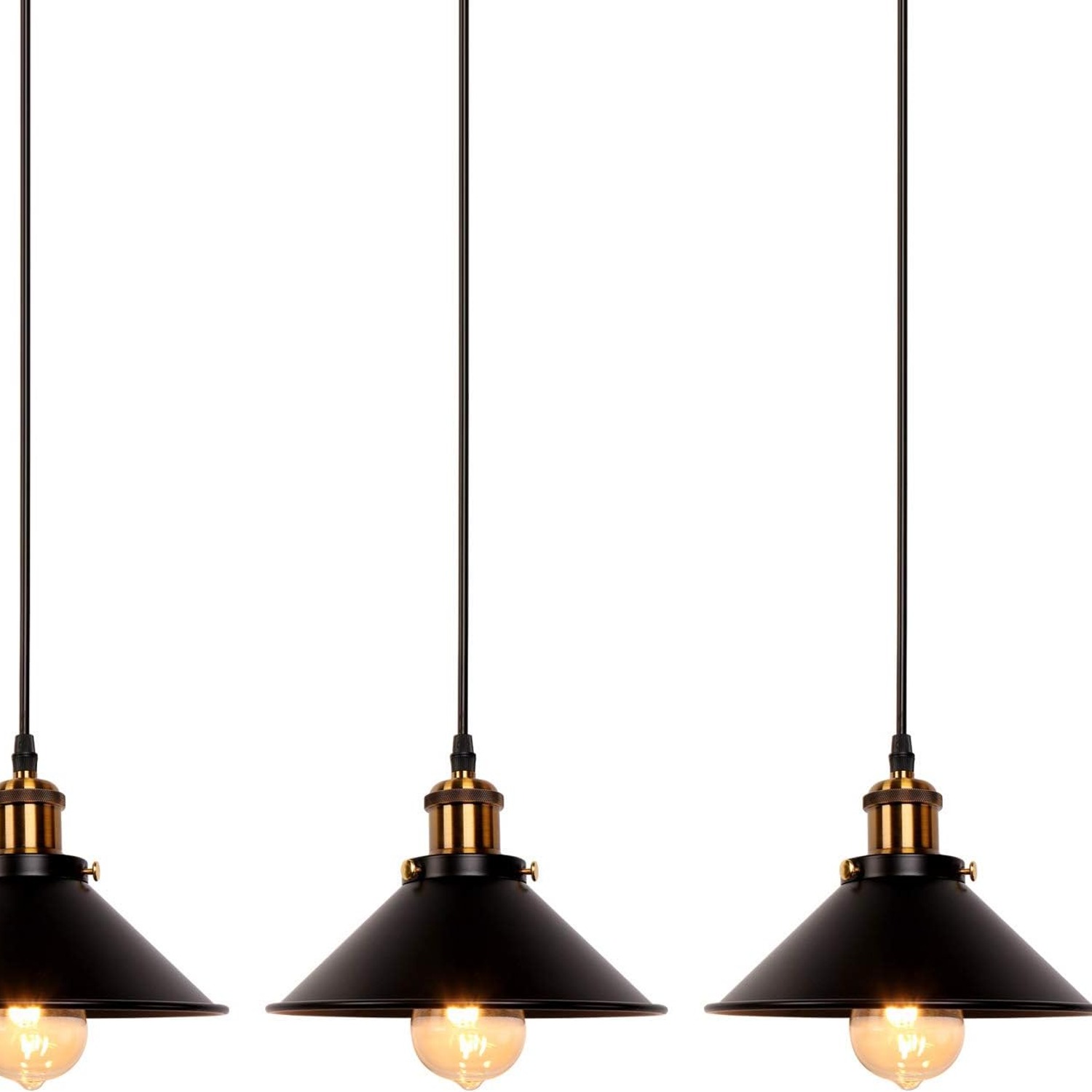
Pendant lights solve this by moving the light source closer to the surface you care about and aiming it down. A cone-shaped metal shade like the one on this black iron pendant light is a deliberate choice. The narrow top and wide bottom funnel the light into a defined pool rather than spilling it sideways. That gives you working light where it is needed and keeps the rest of the room softer, which is usually what people want in the evening.
Buying three at once matters more than it sounds. Matching lights sold separately can arrive from different production runs with slightly different blacks, slightly different cord fittings or slightly different shade depths. A three pack removes that risk, and it is also the number that suits most benches and tables.
How these fittings actually work
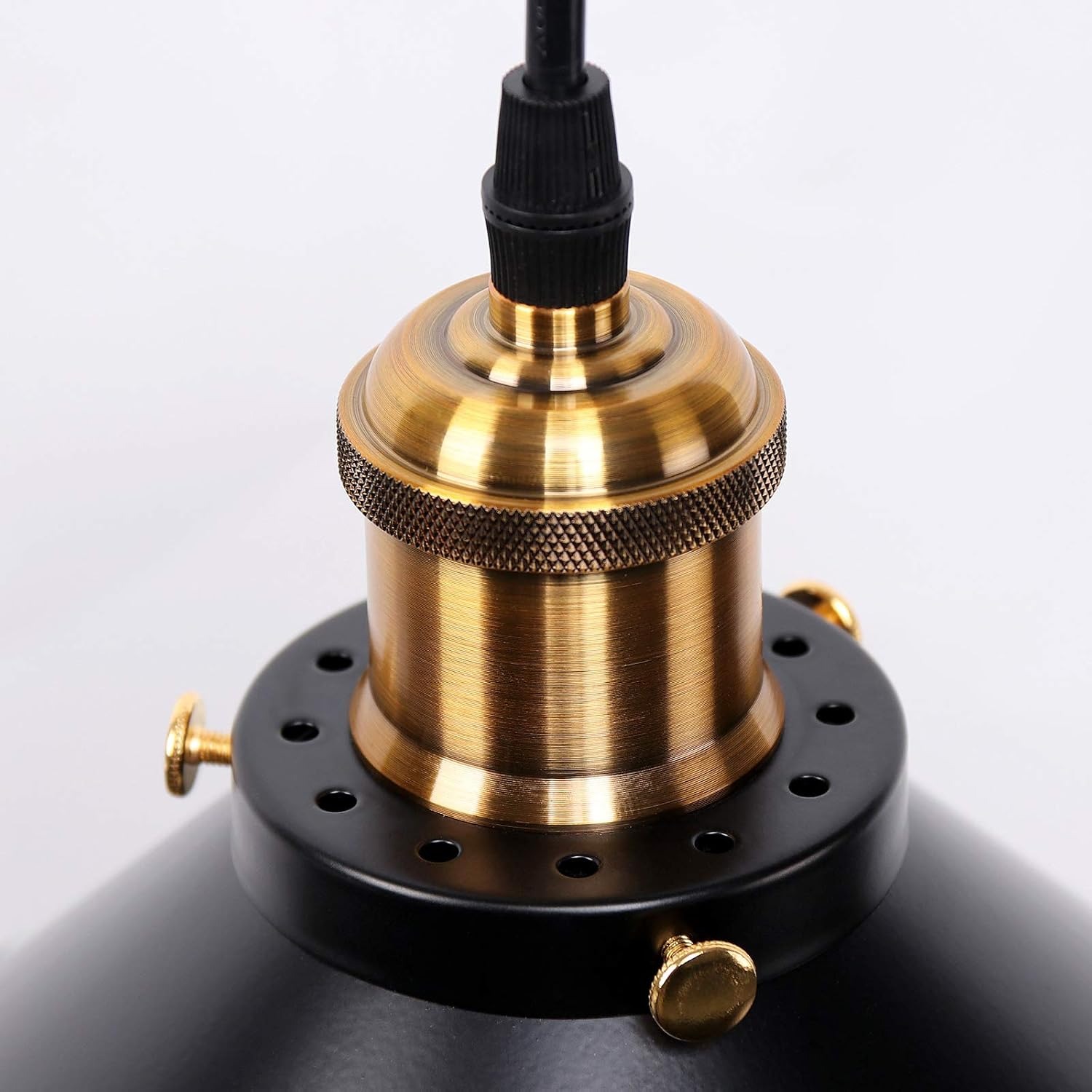
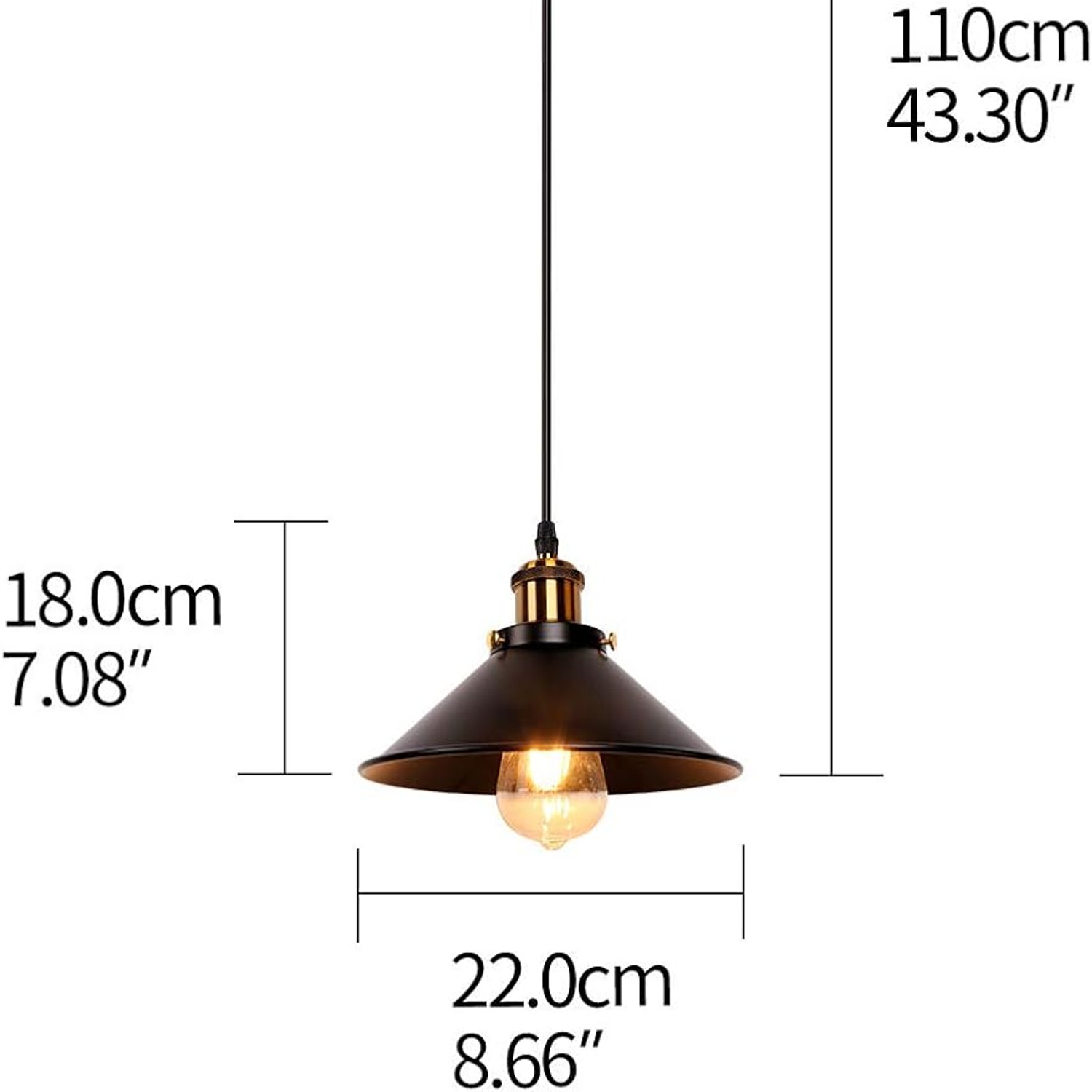
Each pendant is a straightforward corded electric ceiling fitting. There is a ceiling plate, a cord that adjusts to a drop of around 90 cm, a lamp holder and the metal shade. The holder takes an E27 screw bulb, the common large screw base, with a maximum of 60 W per light at 220 V. The maximum light output listed is 800 lumens, which is roughly the brightness of a traditional 60 W incandescent bulb.
Bulbs are not given by the maker, and that is worth seeing as a feature rather than an omission. The bulb decides the mood. A clear filament-look LED makes the inside of the shade glow and throws a bit of sparkle, which is the classic cafe and bar look. A frosted warm white LED is gentler on the eyes if you sit under the lights for long stretches. Because the fitting takes a standard base, you can change your mind later for the price of a bulb.
Light colour is listed as warm white, so the fittings are designed around that softer, yellow-leaning tone. If you work at the bench a lot and prefer a crisper feel, a neutral white LED around 4000K will still fit the same socket.
These are indoor fittings. They carry no water resistance rating, so bathrooms, laundries with steam problems and outdoor areas are out. Dry rooms only.
Who they suit
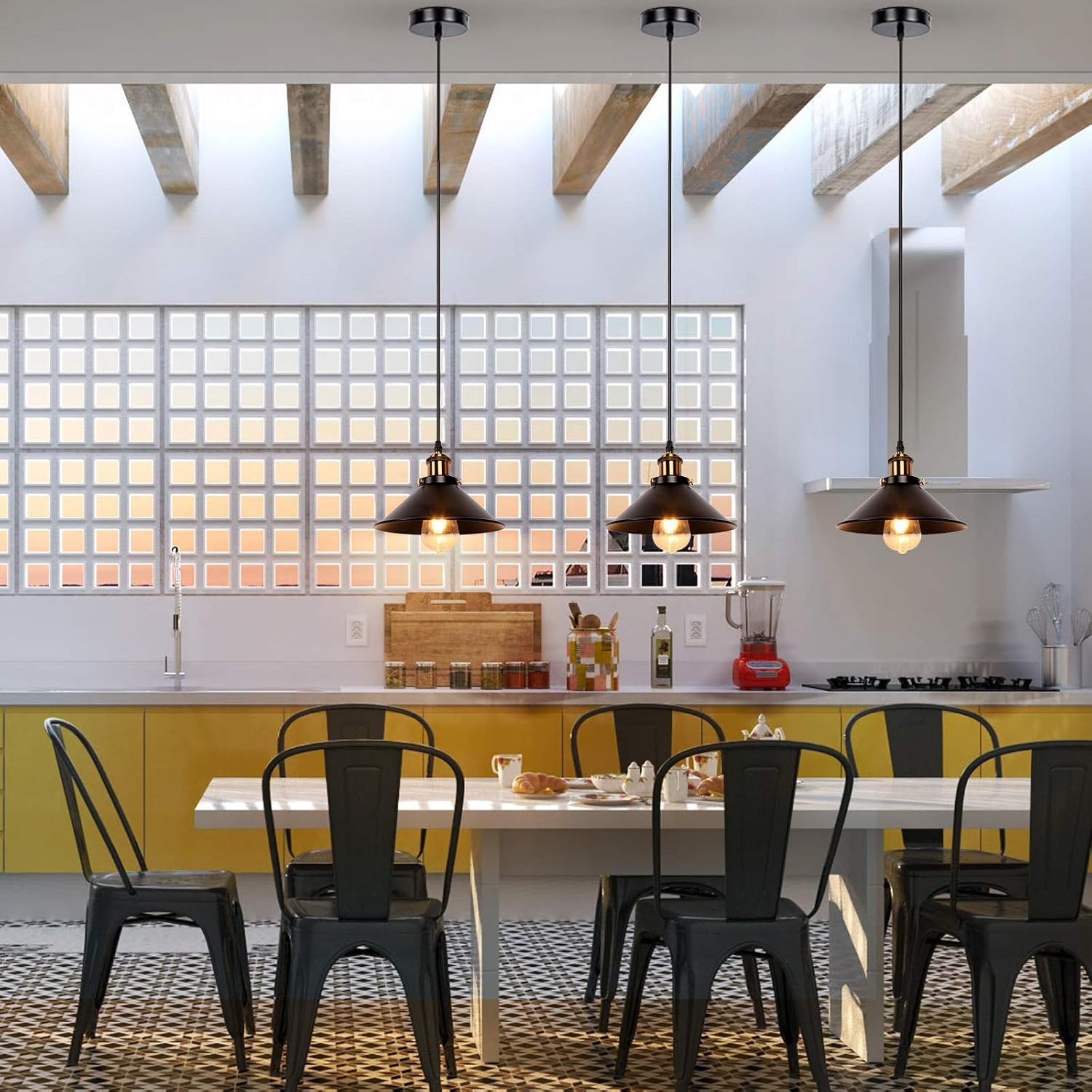
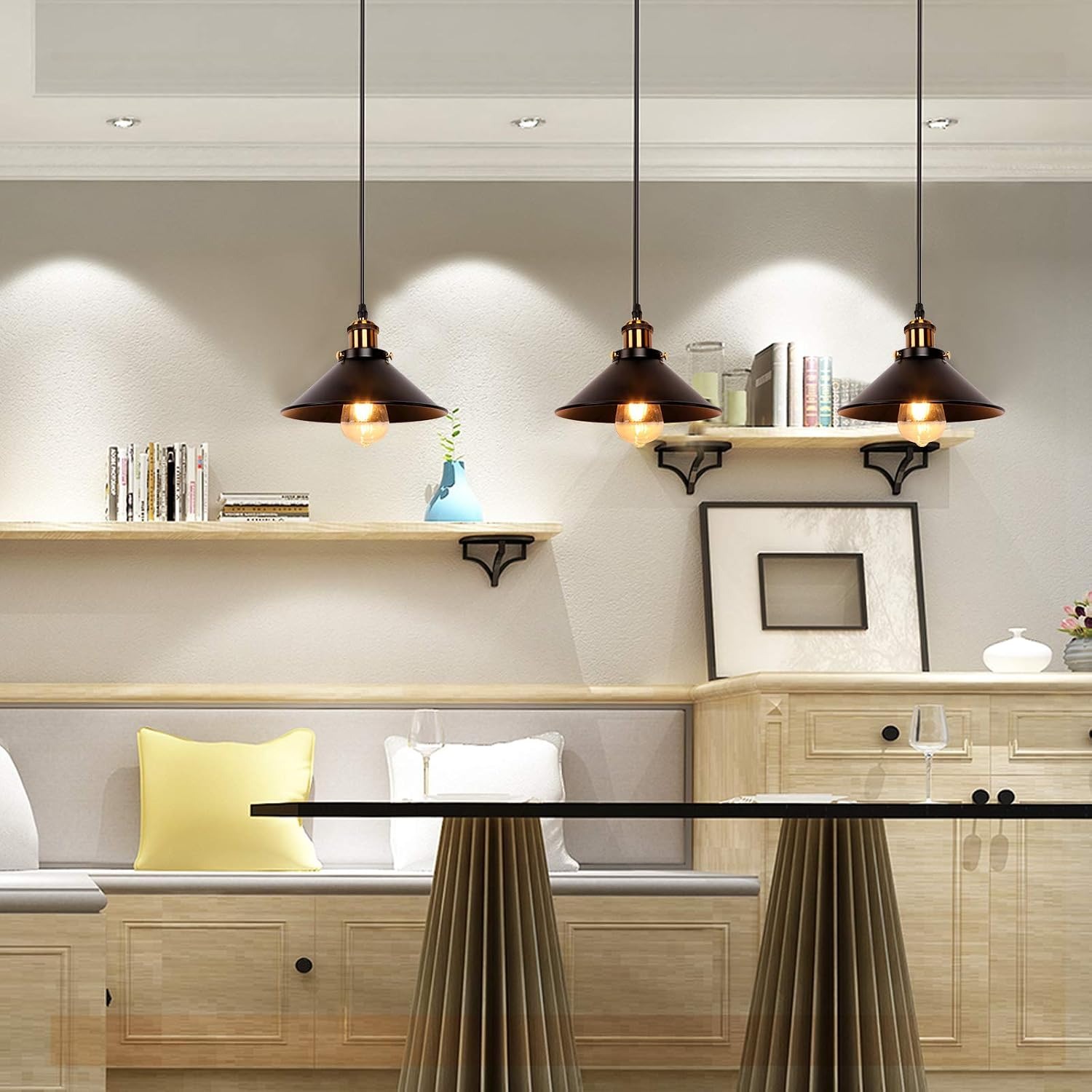
The obvious home is a kitchen island or a breakfast bar. Three pendants in a row over a bench is one of the most reliable looks in modern interiors, and it is popular for a reason. It gives you task light exactly where you prepare food and it visually anchors the island as the centre of the room.
They also work well over a long dining table, especially in an open-plan space where you want the table to feel separate from the lounge area. In a cafe or small restaurant, a run of industrial pendant light fittings over a counter does the same job of marking out the service area.
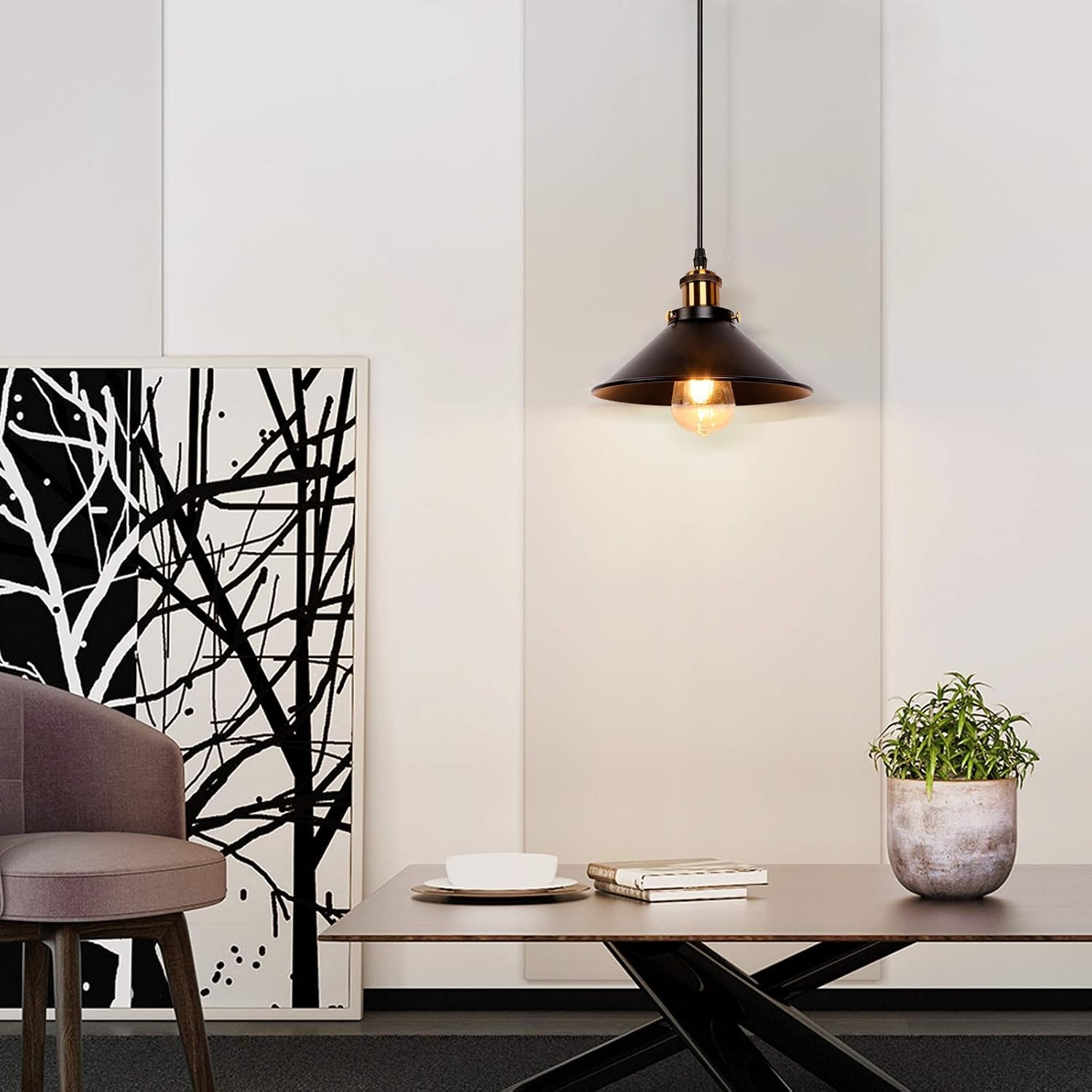
Less obvious uses are often the best ones. One pendant either side of a bed, hung low, frees up bedside table space and looks more considered than matching lamps. A single pendant in a hallway nook or above a reading chair turns dead space into somewhere you actually use. Nothing stops you splitting a three pack across different rooms.
They are a good fit if you like a plain, slightly industrial look. They are not the right choice if your room is heavily decorative, with ornate cornices and crystal, where a black metal cone will read as out of place.
Working out spacing and drop height
Spacing is the part people get wrong, and it is easy to get right with masking tape. Measure your bench, then divide it into three equal sections and mark the centre of each. That usually lands you somewhere between 60 and 75 cm between pendant centres on a standard island. Keep roughly 15 to 20 cm clear at each end so the outer pendants are not hanging over the edge.
Drop height depends on what is underneath. Over a bench or bar, most people hang the bottom of the shade about 75 to 90 cm above the surface. Low enough to light the bench properly, high enough that you can see the person across from you. Over a dining table the same range works, measured from the tabletop. In a hallway or anywhere people walk, the bottom of the shade should clear the tallest person in the house by a comfortable margin.
The adjustable cord gives you up to about 90 cm of drop, which covers standard ceiling heights. If you have a very high ceiling or a raked one, talk to your electrician before ordering, because some rooms need a longer cord or a different mounting approach.
Here is the trick worth repeating. Tape pieces of paper to the ceiling where you plan to hang them, live with it for a day, then decide. Drilling is permanent. Tape is not.
Installation and safety
Assembly is required, but it is the simple kind. You fit the shade to the holder, set the cord length and mount the ceiling plate. The final mains connection is different. In most countries, connecting a hard-wired ceiling fitting is regulated work that must be done by a licensed electrician, and doing it yourself can affect your insurance as well as your safety.
Before the electrician arrives, know your answers. Where do you want them. How high. Do you want them on the existing switch or a separate one. Do you want dimming, and if so, which bulbs. Having those decisions made saves time and usually money.
Respect the 60 W maximum per light. With LED bulbs you will never go near it, since a bright LED typically draws under 10 W. If you prefer traditional incandescent bulbs for the look, stay at or below the rating and remember they run hot.
Looking after them
Care is easy. Switch the power off and let the bulbs cool, then wipe the metal with a dry or barely damp soft cloth and dry it straight away. Avoid abrasive pads, bleach and solvent cleaners, which can dull a lacquered finish over time.
In a kitchen, expect a light film of cooking residue to build up on fittings near the cooktop. A wipe every few weeks is plenty. Avoid hanging pendants directly above a gas burner where heat and splatter are at their worst.
Once a year, give the fixings a gentle check to make sure nothing has worked loose, and check the cord for any wear near the holder. If anything looks damaged, stop using the fitting and get it checked rather than taping over it.
The short version
This is a set of three black metal cone pendants with E27 holders, adjustable cords to about 90 cm, a 60 W maximum per light at 220 V and a warm white light output listed up to 800 lumens. Bulbs are not included. They are indoor only, not water resistant, and need assembly plus a licensed electrician for the final connection.
If you have a kitchen island, a breakfast bar or a long dining table that is poorly lit by one central fitting, three matching pendants will fix the problem and change how the room feels at night. Measure, tape it out, pick your bulbs, and let a professional wire them in. That is the whole job.