

The complete guide
How to Choose a Gold Sputnik Chandelier (and Hang It Right)
The problem with one sad ceiling light
Most rooms get one light fitting in the middle of the ceiling, and most of those fittings are a flat disc or a single shade. The result is a bright spot overhead and gloomy corners everywhere else. Dinner tables end up lit from one small point, so food sits in shadow and everyone has a hard edge of light across their face.
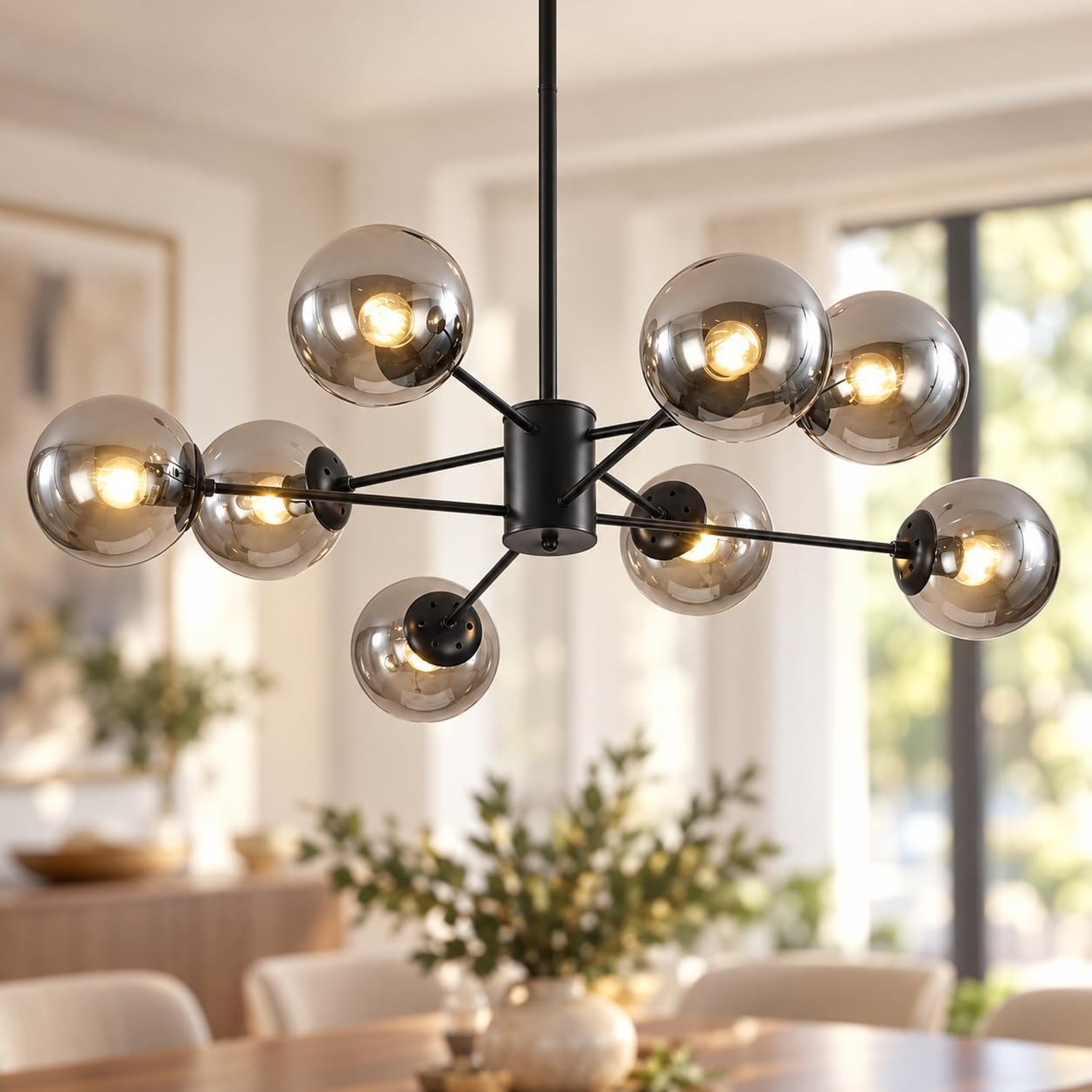
A sputnik chandelier solves that by splitting the light into several sources and pushing them outward. Six globes spread over 74 cm cover a lot more surface than one bulb in the centre. The light lands on the table, the chairs and a bit of the wall behind, which is what makes a room feel finished rather than merely illuminated.
There is a second problem it fixes, which is that ceilings are usually the most boring surface in a house. A gold sputnik chandelier gives a plain white ceiling something to do. It reads as deliberate design the moment you walk in.
How this fixture actually works
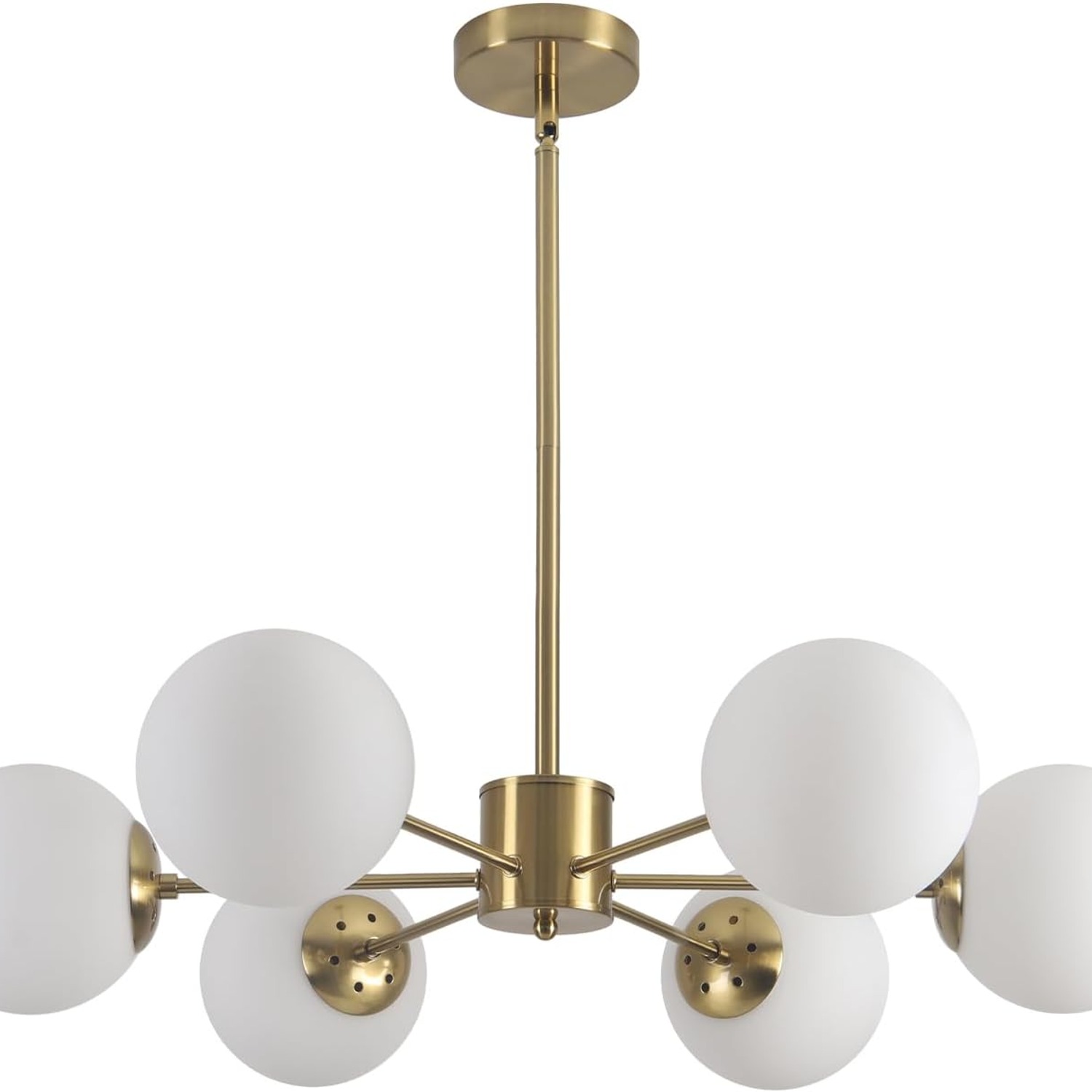
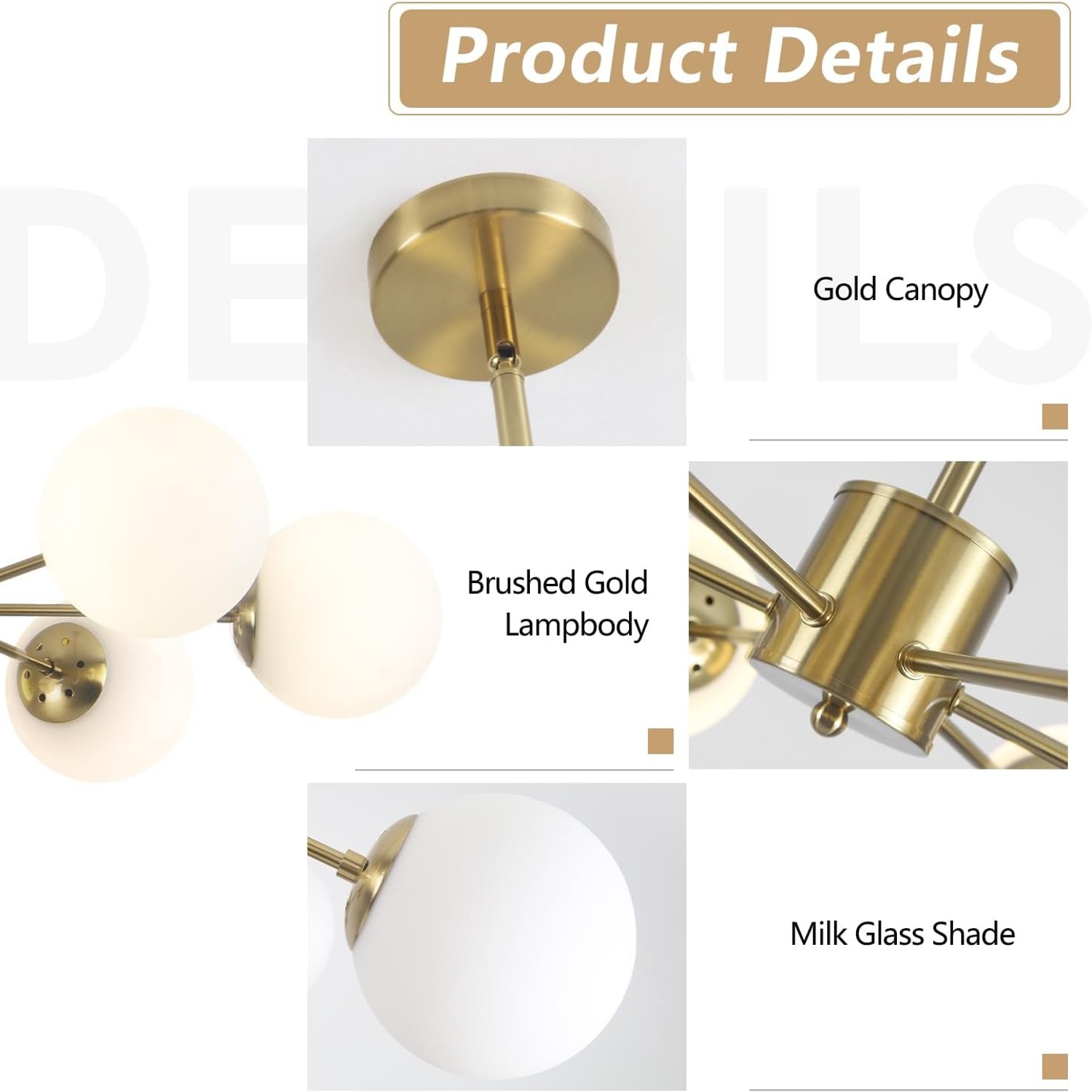
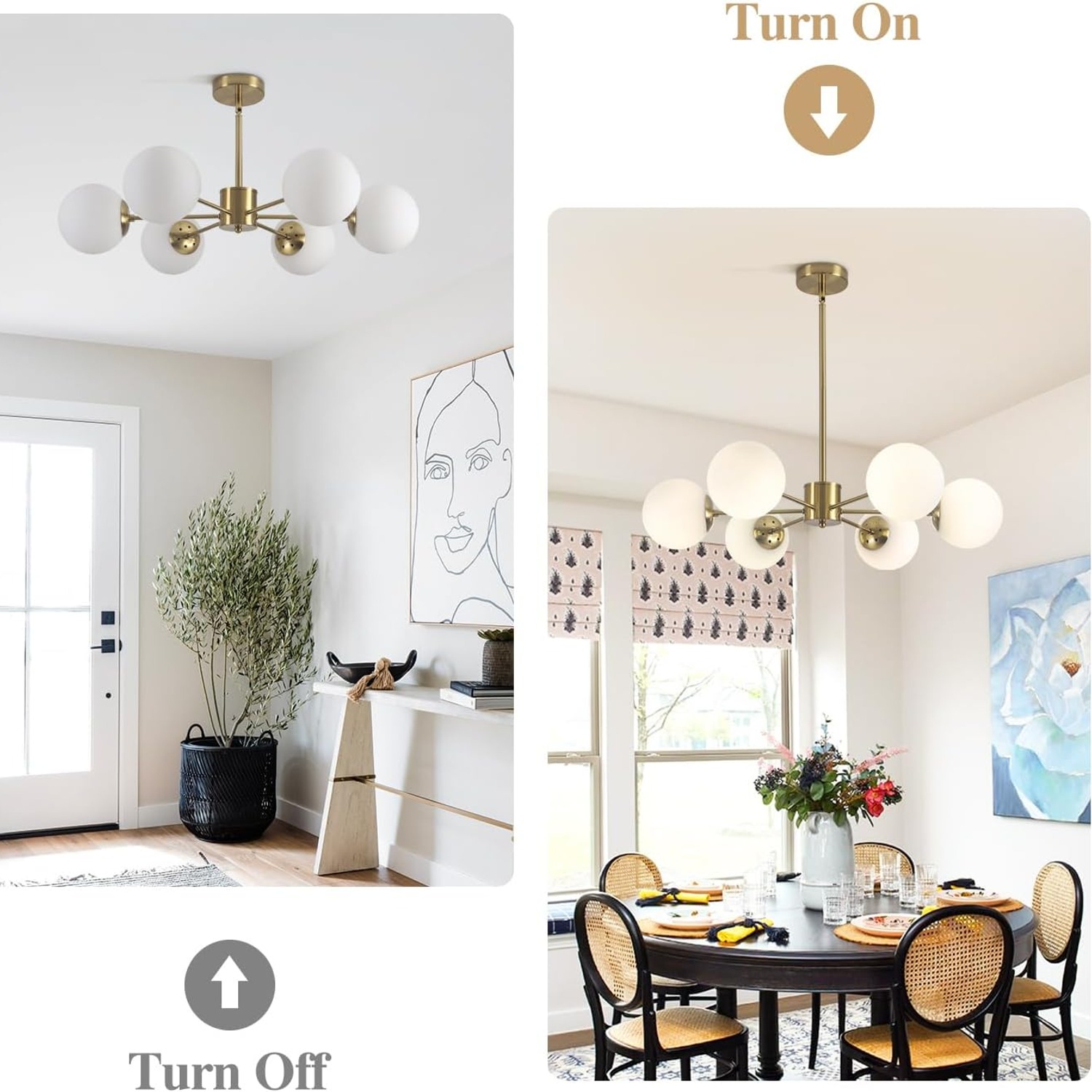
The build is simple. A central hub sits under the ceiling plate, and six arms angle out from it at different directions. Each arm ends in a socket that takes an E26 bulb, and each socket is covered by a round white glass globe.
The glass is the part people underestimate. A bare-bulb sputnik looks great in a photo taken from across the room. Sit under it at a dining table and the filaments are right in your eyeline. White glass shades diffuse the output so you see six soft glowing spheres instead. Paired with the warm 3000 Kelvin colour temperature, it gives the room a yellow-leaning light that feels like evening rather than an office.
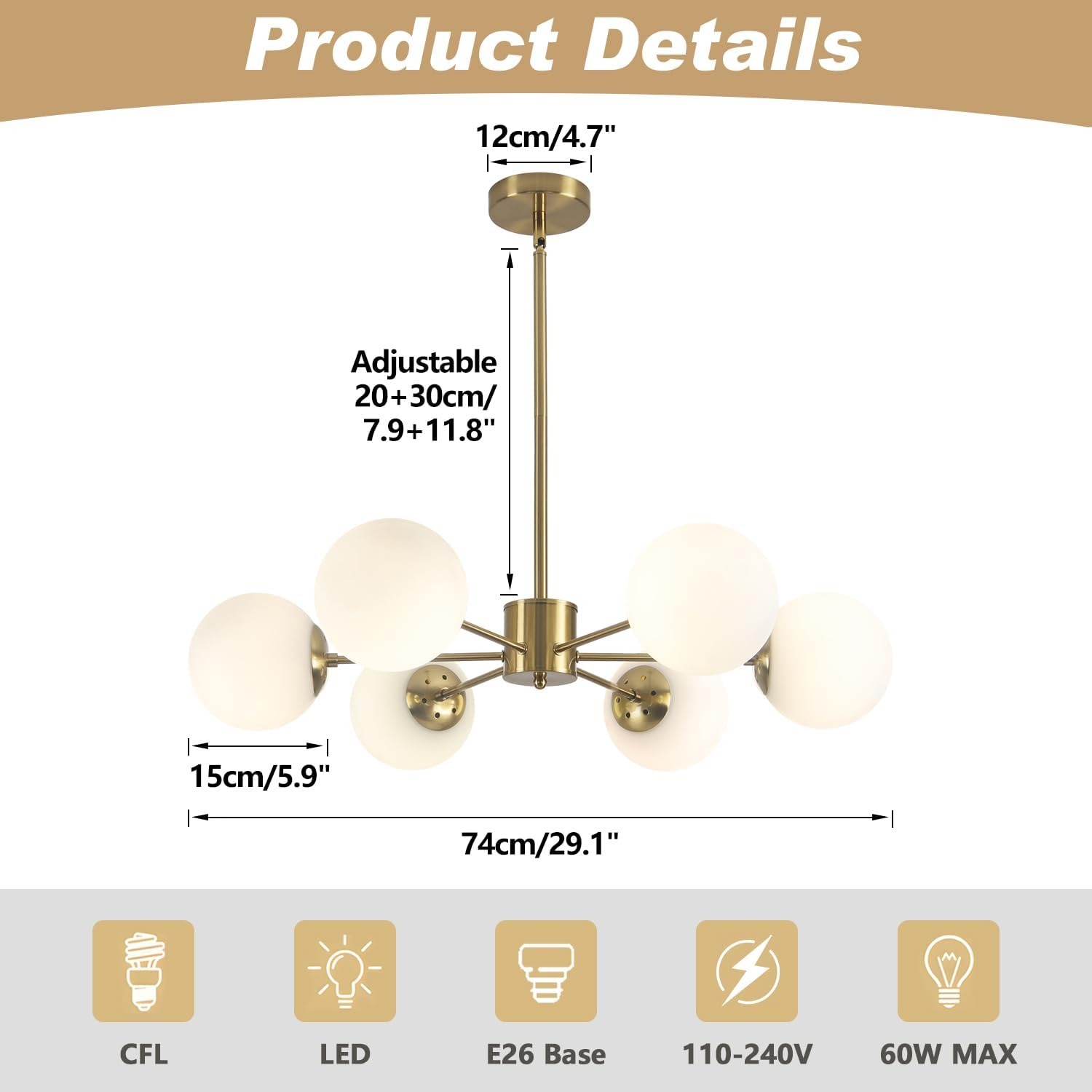
Total output is listed at up to 806 lumens, with efficiency at 13.43 lumens per watt and a 60 watt rating. That makes it an ambient light. It sets the mood and lights the space generally. It is not meant to be your only light source in a working kitchen, so plan on under-cabinet strips or a lamp if you need detail lighting.
Mounting is a semi flush ceiling fixture with adjustable rod sections. You can shorten or lengthen the drop, and the design handles sloped ceilings as well as flat ones. That flexibility matters more than people expect, because ceiling heights vary and the difference between a chandelier that looks right and one that looks wrong is often just ten centimetres of drop.
Who it suits
This one lands well in homes with warm materials. Oak or walnut floors, a timber table, white or cream walls, a bit of marble or stone. Gold picks up those tones and reflects them back. If your home is all cool grey and chrome, a gold fixture can still work as a contrast piece, but it will read as a statement rather than a blend.
Rooms where it does its best work include dining rooms, open-plan living areas, bedrooms with decent ceiling height, and entryways. The semi flush mount means it suits standard ceilings, not just double-height voids. If you have ever looked at long-drop pendants and thought they would brush your head, this style is the answer.
It also suits people who want the mid-century modern ceiling light look without going full vintage. The sputnik shape is a 1950s idea, but the clean brushed gold and plain white globes keep it current. It sits fine in a modern apartment, a renovated terrace or a newer build.
Where it does not belong is anywhere wet or outdoors. The maker's description is clear that it is indoor only and not water resistant. Skip the covered patio, the bathroom shower zone and the laundry above a tub.
Getting the size and height right
Measure first. The fixture is 74 cm wide and 65 cm tall. Over a dining table, a common rule is to choose a fixture roughly half to two thirds the width of the table. A 74 cm spread suits tables from about 110 cm to 160 cm wide. Narrower than that and it starts to overhang; much wider and it can look lost.
For height, aim for around 75 to 90 cm of clearance between the tabletop and the bottom of the globes. That keeps the light close enough to be useful and high enough that nobody is staring through it. In a hallway or entryway, make sure the lowest point clears the tallest person in the house with room to spare, and check door swings.
Ceiling height matters too. In a room with 2.4 metre ceilings, keep the rod sections short so the fixture reads as part of the ceiling. With 2.7 metres or more you can afford to drop it further and let it float.
If the chandelier is going over an island rather than a table, think about where people stand. You want the globes clear of head height when someone is leaning over the bench, and clear of overhead cupboard doors swinging open.
Installation notes
Assembly is required, so give yourself a clear table and a soft cloth to work on. The arms and glass shades attach to the frame before anything goes near the ceiling. Glass against a stone benchtop is a bad combination, so work on something forgiving.
The wiring is a job for a licensed electrician in nearly every region. Beyond the legal side, an electrician will confirm the ceiling box can carry the load and will check that the 220 volt AC rating matches your supply. The maker's description also lists a pull chain switch and a push button controller alongside the main circuit, so have your electrician walk you through how the switching works once it is in.
Two people make the lift easier. One holds the frame at the ceiling while the other connects and secures. Trying to do it alone from a ladder with six glass globes attached is how globes get broken.
Keeping it looking good
Dust is the main enemy of a ceiling fixture. It settles on the top curve of each globe and on the upper faces of the arms, and because you are usually looking up from below, it builds for months before anyone notices.
Every few weeks, run a soft dry cloth over the arms and the tops of the globes. If the glass has picked up kitchen film, turn the power off, let everything cool, and use a lightly damp cloth followed by a dry one. Avoid sprays, solvents and scouring pads. A brushed gold finish has a directional grain, and abrasives flatten it into shiny patches you cannot undo.
Every few months, give the globes and mounting hardware a gentle check to make sure nothing has worked loose. Heat cycling over time can relax fittings slightly, and catching that early is easier than catching a falling globe.
When a bulb goes, replace it with another E26 of similar output and colour temperature. Mixing a 3000K bulb with a 4000K one in the same fixture is instantly obvious and looks like a mistake.
The short version
Six globes, 74 cm across, brushed gold arms, white glass shades, warm 3000K light at up to 806 lumens. It mounts semi flush on flat or sloped ceilings, takes standard E26 bulbs, adjusts for height, and is strictly for indoor use.
Measure your table, check your ceiling height, and plan for a licensed electrician to fit it. Do those three things and you get a ceiling that finally looks like somebody thought about it.