
The complete guide
How to Choose a Staircase Chandelier for a High Ceiling
The problem with tall spaces
Most homes light a stairwell the same way they light a bedroom. One fixture, flat against the ceiling, doing its best. In a room with a normal ceiling that works fine. In a stairwell with five or six metres of air above the bottom step, it does not. The light has too far to travel. By the time it reaches the treads it has spread thin, so the bottom half of the space feels gloomy even with the switch on.
The second problem is visual. A tall stairwell or a double-height entry is mostly empty vertical space. A small fixture at the top of it looks lost. The eye reads the room as unfinished, no matter how good the floor and the balustrade are.
A staircase chandelier fixes both at once. It brings light sources down into the space instead of leaving them all at ceiling level, and it gives that empty vertical volume something to look at.
How a spiral chandelier works
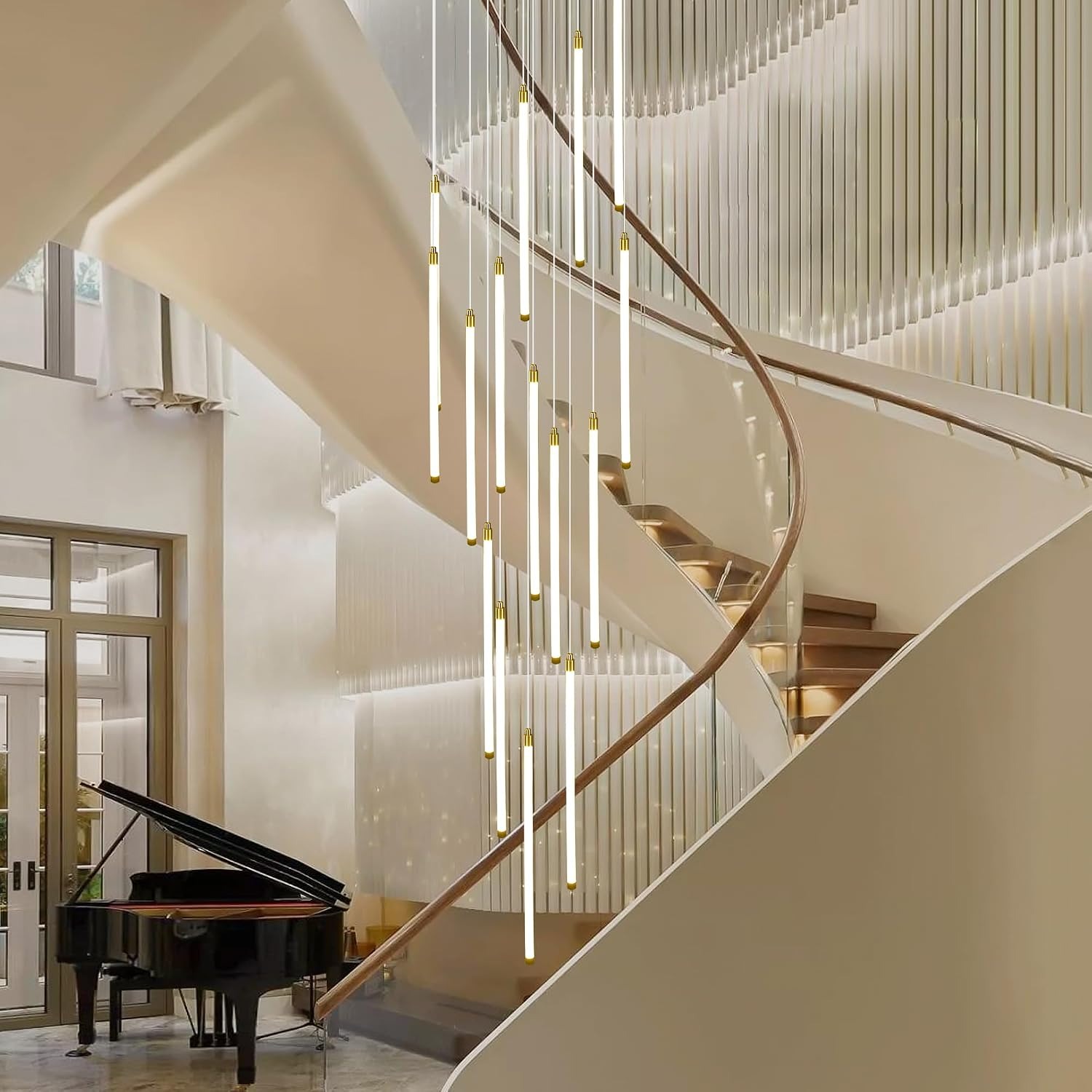
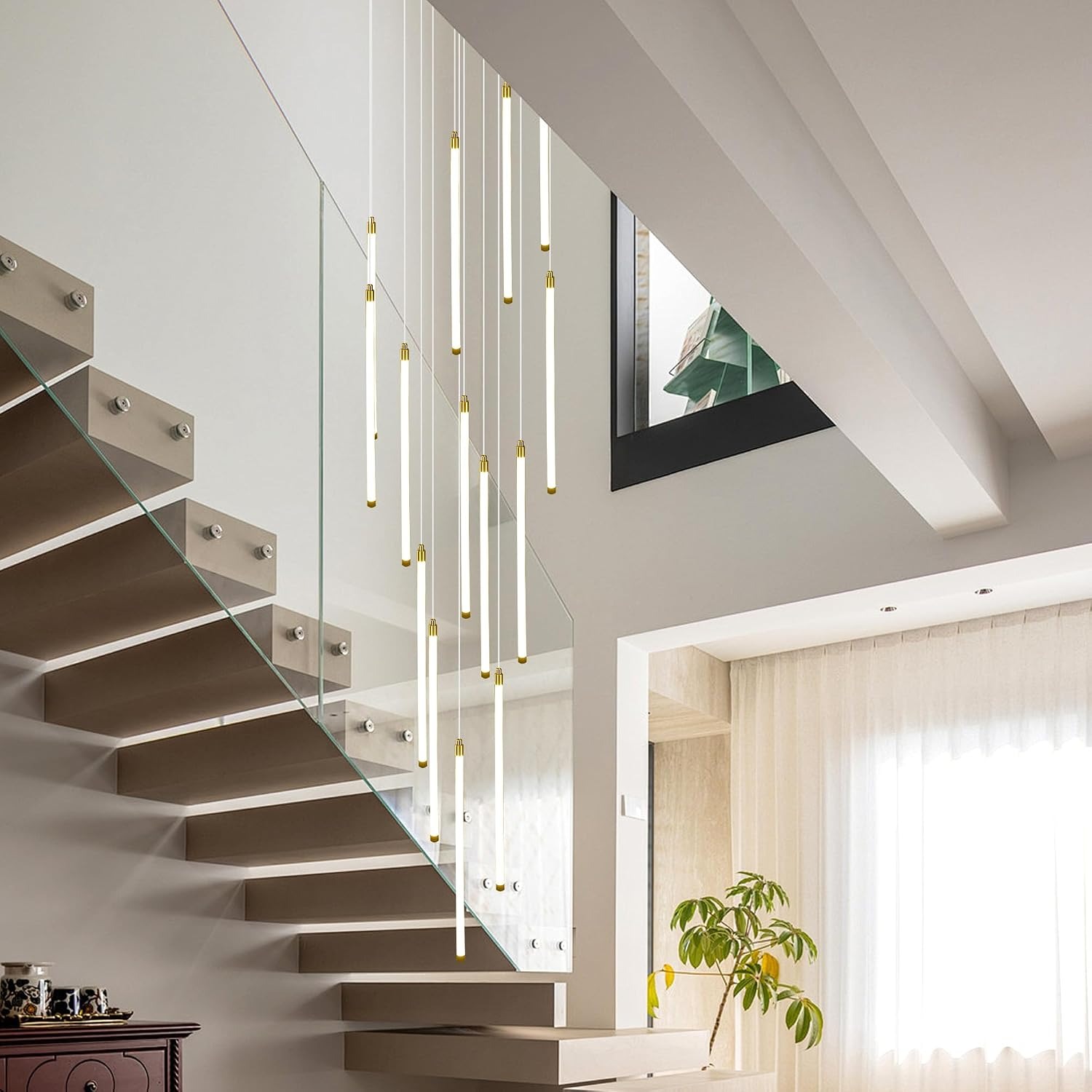
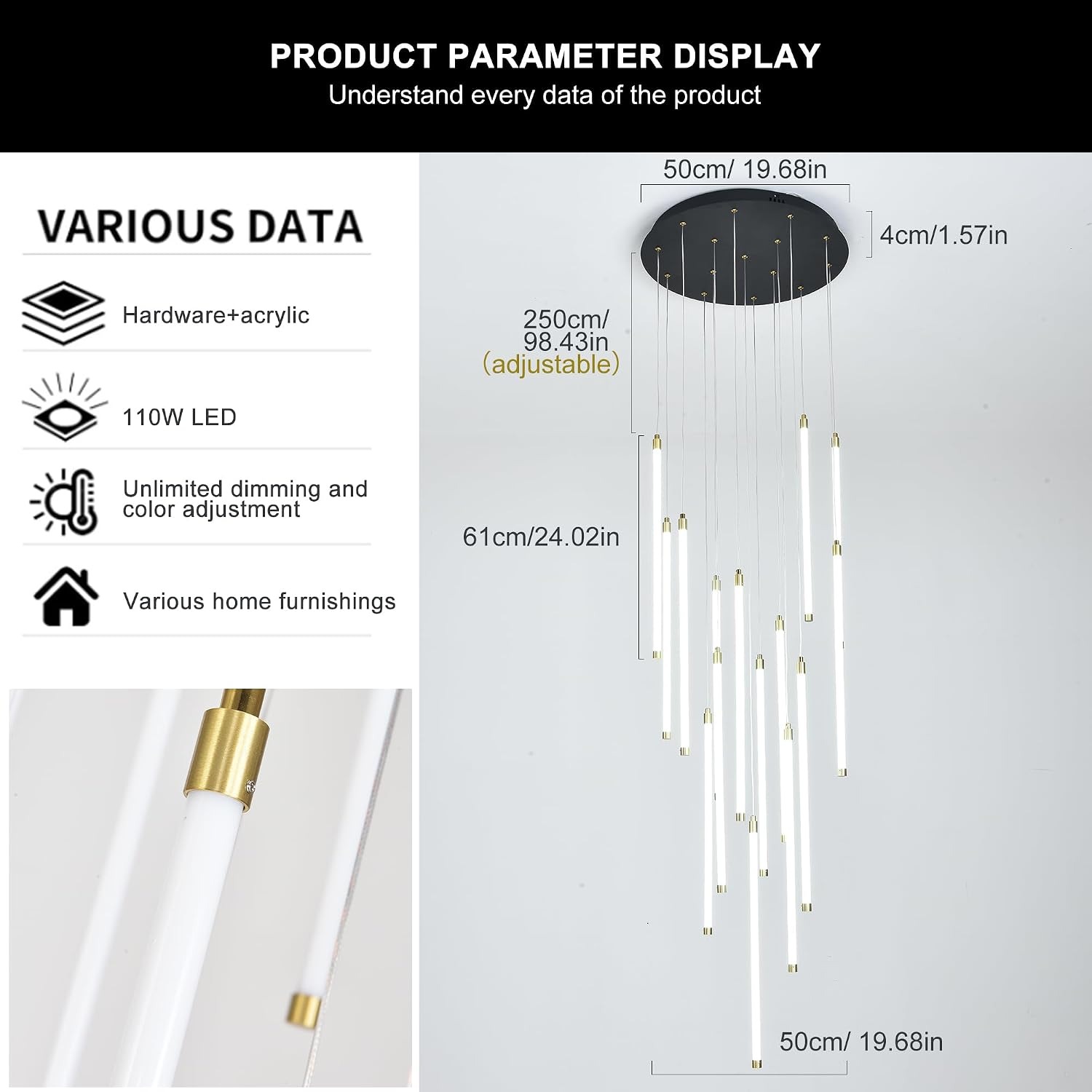
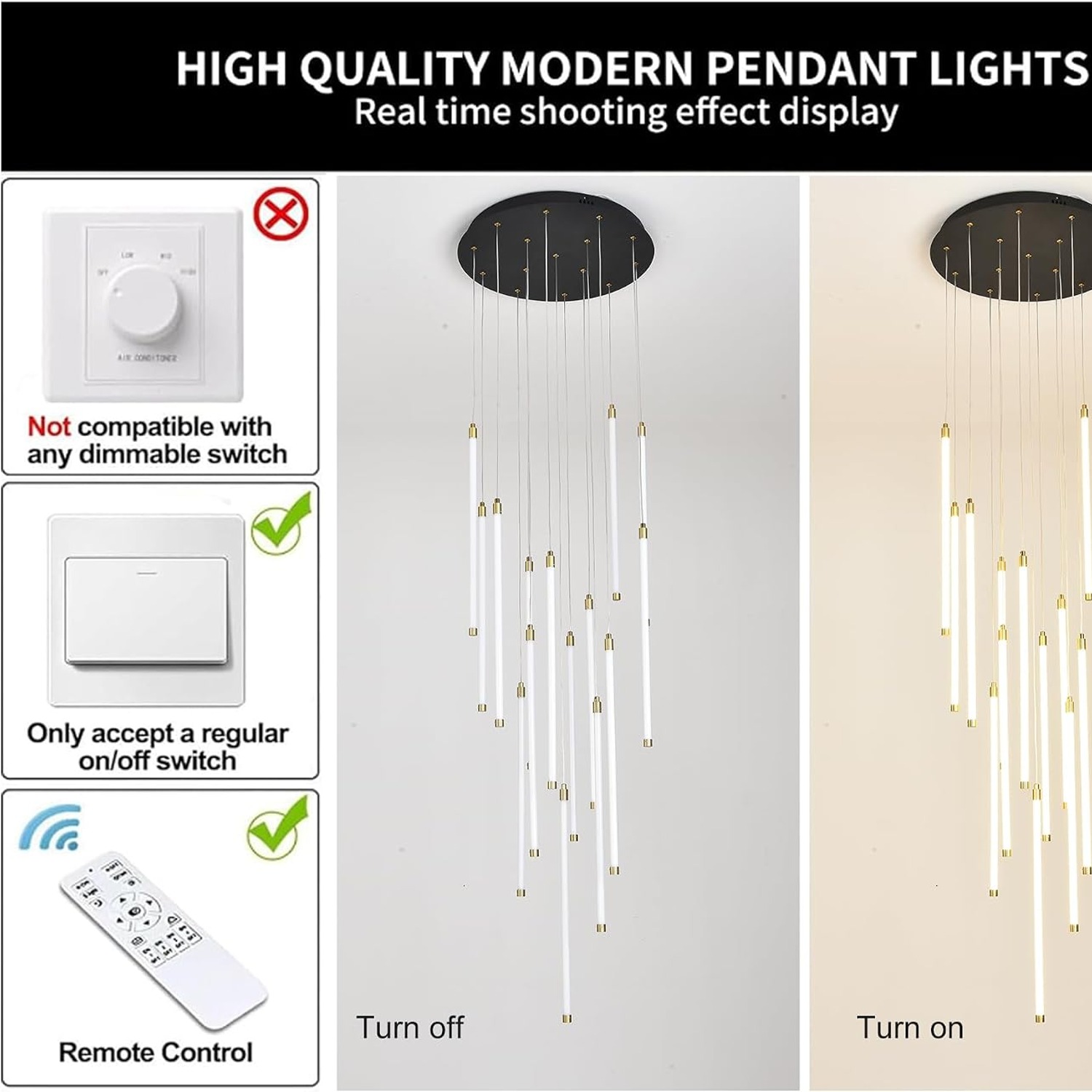
This one uses fifteen slim acrylic columns hanging from a single ceiling canopy. Each column has an LED strip inside it. The acrylic acts as a diffuser, so instead of seeing a bright point you see an even line of light running down the column. Fifteen of those, staggered at different lengths, form a loose spiral.
The practical effect is that light is coming from several heights at once. The upper columns wash the walls near the ceiling. The lower ones put light where you actually need it, on the landing and the stairs. You get the same total output as a single fixture, but it lands in more useful places.
Total output here is 4400 lumens from a 110 watt integrated LED source, running on 220 volts. Integrated means the LEDs are built in rather than sitting in replaceable sockets. That is why the columns can be as slim as they are. It also means there is nothing to unscrew and swap when the time comes, which is a trade-off worth understanding before you buy.
Dimming and colour, and why they matter here
Stairwells get used at very different times of day for very different reasons. At nine in the morning you want to see clearly. At eleven at night you want enough light to not trip, and nothing more.
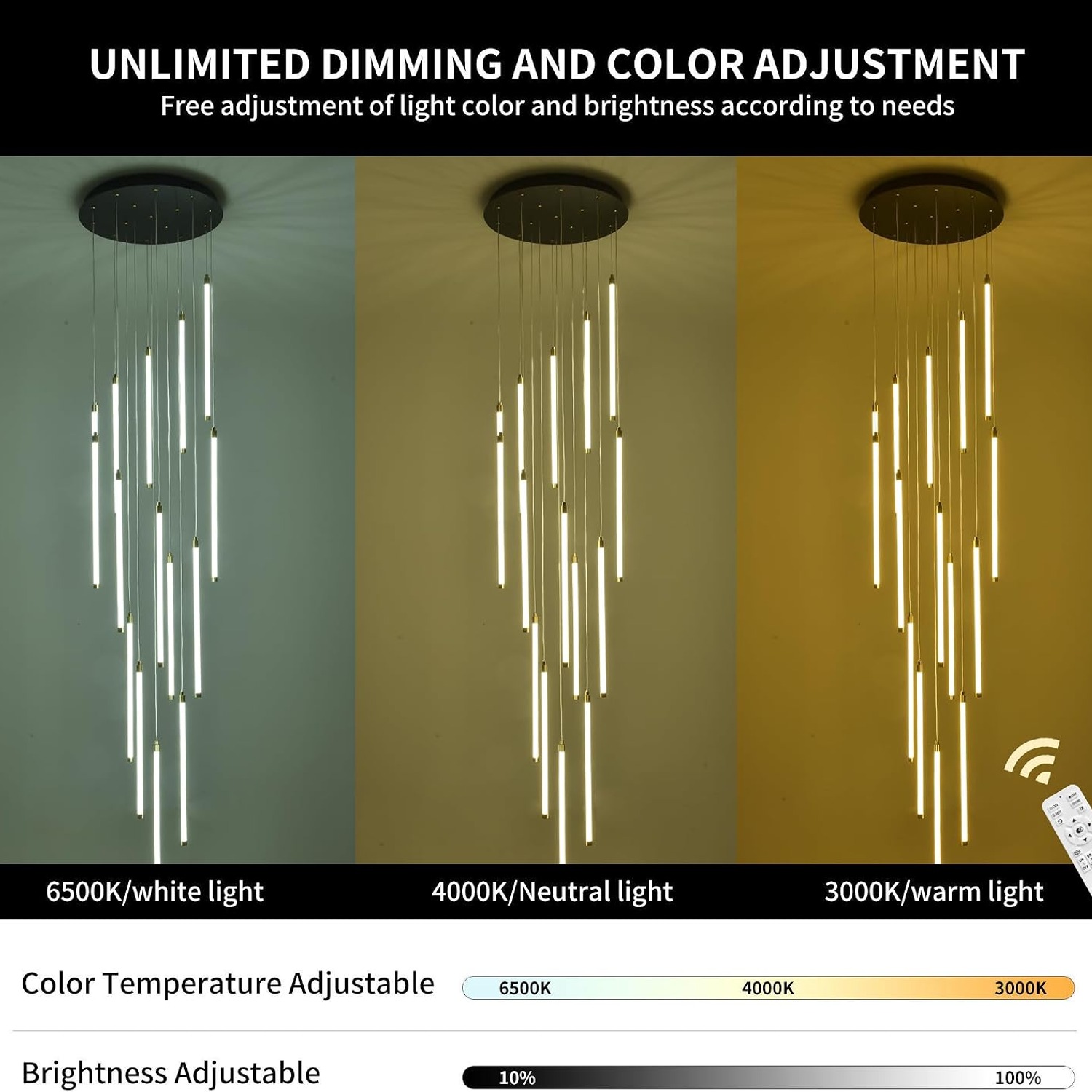
This fixture handles that with stepless dimming from 10% to 100% and an adjustable colour temperature from 3000K to 6000K, both run from the supplied remote. At the warm end, 3000K, the light is soft and slightly golden, which suits evenings and entertaining. At 6000K it is crisp and neutral, better for cleaning, carrying things, or just seeing the state of the floor.
The 10% low setting is the one people end up using most. It is gentle enough to act as a night light for the hallway without waking anyone, which is a genuine help in a house with small children or an older relative. There is also a timer, so if you are the kind of household that leaves the entry light burning until morning, it will take care of itself.
Who it suits
The clearest fit is anyone with a stairwell that turns, or a double-height entry, or a void above an open-plan living area. These are the spaces that defeat ordinary fixtures and where a long drop looks deliberate rather than odd.
It also works in a dining room with an unusually high ceiling, or above a central space in a shop or studio. The listed room types cover dining rooms, entryways, home offices, living rooms and porches, with the important caveat that this is an indoor fixture only. It is not water resistant, so an exposed or semi-exposed porch is not the right spot for it.
It is less suited to standard-height rooms. With a 2.4 metre ceiling there is simply not enough air for the spiral to read properly, and you would end up ducking under it. If that is your situation, a flush or semi-flush fixture is the better answer.
How to choose and measure
Start with height. Measure from your ceiling to the floor directly below the mounting point, not to the nearest stair tread. That full drop is the canvas you are working with. The cords on this fixture are adjustable at installation, so your electrician sets the final look, but you need to know how much room you have before anything gets ordered.
Then think about clearance. Nobody should be able to touch the lowest column from the floor or lean over a landing rail into it. Work out where the lowest point will sit and check it against any landings, balconies or mezzanine edges.
Next, look at the shape of the space from below. Stand at the bottom of the stairs and look up. If you can see a generous open void, a spiral will fill it nicely. If the view is partly blocked by a landing or a wall return, you may want the columns set in a tighter, more vertical arrangement rather than a wide spiral. That is a conversation to have with whoever is fitting it.
Finally, check the electrical side. The fixture is specified at 220 volts and is hard-wired, with a ceiling-mounted canopy and a 5.5 kilogram weight. Confirm your supply, confirm the fixing point is sound, and confirm access. Working above a stair run usually needs a stair platform rather than a standard ladder, and that is often the part of the job people underestimate.
Installation in practice
Assembly is required. The columns, cords and canopy go together during fitting, and the cord lengths are set at the same time, which is where the final look is decided. An instruction manual, mounting hardware and the remote all come in the box.
In most regions a hard-wired fixture needs a licensed electrician by law. Even where it does not, the combination of mains wiring and ladder work over an open stairwell makes a professional the sensible call. Book them before the box arrives so the fixture is not sitting around half-unpacked.
When the carton turns up, open it and check everything. All fifteen columns, the canopy, the hardware, the remote. Acrylic travels well but it is worth confirming nothing is cracked or missing before someone is standing on a platform holding half a chandelier.
Looking after it
Cleaning is simple and infrequent. Switch the light off at the wall, let it cool, then wipe the columns and canopy with a soft dry or barely damp microfibre cloth. The thing to avoid is any solvent, spray cleaner or abrasive pad, because acrylic scratches and clouds easily and the damage does not buff out.
Dust tends to collect on the top of the canopy more than on the columns themselves, so that is the surface to check first. In a stairwell, every couple of months is usually plenty.
If the fixture ever gets knocked or anything is moved, have an electrician look at the mounting and the connections rather than guessing. The warranty is two years from the manufacturer.
The short version
If you have a tall stairwell or a double-height entry that currently looks dim and bare, this is the kind of fixture that solves it. Fifteen LED columns spread the light vertically instead of leaving it stranded at the ceiling, the remote gives you real control over brightness and colour, and the adjustable cords let you shape it to your own space.
The things to confirm before you order are your ceiling height, your clearance below, and your voltage. Get those right, book a sparky, and the rest is easy. If you are unsure, send us your measurements and a photo and we will give you a straight answer about whether it fits.