
The complete guide
How To Choose A Linear LED Pendant For A Kitchen Island
The problem with one light in the middle of the ceiling
Walk into most kitchens and you will find a single ceiling light somewhere near the centre of the room. It lights the floor beautifully. It does very little for the bench, because the moment you stand at the island with your back to the light, you are working in your own shadow.
The fix is not more wattage. It is putting the light where the work happens. That is why linear pendants have taken over kitchen islands and long dining tables. A 100cm bar hung above the bench throws an even band of light along the whole surface, so the chopping board, the kettle and the far corner of the island all get the same treatment.
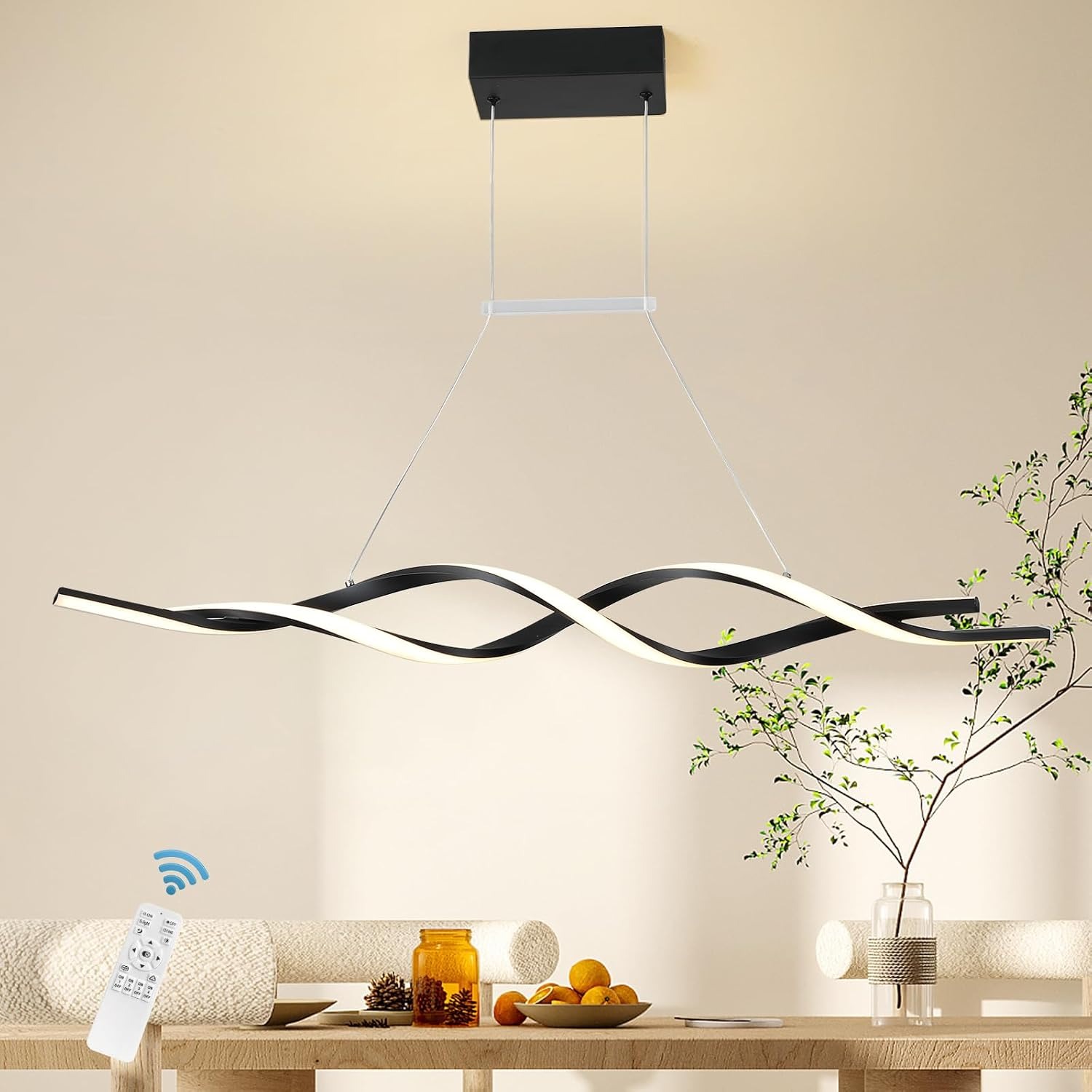
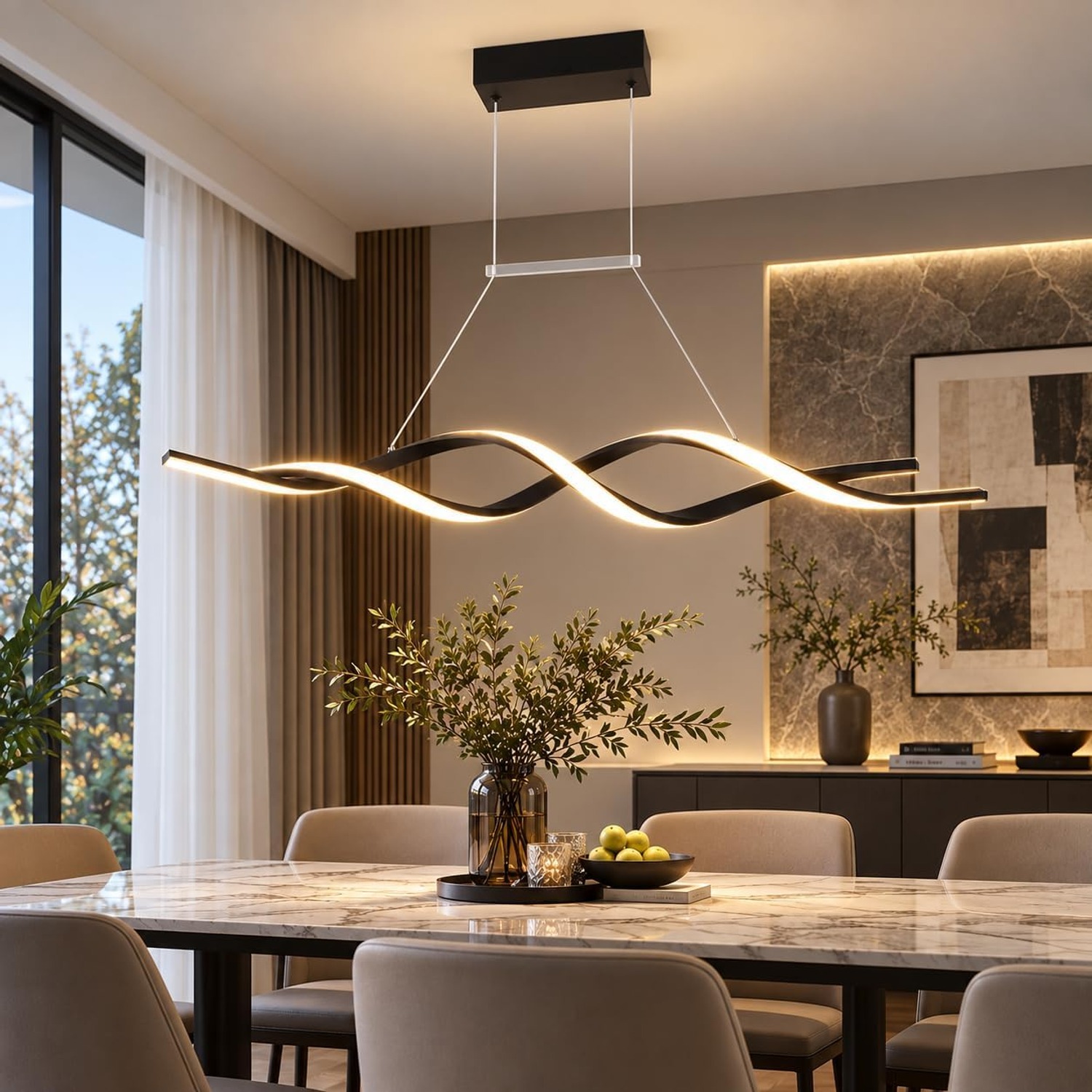
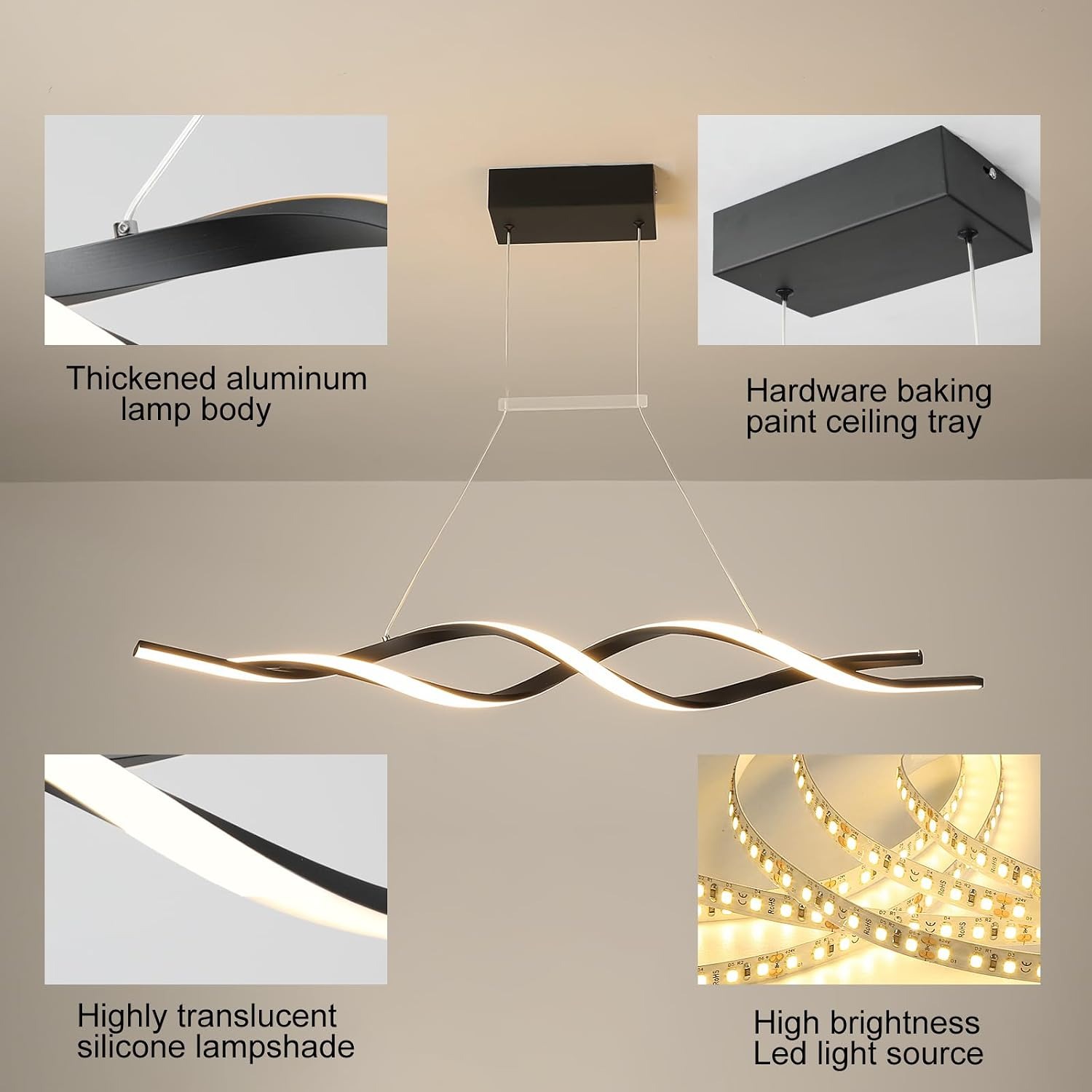
This wave LED chandelier does that job and adds a bit of personality while it is at it. The body twists along its length instead of running dead straight, so it has shadow and shape when the light is off. In a kitchen full of flat cabinet fronts and straight benchtops, that curve does a lot of work.
How it actually works
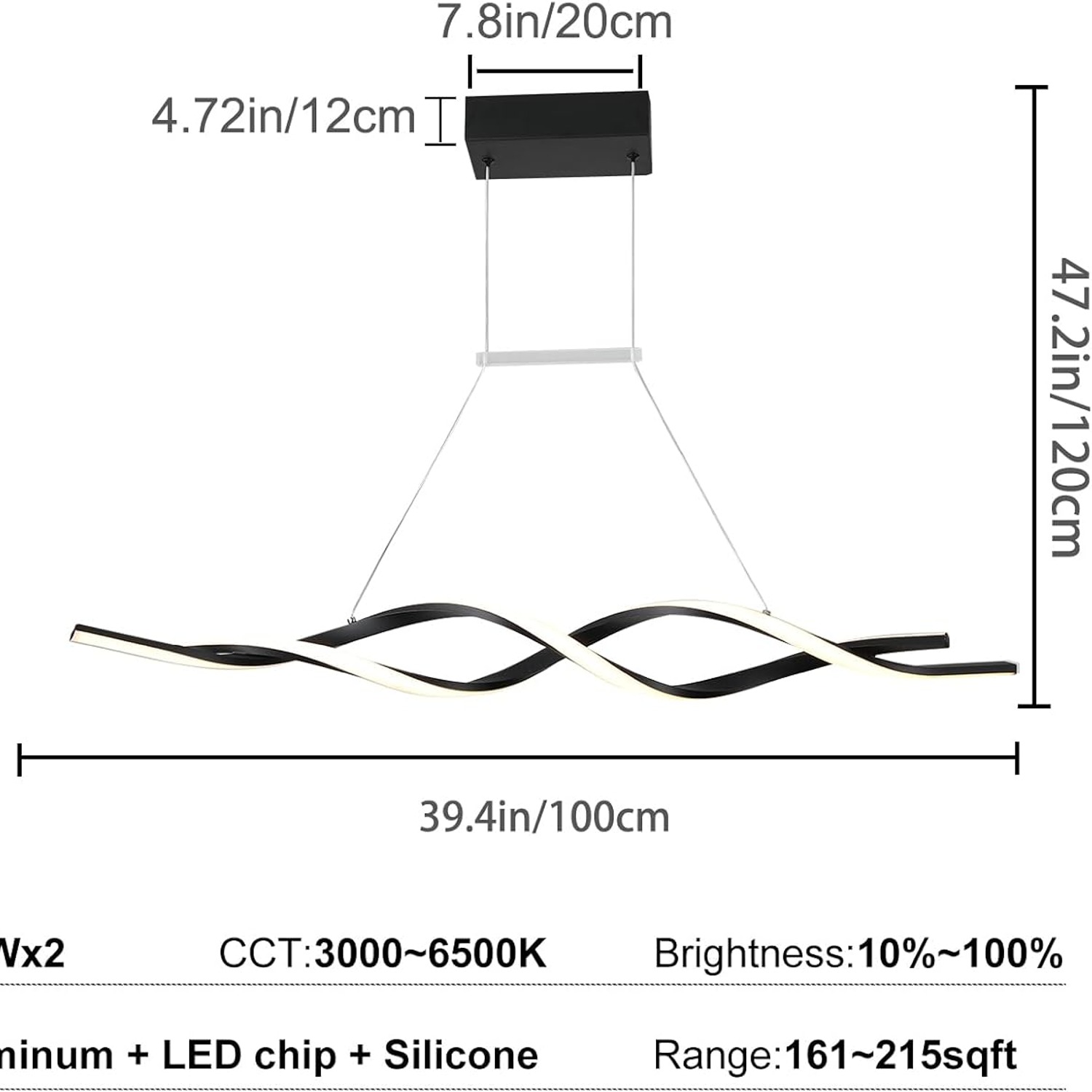
Inside the aluminium frame is a single integrated LED running the length of the fitting. It is rated at 28 watts and puts out up to 1680 lumens. An acrylic diffuser sits over the LED, which is the part that turns a strip of bright chips into a smooth glowing line. Without that diffuser you would see hot spots and get glare in the eyes of anyone sitting at the bench.
Integrated means the light source is built in rather than screwed in. There is no bulb to buy, no bulb to match, and no awkward moment six months later when you cannot remember which colour temperature you bought last time. The trade off is that you cannot swap the LED yourself when it eventually reaches the end of its life. A two year manufacturer warranty is listed.
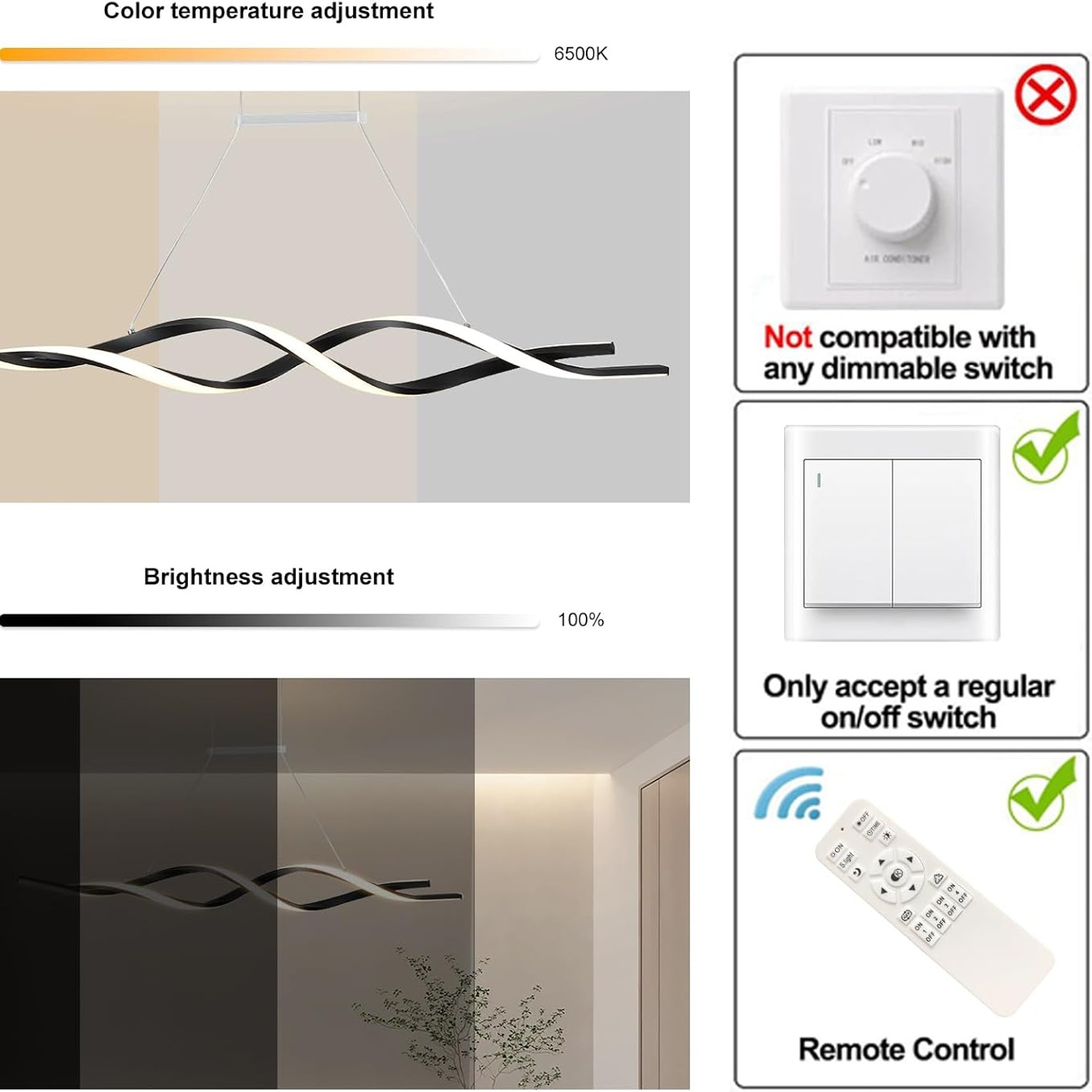
Control is by remote. You can dim it and you can change the colour temperature, with warm and white settings and a stated colour temperature of 6000 Kelvin. In practice that means two different lights in one fitting. Cooler, brighter light for cooking, when you need to read the back of a packet or check whether something is actually cooked. Warmer, dimmer light once everyone sits down.
The hanging sling adjusts too, which sounds minor and is not. Pendant height is the single thing that decides whether a light looks deliberate or accidental.
Who it suits
If you have a kitchen island between roughly 150cm and 200cm long, this is a natural fit. The usual guide is that a linear pendant should be around half to two thirds the length of the surface below it. A 100cm fitting over a 180cm island looks balanced. Over a 120cm bench it will look like it is trying to escape at both ends.
It also works over a four to six seat dining table, which tends to be similar in length. Beyond that, people use these over home office desks, along a hallway, in a bedroom as a statement piece, and in shop fitouts where a long counter needs even light.
It is indoor only and not water resistant, so rule out covered outdoor areas, bathroom zones and anywhere that takes steam directly. Hanging it straight above a cooktop is a bad idea for the same reason: grease and heat are hard on acrylic and painted finishes.
One more thing. It runs on 220 volts and is corded electric, so unless you are qualified, this is a job for an electrician. The mounting hardware is included and no assembly is required, so the install itself is quick. It is the wiring that needs a professional.
Getting the height right
This is where most people second guess themselves, so here are the numbers to start from.
Over a kitchen island, aim for roughly 75cm to 90cm between the benchtop and the bottom of the fitting. That keeps the fitting above the sight line of anyone standing on the other side, so you are not staring into a light while you talk to whoever is cooking.
Over a dining table, drop a little lower, often around 70cm to 80cm above the tabletop. Everyone is seated, so the light can come down closer without getting in the way. Hang it, then sit in every chair and check for glare before you call it done.
Ceiling height shifts both numbers. With a standard ceiling you may need to sit nearer the top of those ranges to keep headroom. With a tall or raked ceiling, you have room to drop it further, and a longer drop usually looks better than leaving a huge gap above the fitting. The adjustable sling is there exactly for this, so take ten minutes at installation to get it right rather than living with a guess.
Choosing between one fitting and two
Over an island up to about two metres, one 100cm pendant is plenty. Past that, two fittings usually look better than one long one. Space them so the gap between the two fittings matches the gap from each fitting to the end of the bench. Keep them at exactly the same height. A few millimetres of difference is surprisingly visible once you step back.
If you go with two, your electrician needs two mounting points, so flag it early. Adding a second ceiling rose after the plasterboard is finished is a much bigger job than doing both at once.
Finish, style and living with black
Black is the easy choice here, and it is the only shade colour listed. It suits kitchens with black tapware, matte black handles or dark window frames, and it holds its own against white cabinetry without disappearing.
The painted finish and acrylic diffuser both want gentle treatment. Switch the light off, let it cool, and wipe it with a soft dry or slightly damp cloth. No solvents, no abrasive pads, no spray cleaners straight onto the fitting. Acrylic clouds when it is attacked with the wrong chemical, and once it clouds it stays that way.
In a kitchen, a wipe every few weeks keeps airborne cooking film from building up on the top surface. It takes less time than wiping the splashback.
What to check before you order
Measure the bench or table length first, then your ceiling height, then the drop you want. Those three numbers tell you whether a 100cm fitting is right and how much sling you need. Confirm your local supply matches the 220 volt rating, and book your electrician before the parcel arrives so it does not sit in a box for a month.
Think about whether you want the same light for cooking and eating. If you do, the adjustable colour temperature and dimming are the features that earn their keep here. If you only ever want warm light at a fixed level, you are paying for flexibility you will not use, and a simpler fitting would do.
The short version
A 100cm wave LED chandelier that puts light along the surface you actually use, not in the middle of the floor. Integrated 28 watt LED, up to 1680 lumens, dimmable with adjustable colour temperature, all handled from a remote. Aluminium and acrylic in black, 1.55kg, with an adjustable sling for low and high ceilings and mounting hardware in the box.
It suits an island or dining table of roughly 150cm to 200cm. It is indoor only and needs an electrician to wire in. Get the hanging height right and it does two jobs well, bright and functional when you are cooking, soft and quiet when you sit down.