
The complete guide
How to Choose a Bedroom Pendant Light That Actually Works Beside the Bed
The problem with bedside lamps
Most bedside tables are small. Once you have a book, a glass of water, a phone on charge and maybe an alarm clock, the lamp is the thing taking up the most room. And it is usually the thing you knock over when you reach for the water at 2am.
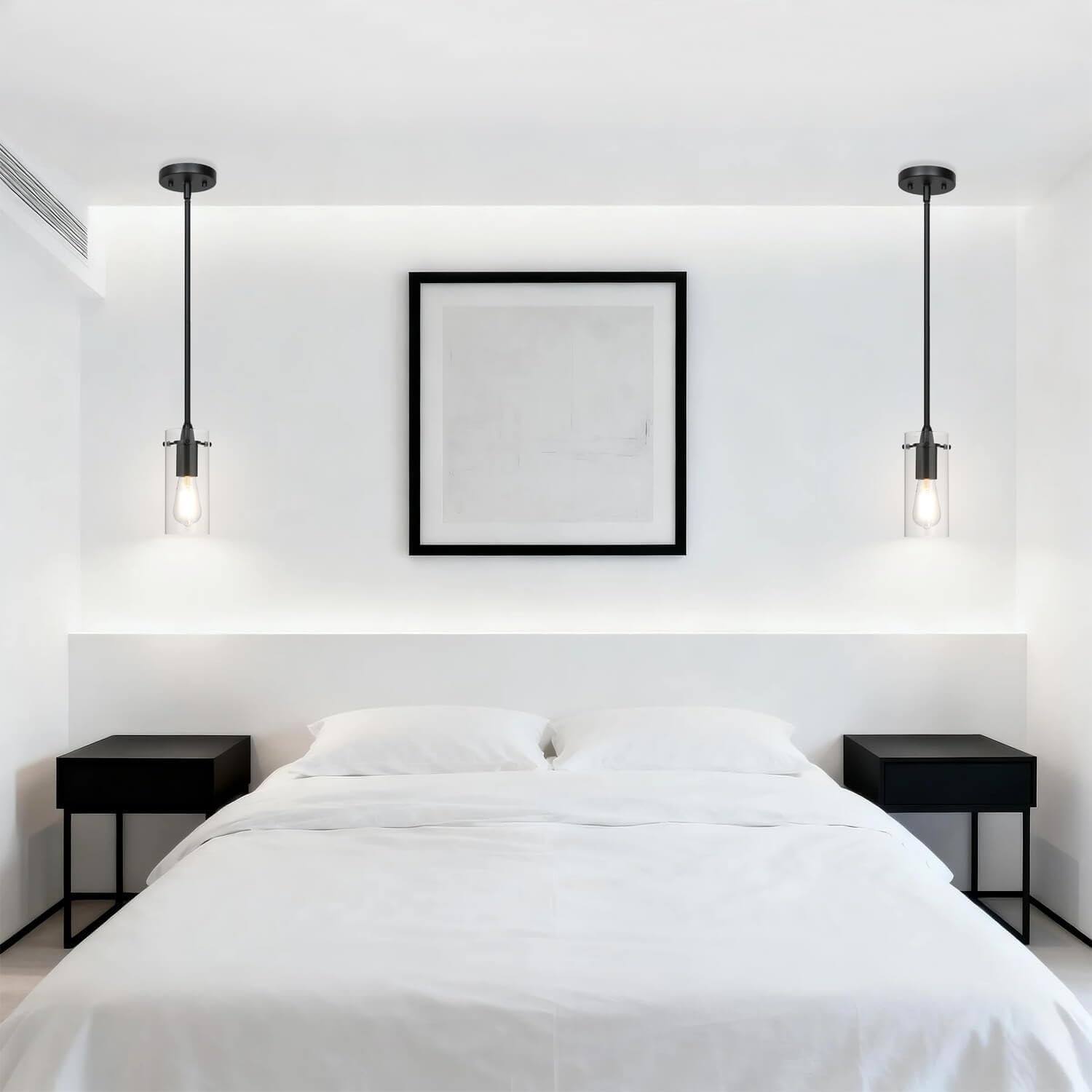
Hanging the light fixes that. A pendant drops the glow from above, leaves the whole table surface free, and puts the light roughly where your book is rather than off to one side. It also makes a small bedroom feel taller, because your eye follows the rod up instead of stopping at a lampshade.
The catch is that a ceiling light is a commitment. You need to get the height right, you need to think about the ceiling you are mounting to, and in most places you need an electrician. This guide walks through all of it.
How this pendant works
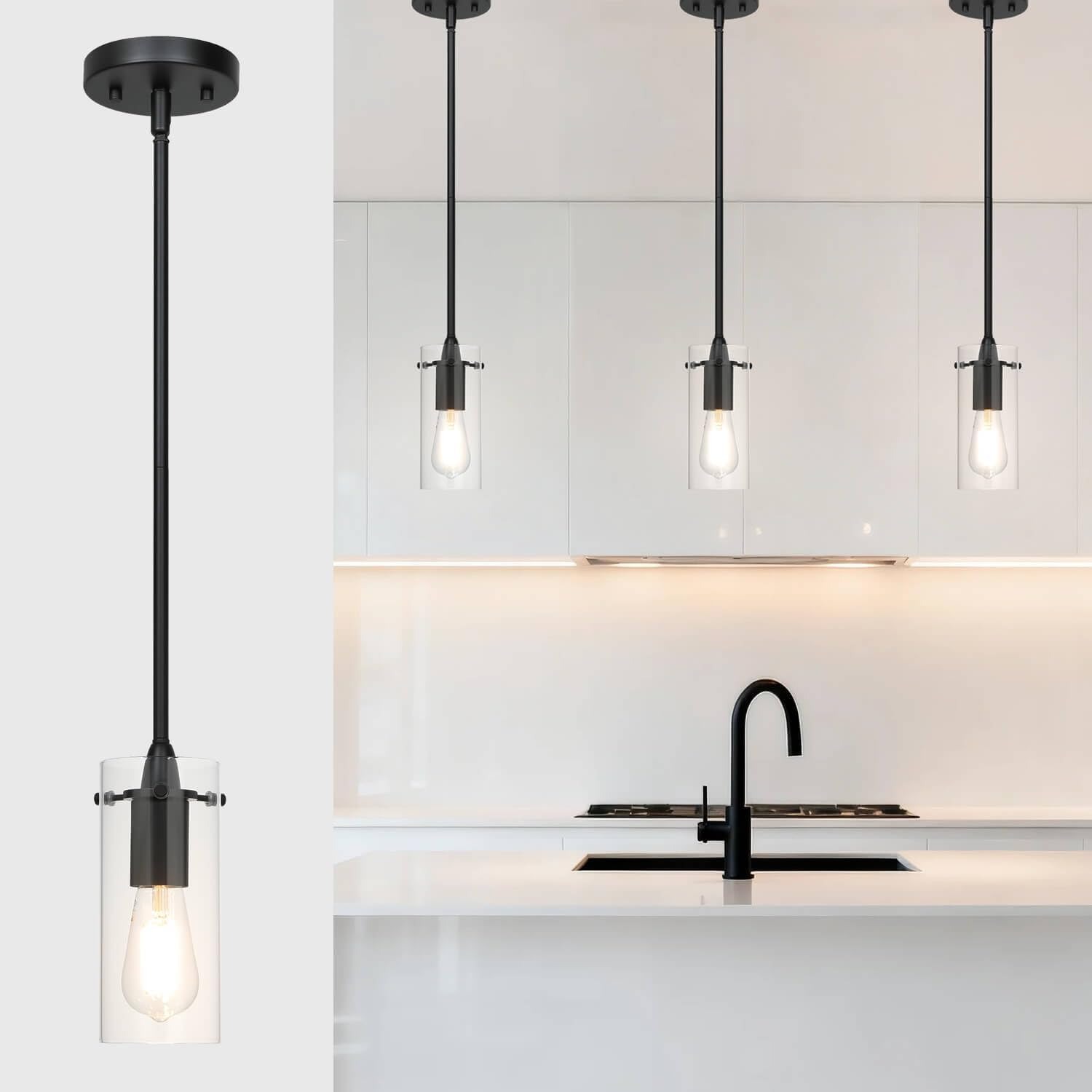
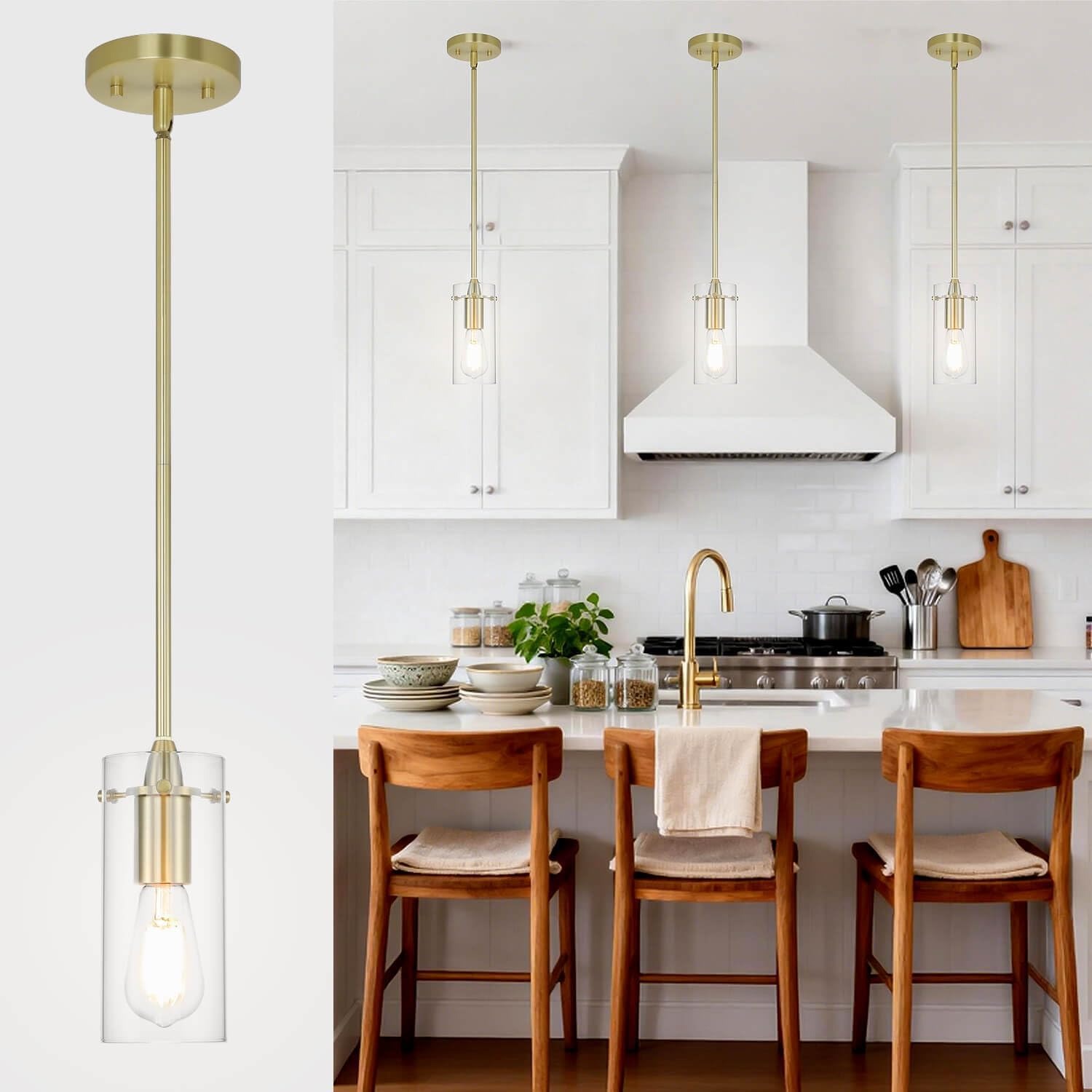
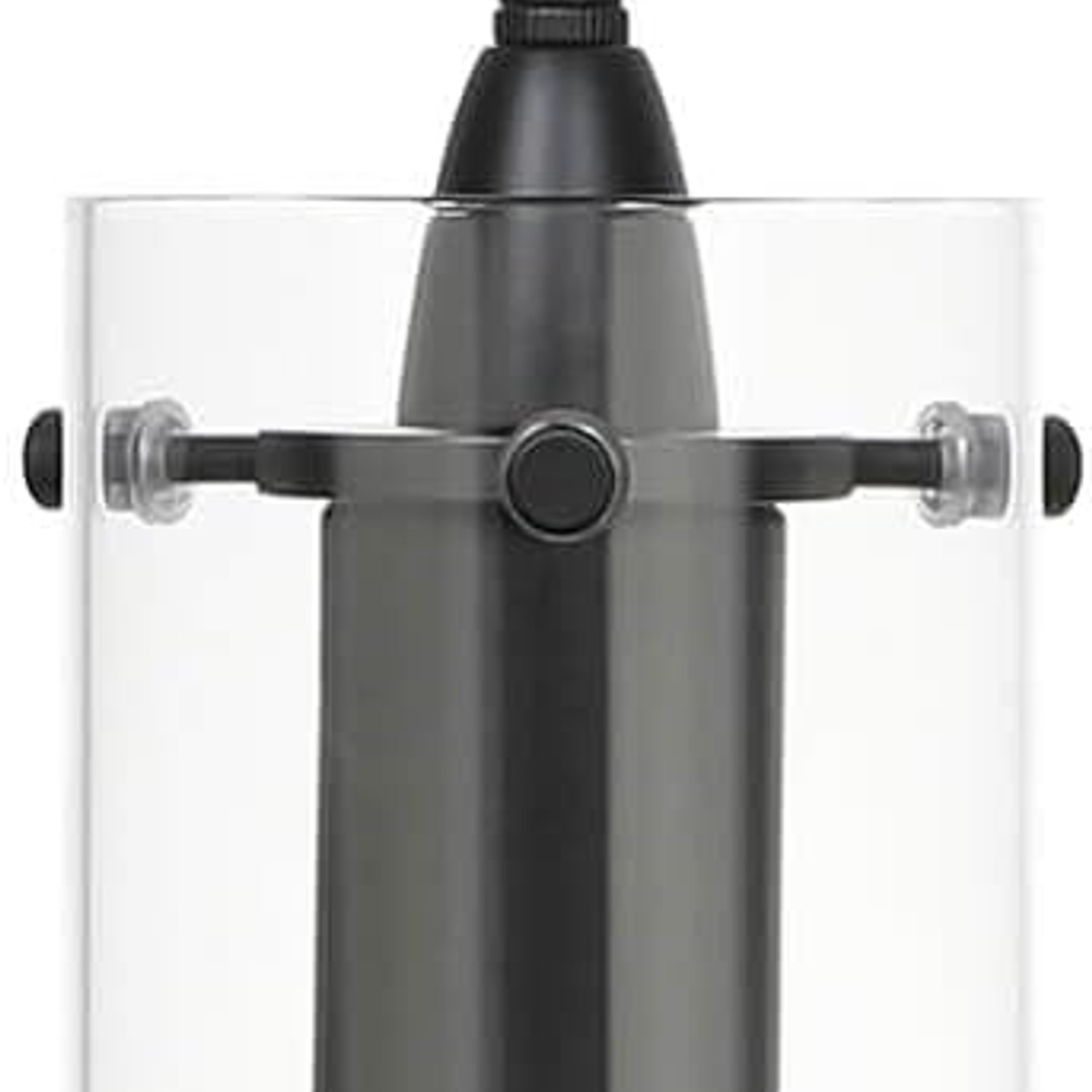
The fitting is a single-light pendant. A matte black iron frame holds a clear round glass shade, and inside sits one E27 bulb rated to a maximum of 60 watts. The whole thing weighs 1.41 kg, which is light as ceiling fittings go.
It is hardwired and runs on 240 volts, so there is no plug and no visible cord trailing to a wall socket. That is part of the appeal. Nothing dangles, nothing gets caught.
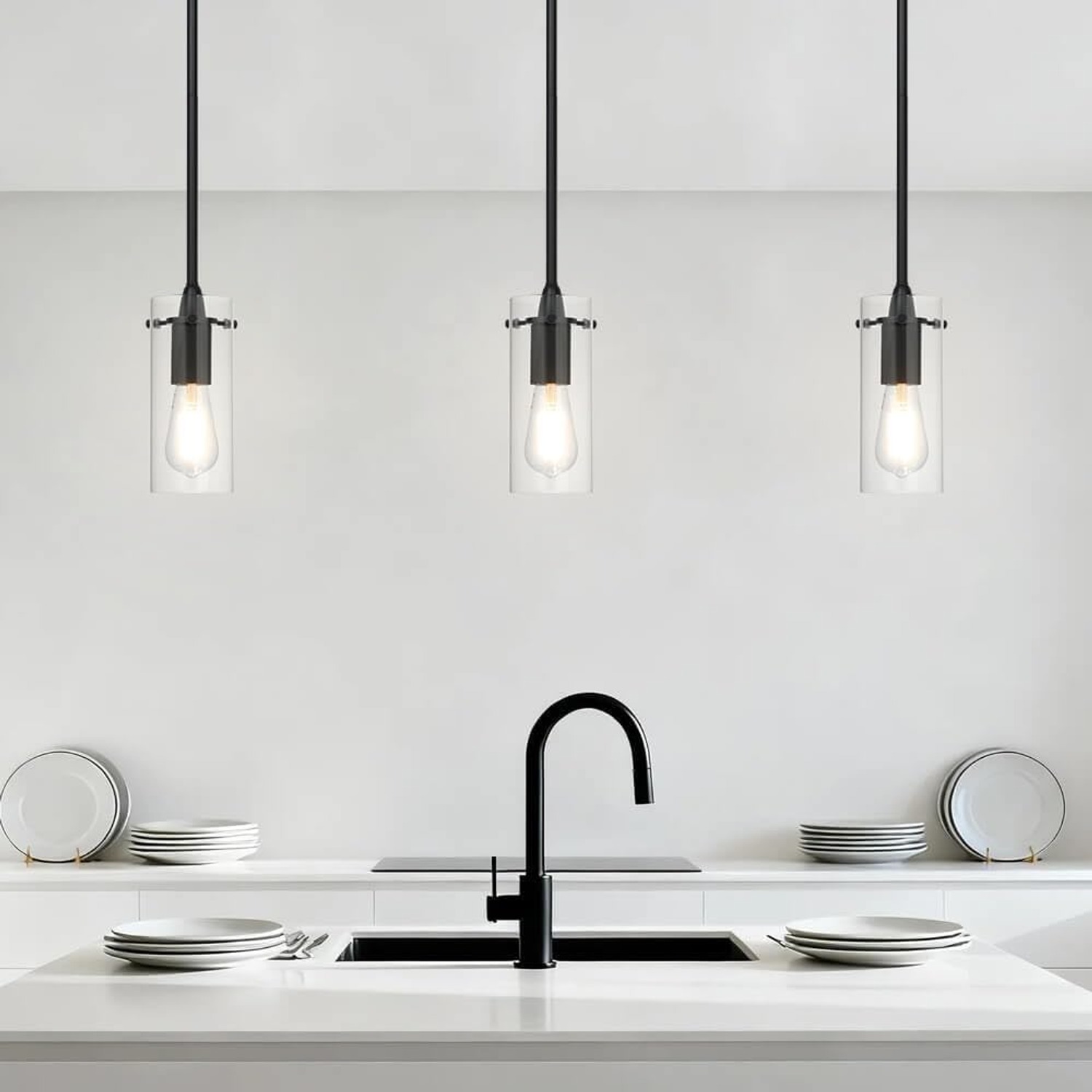
The clear glass matters more than it sounds. An opaque shade pushes light straight down in a narrow cone, which is great for reading but can feel like a spotlight in a bedroom. Clear glass lets light out in all directions while still giving the bulb a frame and a bit of visual weight. You see the bulb, so choose one you like the look of. Filament-style LEDs suit this kind of fitting well.
Brightness is adjustable if you set it up for it. The pendant can be dimmed, but only when you pair a dimmer-compatible bulb with a compatible dimmer switch. Neither comes in the box. If you want a dimmable pendant light, sort the bulb and switch out at the same time as the install, because it is much easier to do in one visit.
Getting the height right
Five rods come with the fitting. Three are 10 inches, one is 8 inches, and one is 4 inches. You pick and combine them to build the drop you want, then mount the canopy. The listed overall height is 135 cm with everything assembled.
For a bedside hanging light, a good starting point is to leave about 50 to 60 cm between the bedside table surface and the bottom of the shade. That puts the glow near shoulder height when you are sitting up in bed. If your headboard is tall or your bed sits high, shorten the drop a little.
Over a kitchen island it is a different number. Most people aim for 75 to 90 cm between the benchtop and the base of the pendant. Any lower and it blocks the view across the island. Any higher and the light spreads too thin to be useful for prep work.
Over a dining table, somewhere around 75 to 85 cm above the tabletop usually works, so people on opposite sides can still see each other.
Measure before you order rods in your head. Write down your ceiling height, the height of the surface below, and work backwards. It only takes five minutes and it saves a second trip up the ladder.
Sloped and angled ceilings
This is where a lot of pendants fail. On a sloped ceiling, a fixed canopy makes the pendant hang at an angle, which looks wrong and is impossible to ignore once you have seen it.
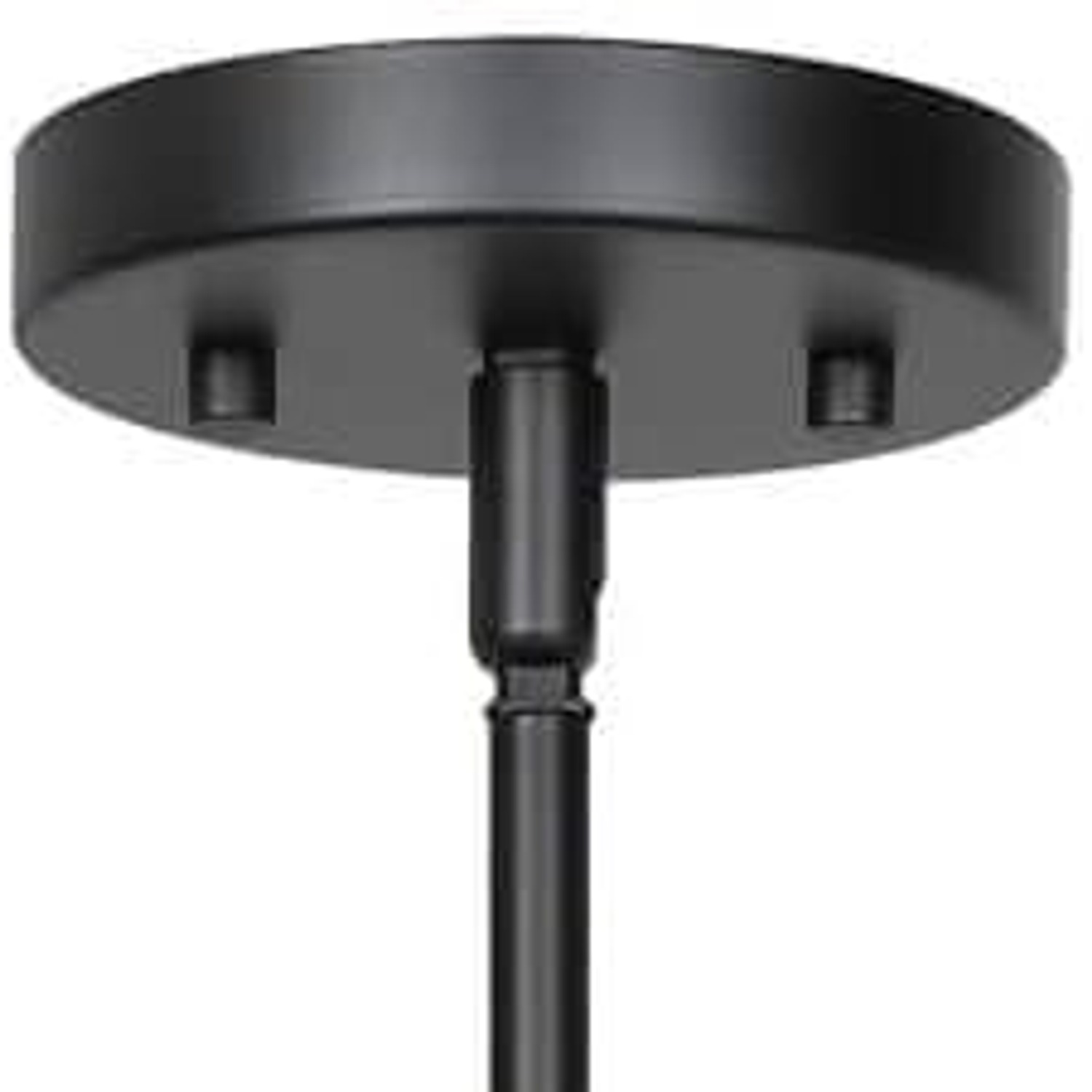
This fitting includes a swivel adapter at the top. The canopy follows the ceiling angle while the rod stays vertical. That makes it workable in attic conversions, loft bedrooms, extensions with raked ceilings, and anywhere a previous renovation left you with a slope.
If your ceiling is very steep, mention it to your electrician before the install. They will check the swivel range against your actual angle.
Who it suits
It suits anyone who wants a clean, simple look rather than something ornate. The matte black and clear glass combination sits comfortably in contemporary, modern and lightly industrial rooms, and it does not fight with other finishes. Black hardware on a door or a window frame ties in nicely.
It suits small bedrooms where table space is tight, and bedrooms where you read at night and want light coming from above rather than from a lamp at eye level.
It suits renters less well, because it is hardwired. If you cannot change the ceiling wiring, this is not the fitting for you.
It is also not for damp rooms. The maker's description is clear that it is indoor use only and not water resistant. That rules out bathrooms, laundries, enclosed outdoor areas and anywhere with steam.
Choosing the right bulb
Since the bulb is not included, you get to make this call yourself. A few things to think about.
Colour temperature sets the mood. For a bedroom, something warm around 2700K to 3000K keeps the light soft and easy on the eyes at night. Cooler white can feel clinical when you are winding down, though it works better over a kitchen island.
Wattage is capped at 60 watts, and with LEDs you will rarely get close. A warm white LED at 6 to 9 watts gives plenty of output for a bedside. If you want more light over a bench, step up a little.
If you plan to dim it, buy a bulb that clearly says dimmable on the box and pair it with a switch the bulb maker lists as compatible. Mismatched dimmers and LEDs cause flicker and buzzing, and it is almost always a compatibility issue rather than a fault with the light.
The listed energy efficiency class for the fitting is A, and the light colour is described as warm white.
Installation and care
Assembly is required. You build the rod length, fit the canopy, and attach the shade. All mounting hardware is included.
The electrical side is where you should stop and call a professional. The fitting is hardwired at 240 volts, and in most regions that work must be done by a licensed electrician. Power off at the board is the absolute minimum before anyone touches anything.
Once it is up, care is simple. Switch it off and let the bulb cool, then wipe the glass with a lint-free cloth. Put glass cleaner on the cloth, not on the fixture, so nothing runs into the socket. Use a soft dry cloth on the black metal and skip the abrasives, because scouring pads leave shiny marks on matte paint.
Check the rod joints and canopy screws once or twice a year. They rarely move, but it takes ten seconds to be sure.
The maker also notes that replacement parts can be requested if a shade arrives damaged or a component is missing from the box. Check everything before the electrician starts.
The short version
If you want to free up your bedside table and get softer, better-placed reading light, a pendant beats a lamp. This one gives you a matte black frame, a clear glass shade, five rods for setting the drop, and a swivel adapter so it hangs straight on sloped ceilings. It takes a standard E27 bulb up to 60 watts and will dim if you add a dimmer bulb and matching switch.
Measure your drop first, buy the bulb at the same time, and get an electrician to wire it in. Then the only job left is deciding which side of the bed gets the first one.