

The complete guide
How To Choose A Frosted Globe Sputnik Chandelier
The problem with most ceilings
Walk into a lot of homes and the ceiling is the most ignored surface in the house. There is a flat panel, a batten or a bowl-shaped fitting that someone chose because it was cheap and the room needed light. It works. It also makes the whole room feel unfinished, the way a nice outfit looks off with the wrong shoes.
Lighting is the one change that affects every hour you spend in a room. It sets how big the space feels, how warm the colours look and whether people want to sit and stay. A frosted glass sputnik chandelier fixes two problems at once. It gives the ceiling something to look at, and it spreads light from eight points instead of one, so the room fills evenly rather than glaring from the middle.
What a sputnik chandelier actually is
The name comes from the satellite. Arms shoot out from a central hub in every direction, ending in bulbs or shades, and the whole thing looks like a star or an exploding diagram. Designers started making these in the 1950s and they never really went away, because the shape is simple and confident.
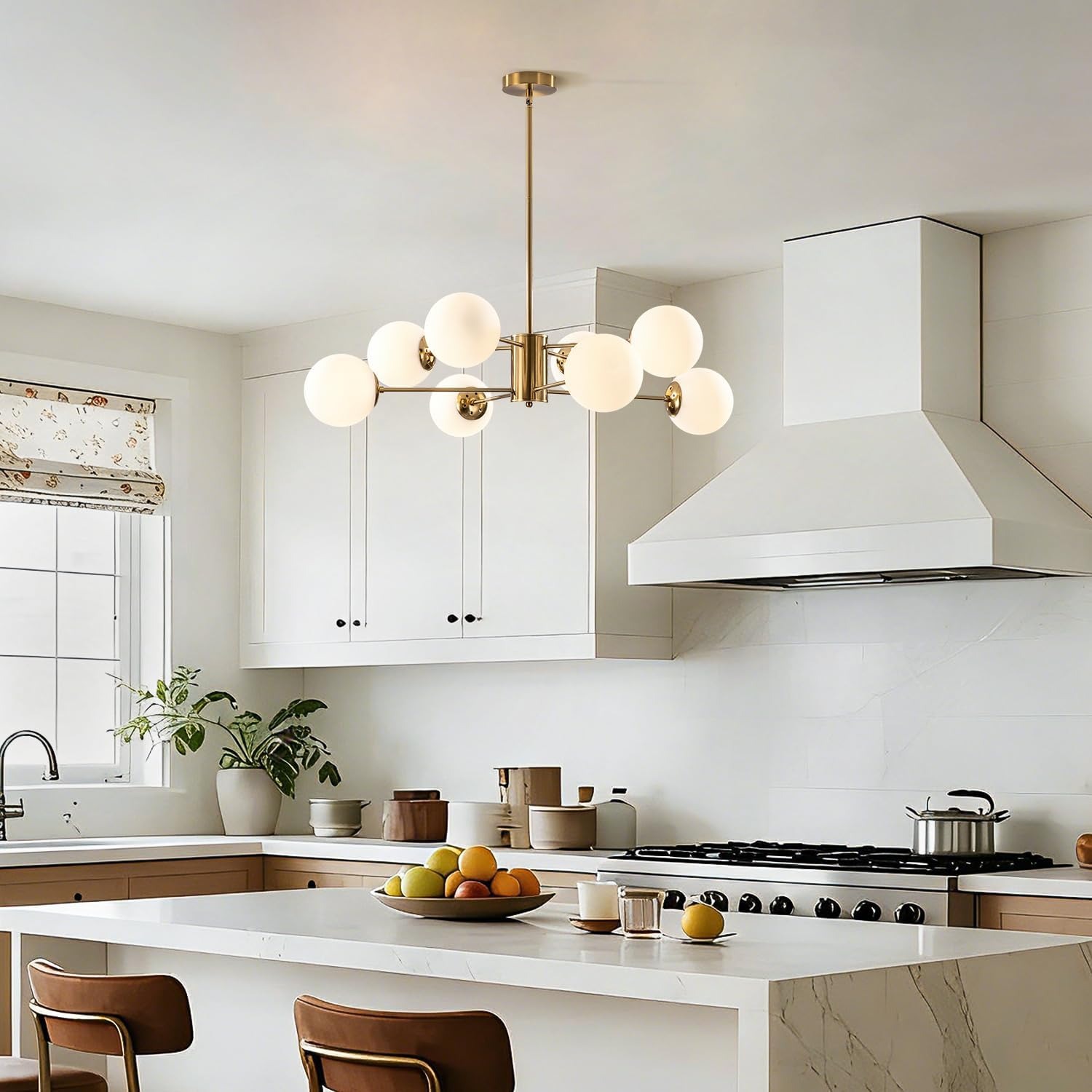
The original versions used bare bulbs. They look great in a photograph and less great when you are sitting under them at dinner with the filament burning into your retinas. Frosted globes solve that. Each arm ends in a white glass sphere, and the glass does the work of softening the light before it reaches you. You keep the sharp geometry of the frame while the light itself goes gentle.
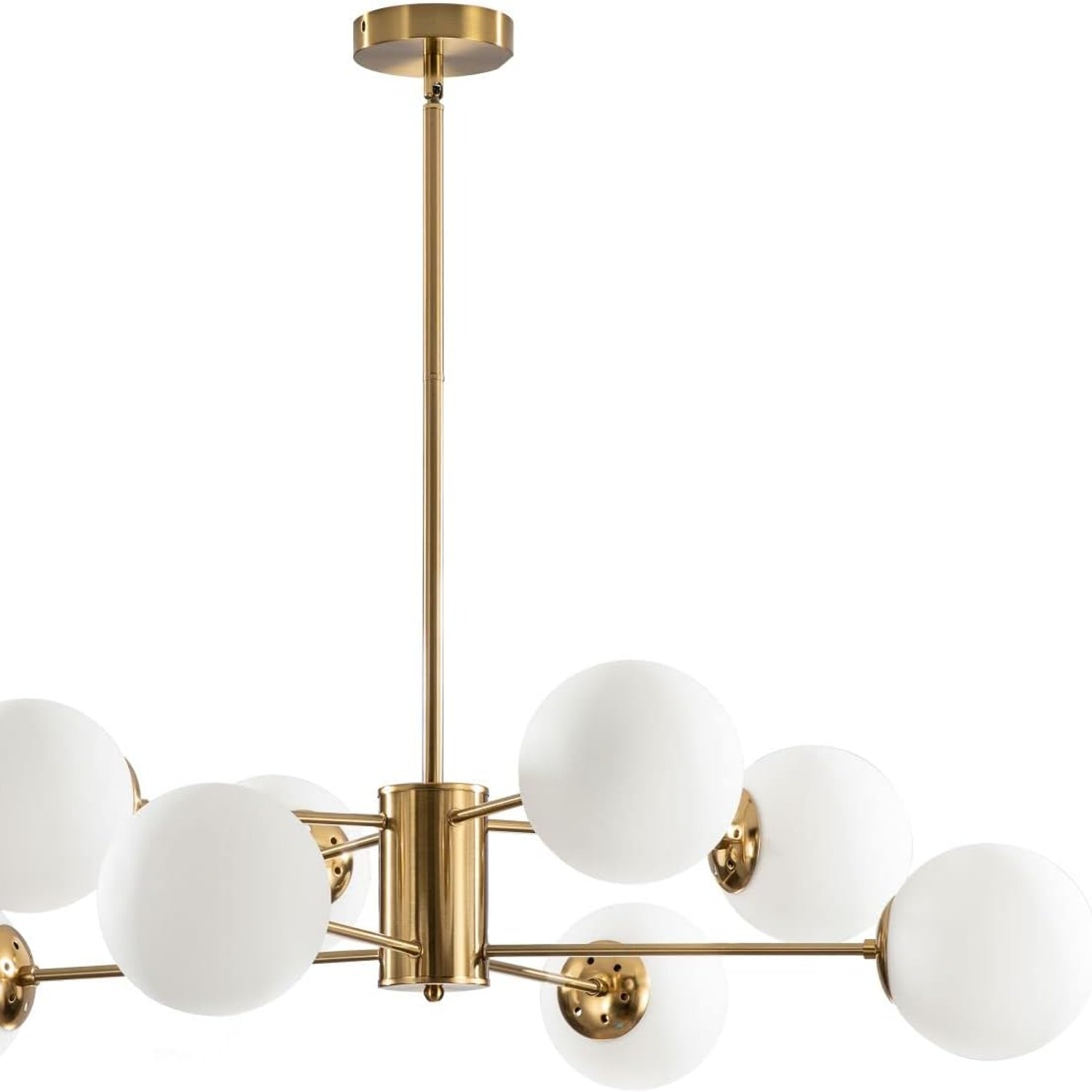
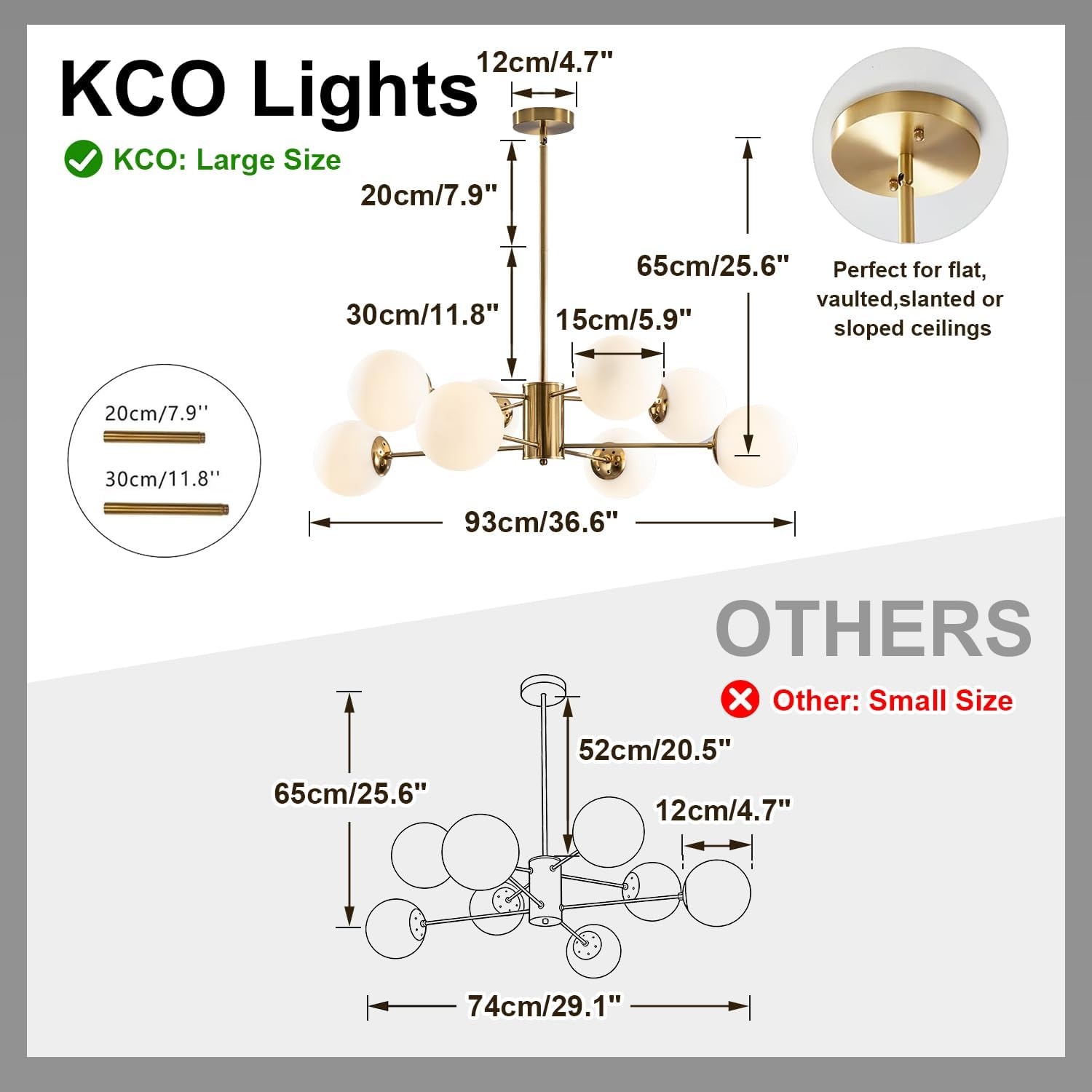
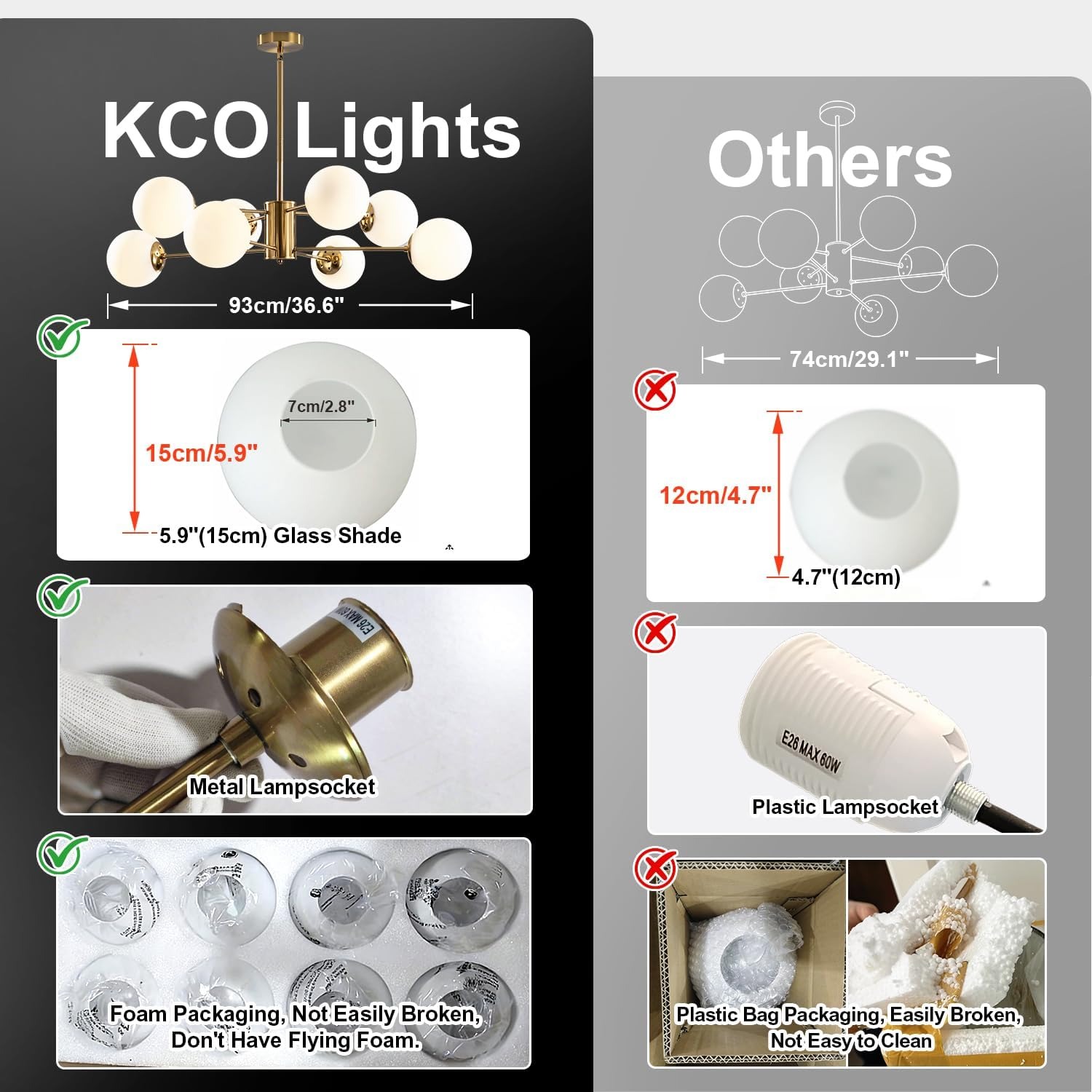
This particular fixture has eight heads on crossing arms around a central post, with a brushed gold metal frame and white glass shades. The listed size is 93 cm wide and 65 cm tall, which means it is close to a metre across. That is a real statement piece, not a token light.
How it performs as a light source
Numbers are worth looking at before you fall in love with the shape. This chandelier is listed at 4000 lumens maximum across all eight heads, in a warm white tone at 3000 Kelvin. It takes E26 base bulbs rated at 40 watts.
Four thousand lumens is enough to be the main light in a decent-sized dining or living room. Warm white at 3000 Kelvin is the tone most people describe as cosy. It is softer than daylight bulbs, leans slightly golden, and it makes timber floors, brass hardware and warm paint look richer. Cool white would make the same room feel more like an office.
The practical tip here is to buy all eight bulbs at once, from the same brand and in the same colour temperature. Mixing bulbs is the quickest way to make an expensive fixture look cheap, because the eye picks up on one globe glowing slightly yellower than its neighbours. If you want the option to drop the light level in the evening, choose bulbs labelled dimmable and ask your electrician about fitting a compatible dimmer at the wall.
Getting the height right
This is where most chandelier purchases go sideways. People focus on the width and forget the drop, then end up with a fixture that either floats uselessly near the ceiling or hangs low enough to headbutt.
The good news is that this one is built for adjustment. Extension rods are supplied, and a sloped ceiling adapter comes in the box, so it can be mounted under a flat ceiling or a raked one. Angled ceilings are usually the hardest case, because a standard canopy will leave the fixture hanging crooked. An adapter sorts that out.
For a dining table, the usual guide is 75 to 90 cm of clearance between the tabletop and the lowest point of the fixture. Taller ceilings can take a longer drop. In a hallway or a room where people walk underneath, keep the bottom of the chandelier well above head height, with a comfortable margin for tall visitors.
The best way to check is to sit down at the table while the electrician holds the fixture at the proposed height. Look across at where someone's face would be. If the light is in your eyes, it is too low. That two-minute check saves having to redrill the ceiling later.
Matching it to your room
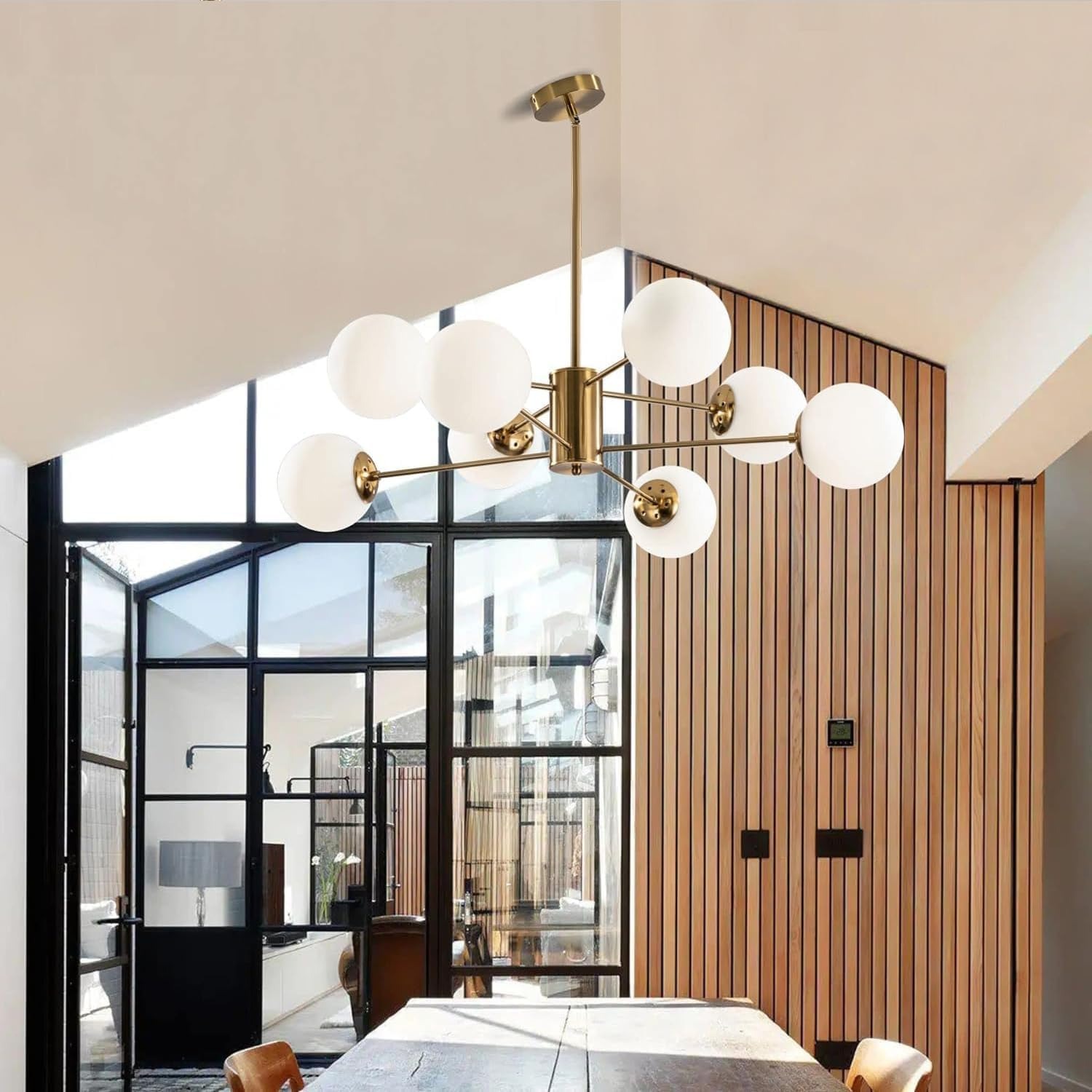
A metre-wide fixture needs space around it. In an open-plan living area, a wide hallway, a generous dining room or a stairwell void, it will look right at home. Over a long dining table it works particularly well, because the width of the frame mirrors the width of the table surface without touching the walls.
In a smaller room, you can still make it work, but be honest about the proportions. If the fixture takes up most of the visual space above the table, that can read as deliberate drama or as cramped, depending on the ceiling height. Low ceilings under about 2.4 metres are the main risk, since even the shortest rod configuration brings the globes down into the room.
Style-wise, the gold and white combination is forgiving. It sits naturally in mid century modern lighting schemes, where the starburst shape belongs. It also works in plain contemporary rooms, where the warm metal adds something against white walls and pale timber. Dark paint colours make the gold pop harder, which some people love. If every other metal in your room is chrome or black, you will need to decide whether you want the gold as a contrast or whether you would rather keep the finishes consistent.
Where it should not go
The fixture is listed as indoor use only and not water resistant. That rules out bathrooms, laundries, covered patios and any space that collects steam or spray. Fixtures that are not moisture rated can corrode internally and become a genuine hazard, so this is not a rule worth bending.
It is also a hard-wired ceiling mount, which in most countries means a licensed electrician has to do the connection. You can unpack it, check the parts and assemble the arms and globes yourself, but the wiring and the ceiling fixing belong to a professional. Tell them it is a large metal and glass fixture so they can check the mounting point is strong enough.
Unpacking and caring for it
Open the carton carefully and check every globe before the packaging goes out. Glass travels well when it is packed properly, but transit damage happens, and it is much easier to claim a cracked shade while the box is still sitting there. Count the parts against the manual too. The maker includes the chandelier, the accessories and the manual.
Once it is up, care is simple. Switch off at the wall, let the bulbs cool, then dust the frame and globes with a dry microfibre cloth. Fingerprints come off with a cloth lightly dampened with water or glass cleaner, sprayed onto the cloth and not onto the fixture. Keep abrasive pads and strong solvents away from the brushed finish. Every few months, give the globes and fittings a gentle check to make sure nothing has worked loose.
The short version
This is a large, eight-light frosted globe chandelier in brushed gold and white, about a metre across, designed to be the main light and the main feature in a room. The frosted shades keep the glare down, the warm white 3000 Kelvin tone keeps the mood relaxed, and 4000 lumens is plenty for a dining or living space.
Buy it if you have the ceiling height, the floor space and a room that deserves something better than a flat panel. Check your drop before install day, order eight matching E26 bulbs, keep it out of wet rooms, and get an electrician to hang it. Do those four things and you will have a ceiling people actually look at.