
The complete guide
How to Choose a Round Black Chandelier for Your Dining Room
The problem with most dining room lighting
Walk into a lot of homes and the dining light is an afterthought. A small pendant hangs dead centre over the table, maybe 30 cm across, and it does one job badly. It makes a bright circle on the middle of the table and leaves everything else dim. People sitting at the ends of the table are lit from above in a way that throws shadows under their eyes. The food at the edges looks grey.
That happens because of geometry, not quality. A small light source directly overhead sends most of its output straight down into a narrow cone. The further out you go, the less light reaches the surface. You can turn up the wattage and the hot spot just gets harsher.
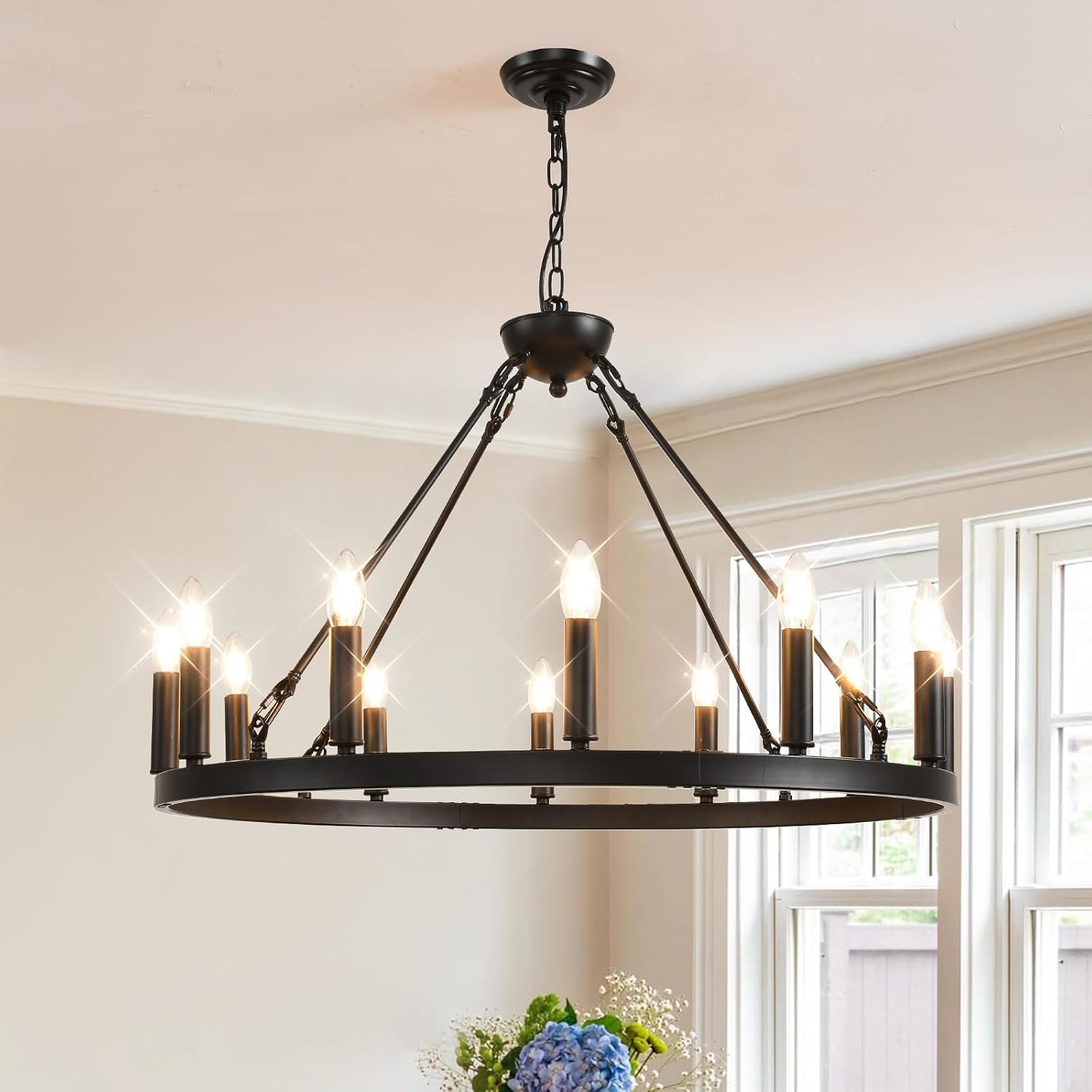
A wide ring solves the problem by moving the light sources outward. With twelve sockets spread around an 80 cm circle, the light comes from twelve points sitting over different parts of the table at once. The result is softer, flatter and much easier to eat and talk under. It is the same reason a long table in a restaurant usually has a row of lights rather than one big one in the middle.
What this fixture actually is
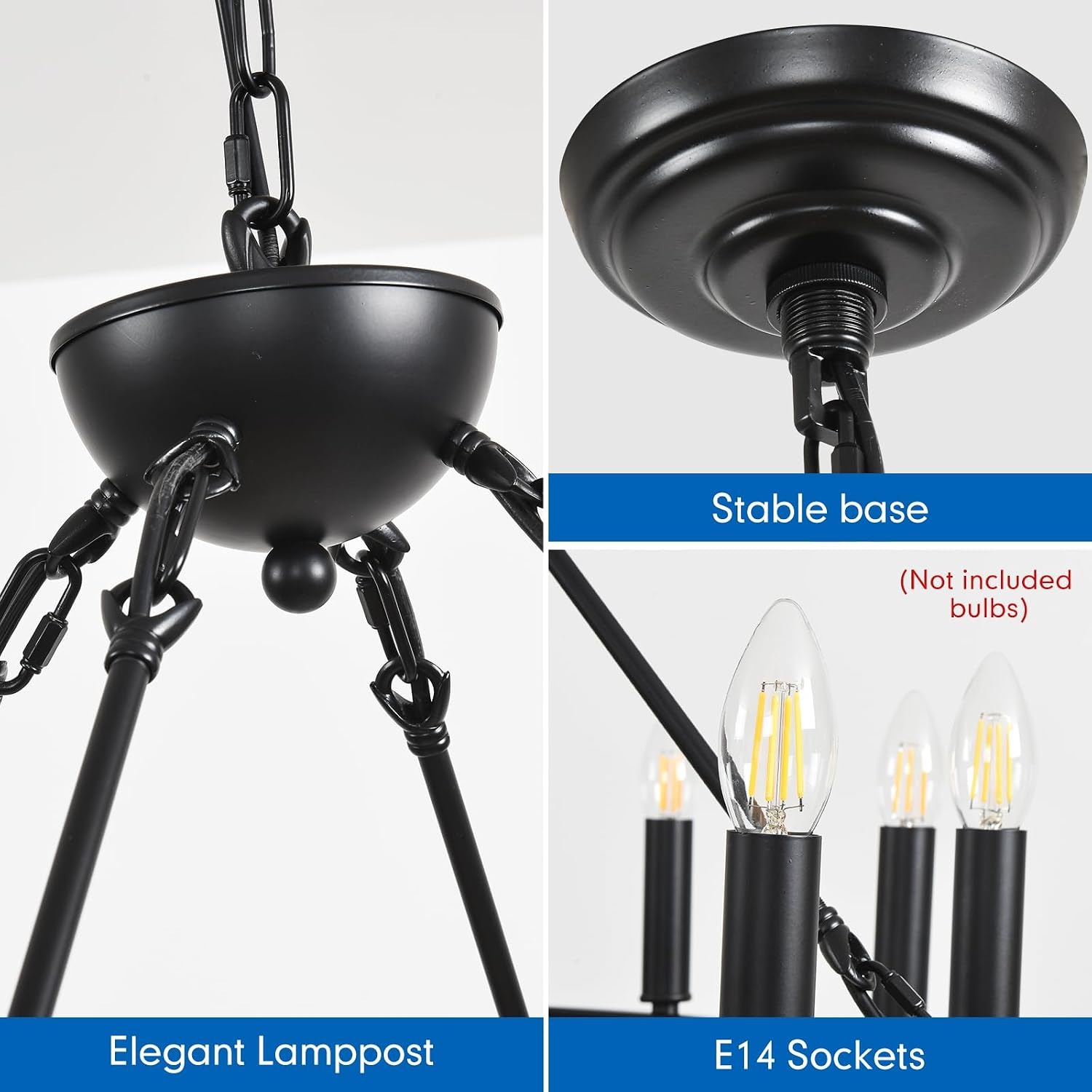
The frame is a single open ring, 80 cm across and 50.8 cm tall overall, made from aluminium with a painted black finish. The maker lists an anti-rust feature on the finish. Aluminium is a practical choice at this diameter because it keeps the weight manageable, which matters both for the ceiling mount and for whoever is holding it up during installation.
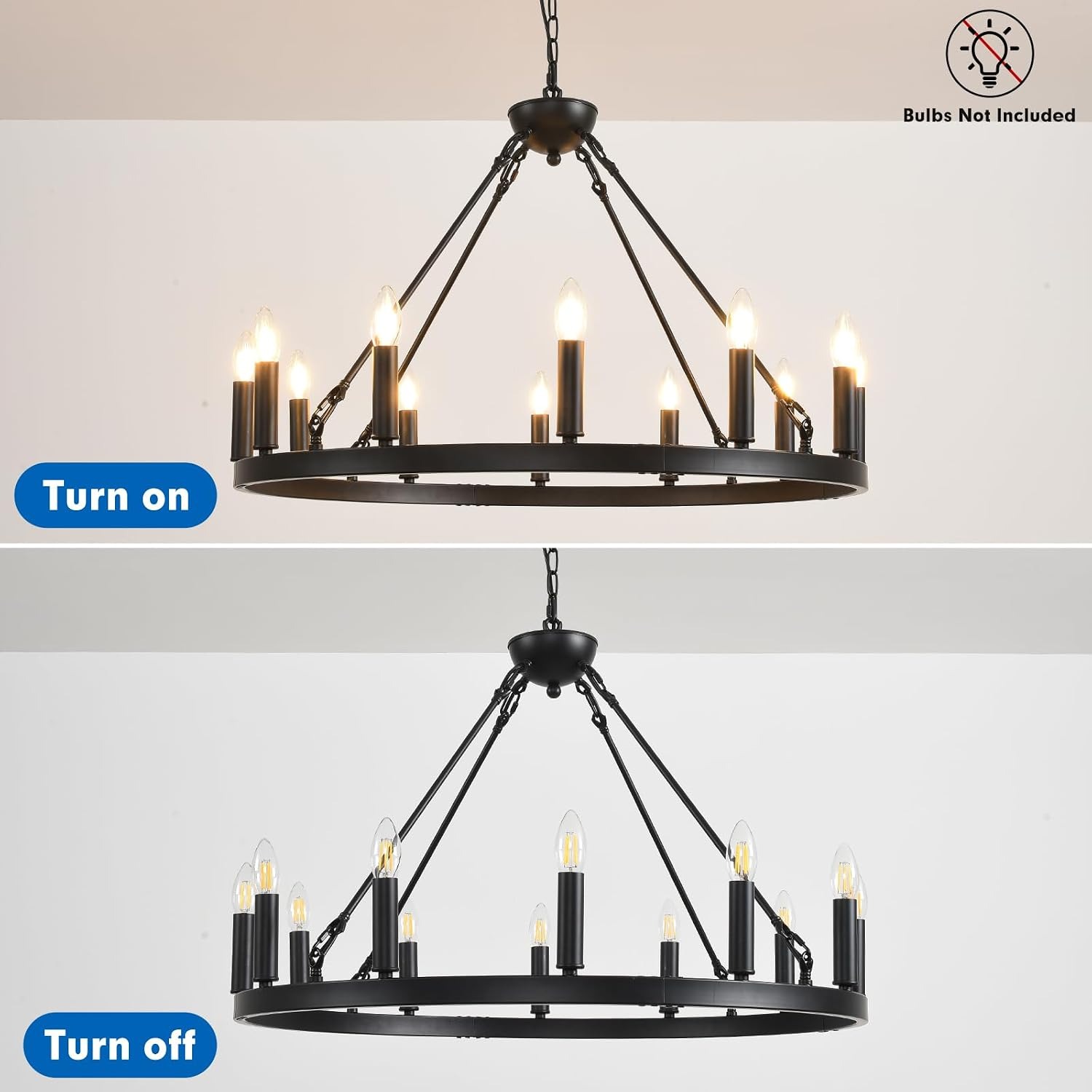
It takes twelve E26 bulbs. That is the standard medium screw base, so bulbs are easy to find anywhere. Bulbs are not listed as included, which is normal on a fixture like this and honestly better for you. Twelve sockets give you a lot of say in the final look, and nobody wants to pay for a set of bulbs they will immediately swap out.
Power is 220 volt AC, corded electric, and the maker's description specifies incandescent, warm white light. It is a ceiling mount, flush installation, with mounting hardware included and no frame assembly needed. It is rated for indoor use and is not water resistant.
Choosing the right bulbs
This is where you control the whole character of the fixture, so it is worth a few minutes of thought.
Clear filament bulbs give you the classic look. The glowing wire is visible, the frame reads industrial, and the light has a lot of sparkle. The trade-off is glare. If people sit facing the fixture at eye level, clear bulbs can be uncomfortable after a while. They work best when the chandelier hangs well above sightlines or when you run them on a dimmer.
Frosted or opal bulbs diffuse the light and remove most of that glare. You lose some of the vintage drama but gain comfort, which usually wins in a room where people linger over dinner. For a matte black pendant light over a family table, frosted is often the smarter pick.
On brightness, resist the urge to go bright on all twelve. Twelve moderate bulbs will outperform twelve strong ones for atmosphere, and you will use the room more. If you want flexibility, fit dimmable bulbs and pair them with a compatible wall dimmer. Just check that the bulbs are explicitly marked dimmable, because many LEDs are not.
Getting the size and height right
Two numbers decide whether a large round chandelier looks deliberate or looks like a mistake.
The first is diameter against your table. An 80 cm ring suits a table roughly 150 cm to 220 cm long, or a standard kitchen island. You want the fixture clearly narrower than the surface below it, so nobody reaching for the water jug meets a bulb. If your table is under about 120 cm long, this fixture will dominate the room.
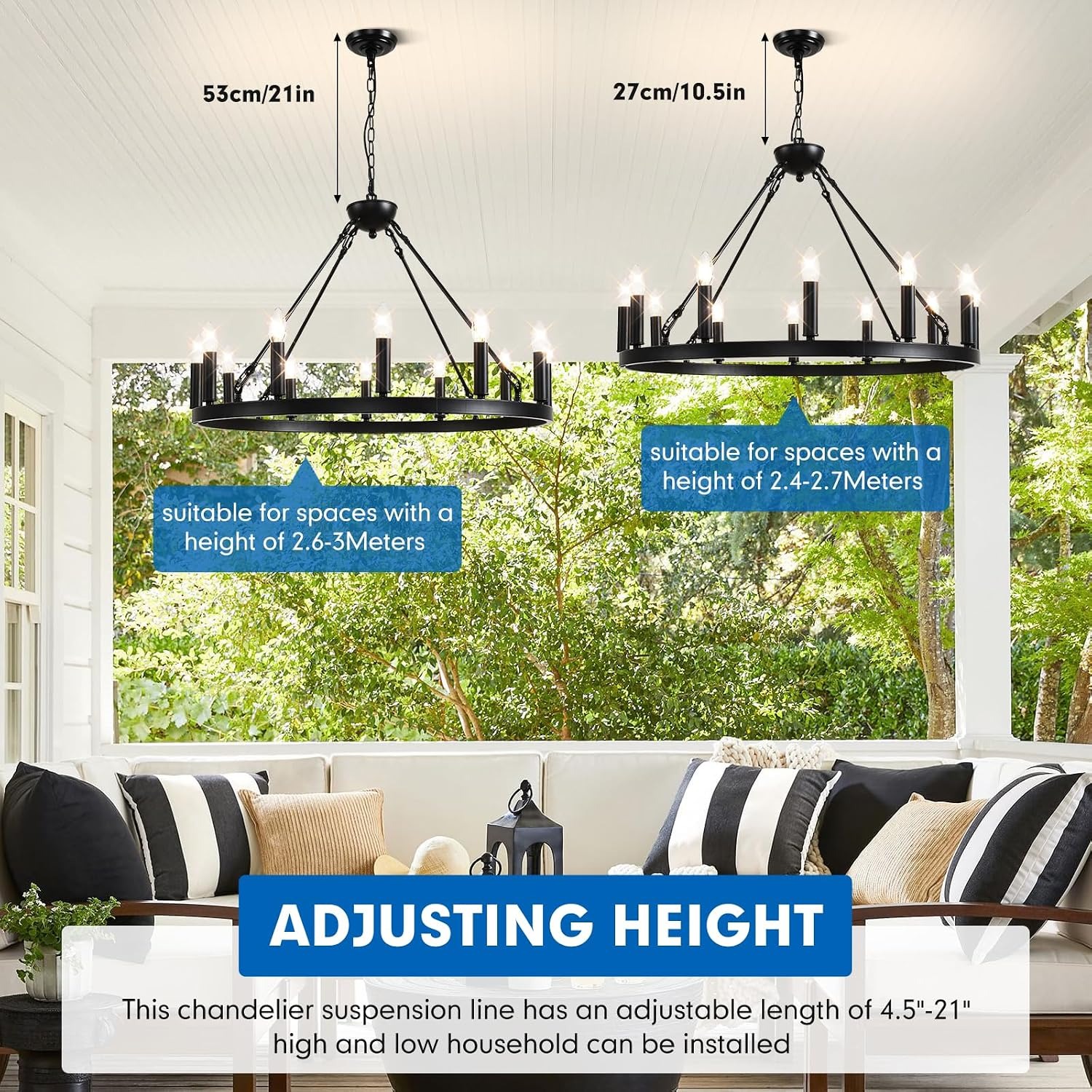
The second is hanging height. The usual guide is 75 to 90 cm of clear space between the tabletop and the bottom of the fixture. Lower than that and tall people bump it. Higher and the light spreads too thin and stops feeling like it belongs to the table. If your ceilings are above about three metres, nudge it up a little so the proportions stay right from across the room.
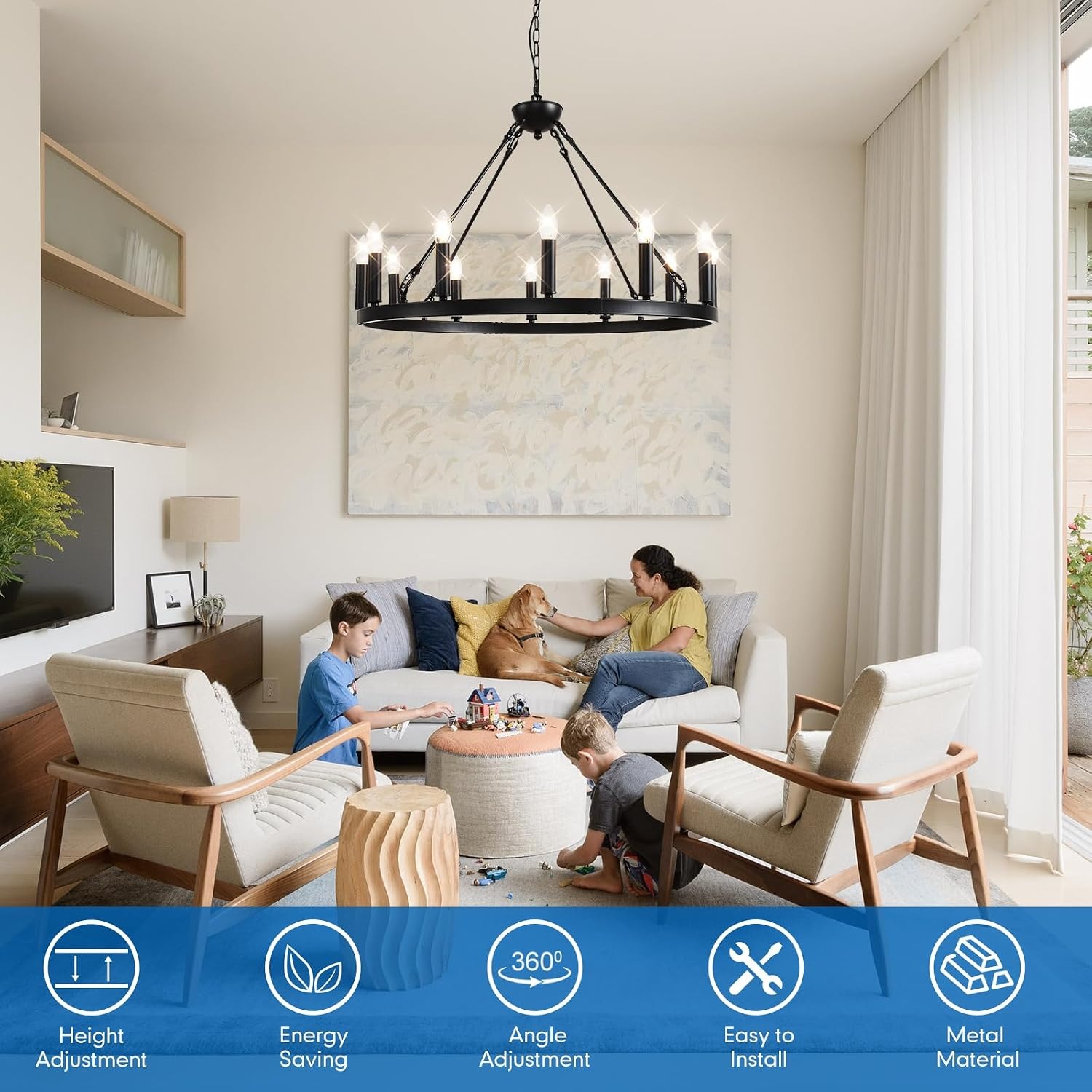
Room shape matters too. In a wide open plan space, an 80 cm circle anchors the dining zone and tells people where the table lives. In a narrow room with a standard ceiling, the same circle can feel like it is pressing down. Measure before you commit, and if you are on the line, send us the numbers.
Where it works beyond the dining table
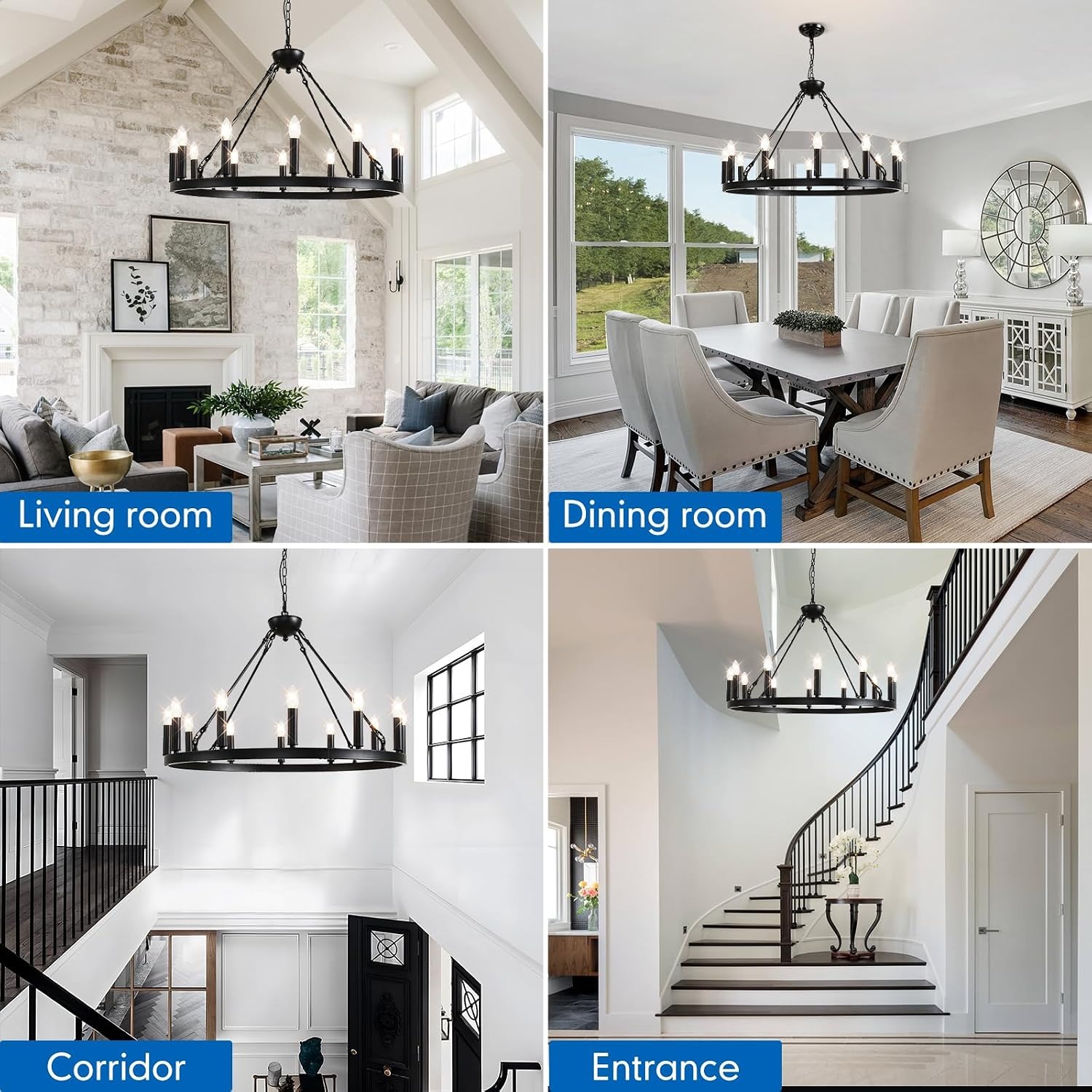
The obvious home is over a dining table, but this is not the only good use for a 12 light ceiling chandelier.
Over a kitchen island it gives you full-length light across the bench without the busy look of three separate small pendants. Prep work benefits from even light more than almost any other task in the house.
In an entry hall with height, it becomes the first thing anyone sees. A black frame against a pale wall and ceiling has a lot of graphic punch, and a dining room pendant light in the entry sets the tone for everything behind it.
A large bedroom can take it as a central fixture, and the maker does list bedroom as a room type. Keep the clearance generous over the bed and consider frosted bulbs, since you will often be looking straight up at it.
The one hard limit is moisture. This fixture is not water resistant and is for indoor use only. That rules out bathrooms with real steam, uncovered outdoor areas, and anywhere it might get splashed.
Installation, honestly
Required assembly is listed as no, so the frame arrives built. The job is the ceiling mount and the wiring, and mounting hardware is in the box.
If you have done ceiling fixtures before, understand your local wiring rules and have a helper to take the weight, this is a straightforward swap. If any of those three things is missing, call a licensed electrician. It is usually a short visit, and on a fixture this wide you want the mounting point assessed properly rather than guessed. Plasterboard alone is not an adequate anchor for something of this size.
Fit the bulbs after the frame is mounted, not before. It is easier, and it avoids handling twelve glass bulbs while someone holds a ring over their head.
Looking after it
Painted black shows dust, so a light wipe every few weeks keeps it looking sharp. Always kill the power at the wall and let the bulbs cool first. A dry or very slightly damp soft cloth is all it needs, followed by a dry pass. Skip bleach, solvents and anything abrasive, because those are what strip painted finishes.
Once or twice a year, give the mounting screws and the bulb sockets a check. Fixtures loosen slowly over time with normal house vibration, and catching it early is a two minute job.
The short version
If your dining room light leaves half the table in shadow, the fix is usually a wider fixture rather than a brighter one. This round black chandelier is 80 cm across with twelve E26 sockets, built from painted aluminium, mounted flush to the ceiling, and designed for warm white indoor light at 220 volts.
It suits a table or island of roughly 150 cm to 220 cm, hung about 75 to 90 cm above the surface. Pick frosted bulbs for comfort or clear filament bulbs for drama, and run them on a dimmer if you can. Bulbs and an electrician are the two things to budget for beyond the fixture itself.
Measure first. Everything else is easy.