
The complete guide
How to Choose a Large Crystal Chandelier for Your Dining Room
The problem with one light in the middle of the ceiling
Walk into most dining rooms and the lighting is doing almost nothing. There is a single fitting in the centre of the ceiling, one bulb inside it, and the result is a hard circle of light over the table with everything else fading off into grey. Faces get shadowed. The far end of the room looks like it belongs to a different house. People turn on lamps in the corner to compensate, which helps a little, but the ceiling is still the problem.
A large chandelier fixes it in a way that no table lamp can. Instead of one source, you get many, spread across a wide frame. Light leaves the fixture from sixteen different points, bounces off the crystal, and reaches the walls and the ceiling as well as the table. The room reads as lit rather than spotlit. That is the practical argument for a 16-light chandelier, before you get anywhere near how it looks.
How a crystal chandelier actually works
There are two things happening at once. The lamps provide the light, and the crystal redistributes it.
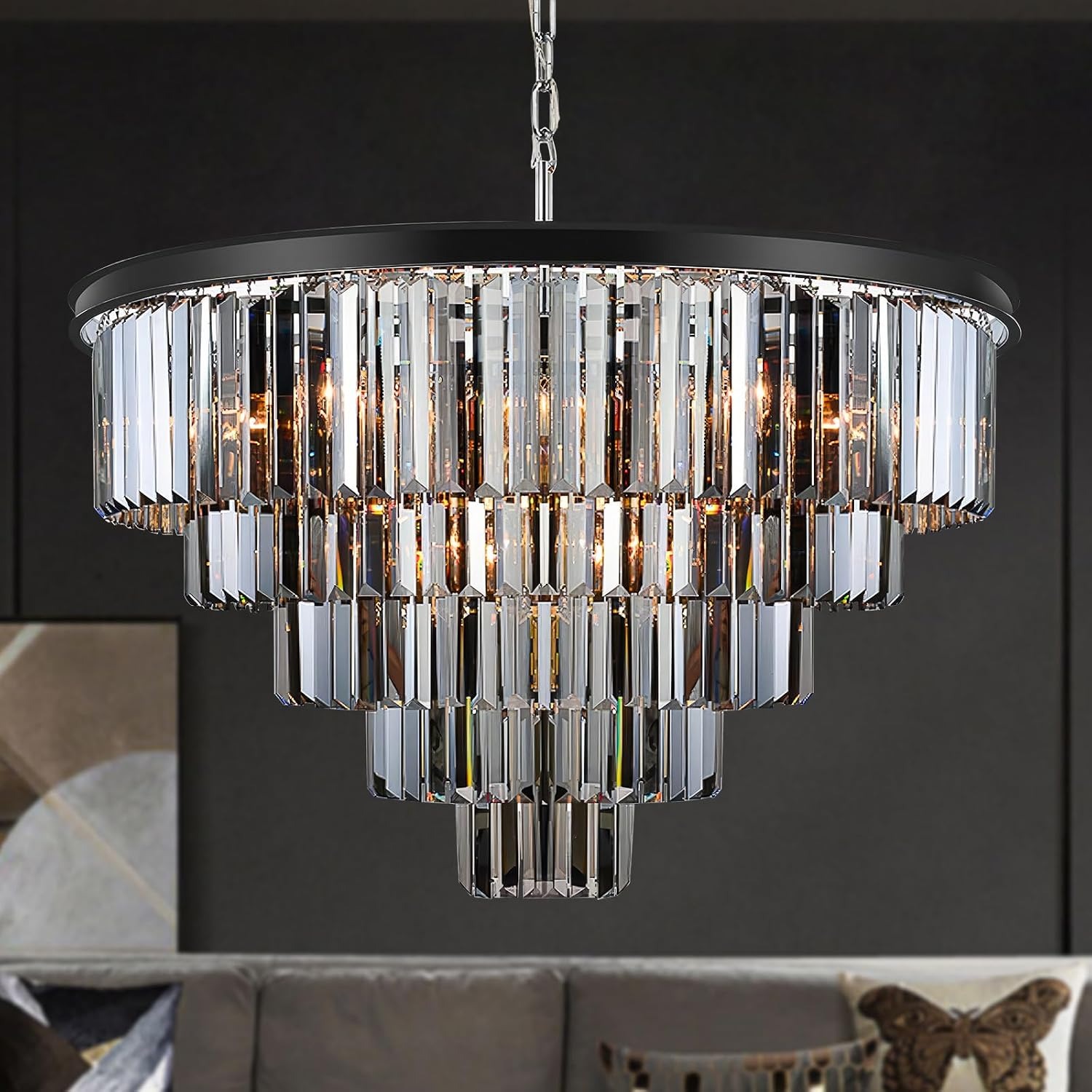
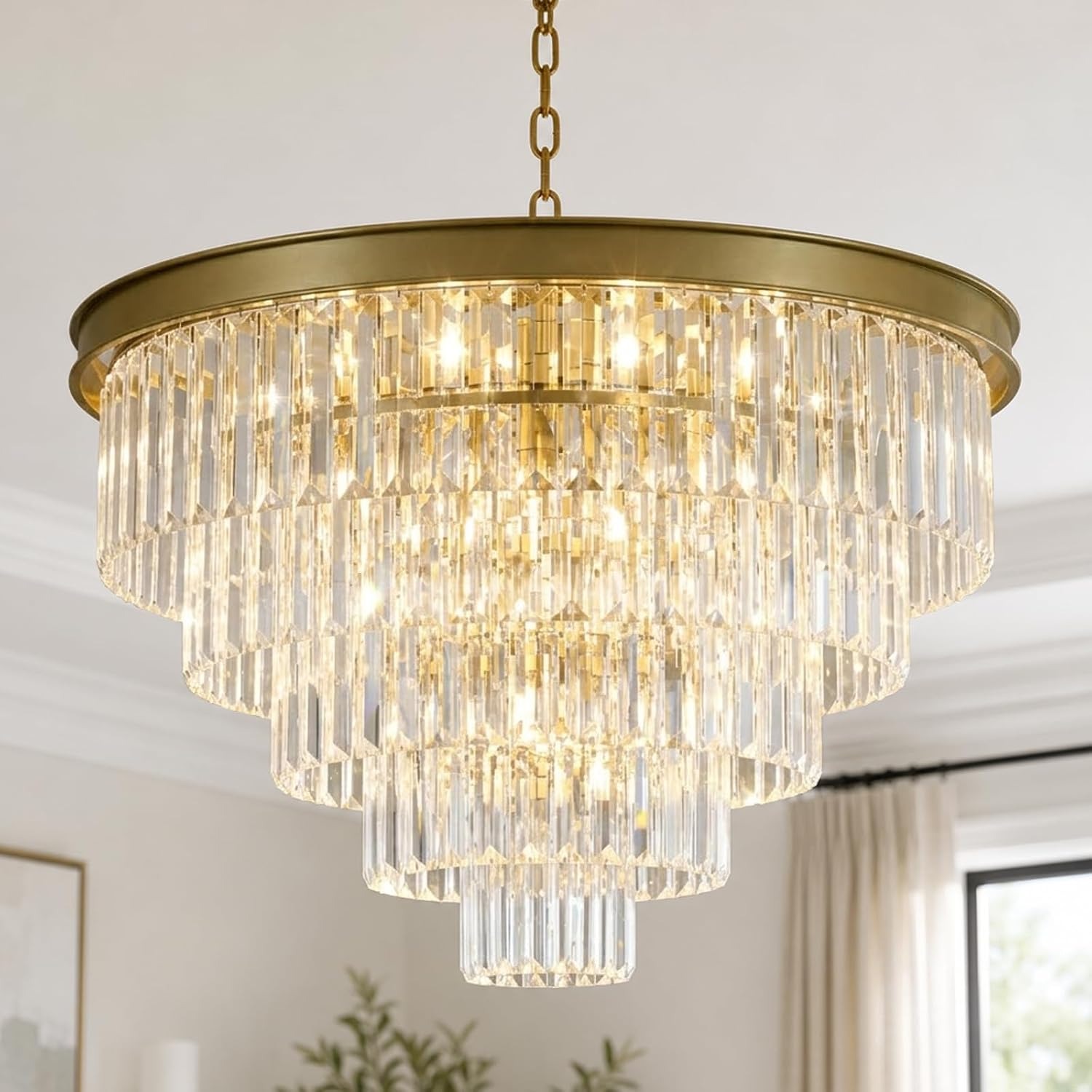
K9 crystal is an optical glass used widely in decorative lighting. It is cut with facets, so a beam entering one face leaves through several others at different angles. Multiply that by a frame full of crystal and you get the scattering effect that makes a lit chandelier look alive rather than static. Smoky grey crystal, as used here, cuts the brightness of the reflection slightly compared with clear crystal. The sparkle is warmer and a bit moodier, which is why it pairs so naturally with a black frame.
The frame does the structural work. This one is painted iron, which is the right material for a fixture of this size. Iron holds its shape under load, and a baked painted finish gives a consistent surface across a large piece. The black finish is what pulls the whole thing into modern territory. Traditional chandeliers in brass or chrome can look fussy in a contemporary room. A black crystal chandelier reads as graphic and intentional, closer to furniture than to ornament.
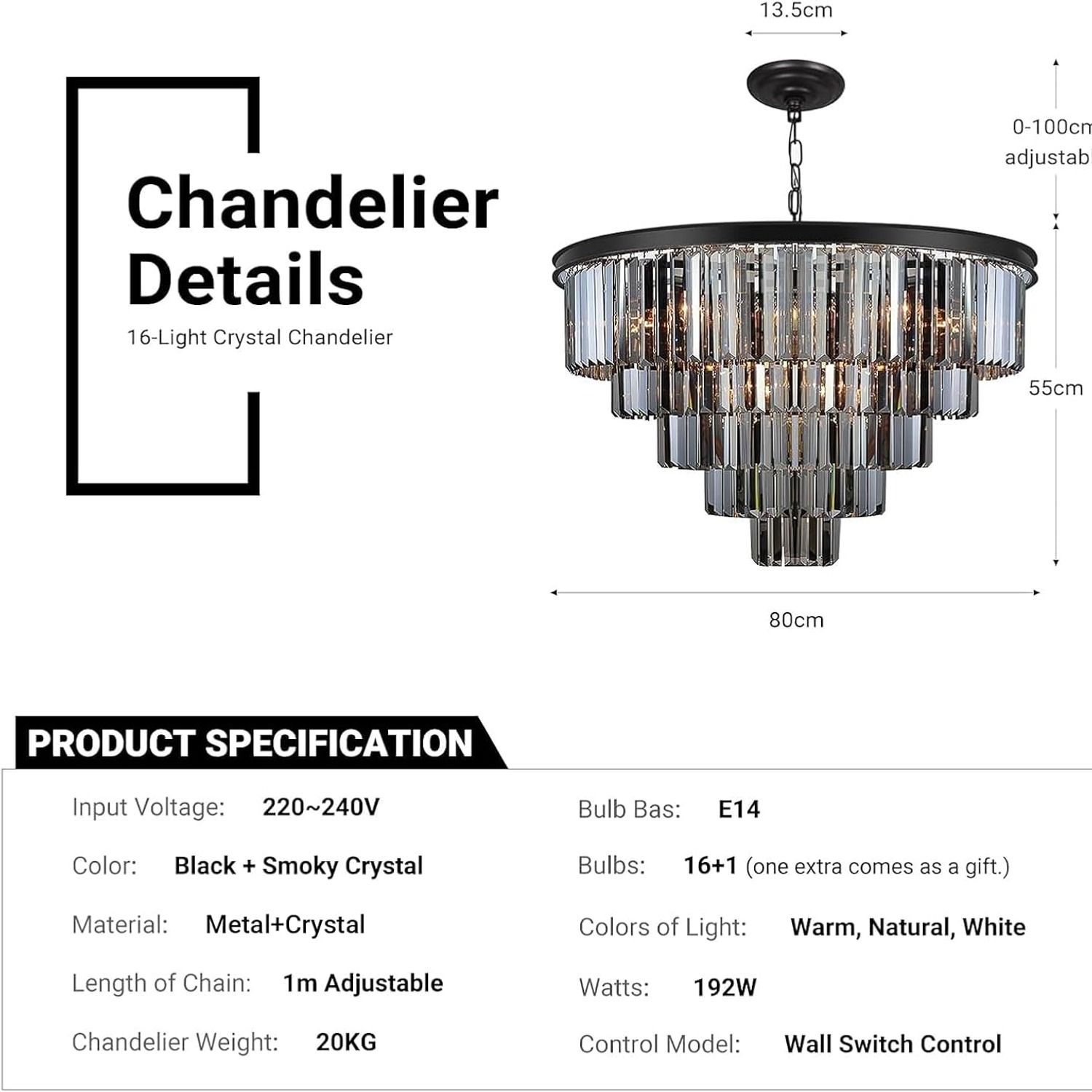
Then there are the sockets. Sixteen E14 bases, the smaller screw fitting. E14 is worth having because it is stocked everywhere and the choice of lamp is genuinely yours. The lamps set the character. Warm lamps make the room feel like an evening room. Cooler lamps make it feel crisper and more modern. You can change that later without touching the fixture.
Who this size actually suits
This is where most chandelier purchases go wrong, so it is worth being blunt.
At 80cm across and 50cm tall, this is a big fixture. It is not a bedroom pendant that happens to have crystal on it. It needs a room with floor area and, ideally, ceiling height.
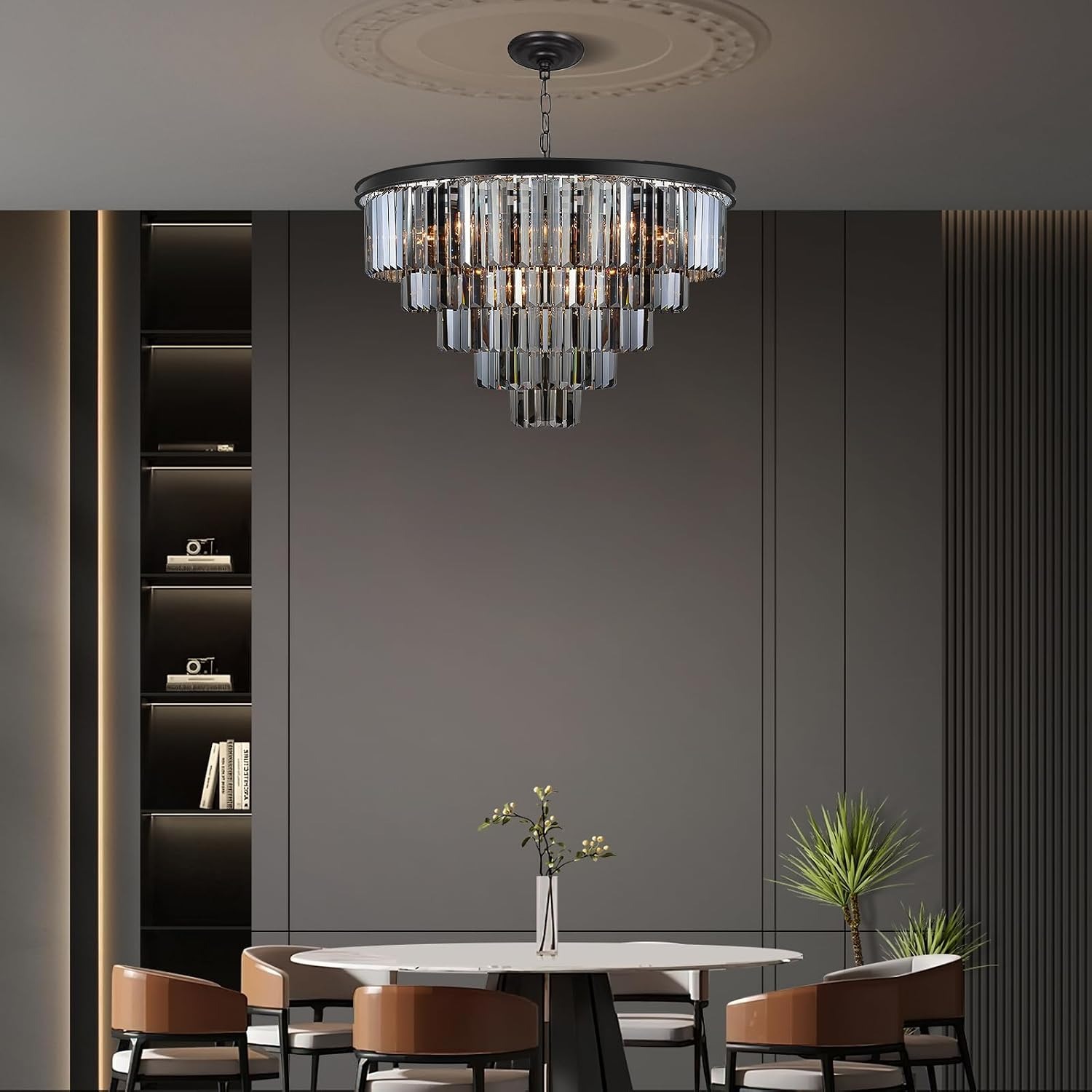
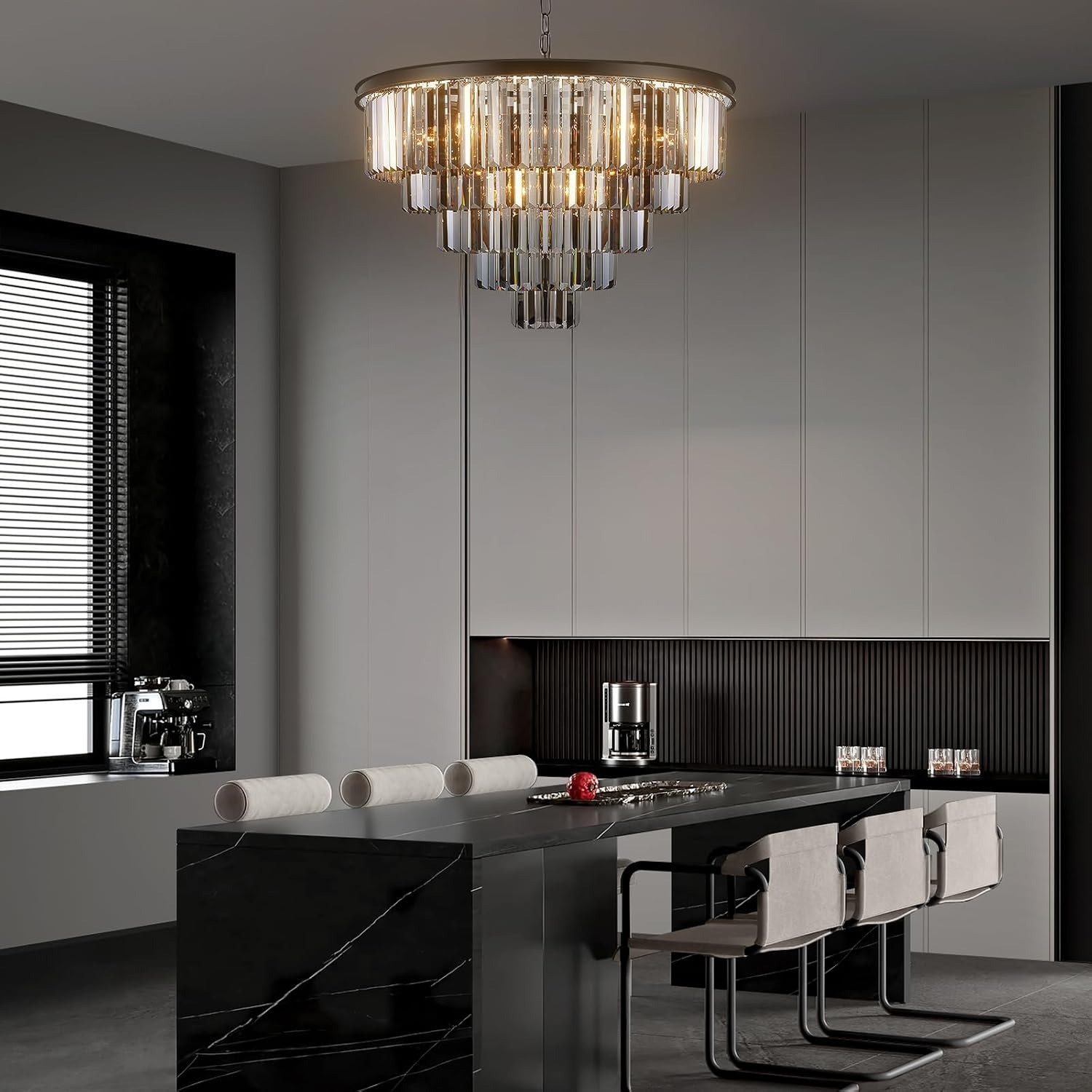
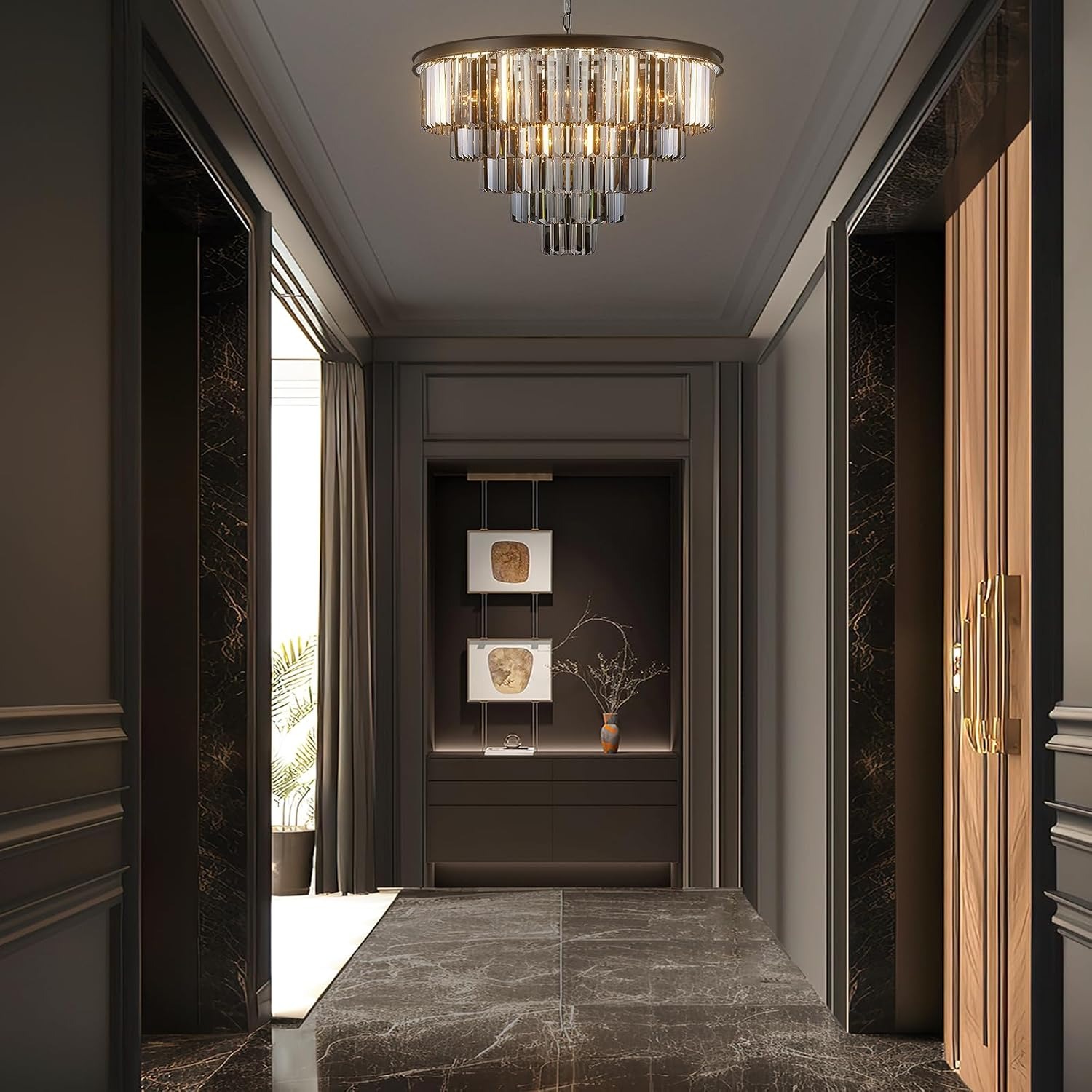
It works well over a long dining table, generally one around 180cm or more. It works in a double height entry, where a large piece hanging in the void is the whole point. It works over an open stairwell. It works in the centre of a large open plan living area where a small pendant would simply disappear.
It does not work in a small bedroom, a compact hallway, or a dining nook where the table is a 120cm square. In those spaces the fixture takes over, and no amount of lovely crystal rescues a fitting that is out of scale with the room. If you are working in a tighter space, a smaller chandelier is the better answer, and it is worth asking us before you order rather than after.
The simplest sanity check is to measure the room, then measure the table, then look up and estimate your ceiling height. If the ceiling is a standard height and the table is small, this is not the one.
Getting the hanging height right
The chain is the detail that does the most work, and it is often overlooked.
Over a dining table, the usual aim is to hang the bottom of the fixture roughly 75 to 90cm above the tabletop on a standard ceiling. That is low enough to feel connected to the table and high enough that people can see each other across it. Go higher and the fixture starts to float. Go lower and it blocks the view.
In an entry or a stairwell void, the logic changes. There the fixture is being seen from several levels, so you set the drop so it sits comfortably in the middle of the space and is visible from both the ground floor and the landing. Keep enough clearance below for anyone walking underneath, including people carrying things.
The adjustable chain on this chandelier means you set that once, properly, at installation. Decide the height before the electrician leaves, because adjusting it later means getting a ladder back out.
Installation and electrical notes
Three things matter here.
First, the voltage. This fixture is rated 220 volts. Check that against your local supply. If you are unsure, your electrician will confirm it in seconds.
Second, the fixing. A large iron and crystal fixture is heavy, and the ceiling needs a fixing rated to hold it safely. This is not a job for a plasterboard anchor and hope. A licensed electrician will assess the ceiling structure and use an appropriate mount.
Third, the assembly. Assembly is required. Crystal chandeliers normally arrive with the frame built and the crystal packed separately, and the crystal is hung piece by piece. It is not difficult, but it takes time and patience. Lay everything out on a soft surface first, count the pieces against the parts list, and work methodically from one side to the other so the pattern stays even.
The maker's description also lists a colour changing feature with remote, touch and push button control. If those functions are part of why you want the fixture, confirm exactly how they operate on the unit you receive before planning any switching or dimming around them.
Keeping it looking good
Crystal collects dust, and dust kills sparkle faster than anything.
Switch off at the wall and let the lamps cool before you touch anything. A dry microfibre cloth handles normal dust. If there is a film on the crystal, a cloth barely dampened with water and dried straight away will shift it. Keep ammonia, solvents and abrasive cleaners away from the painted iron, and never spray liquid directly at the fixture, because liquid running into a live socket is a real hazard.
Once or twice a year is enough for most homes. Kitchens and rooms with open windows need it slightly more often.
While you are up there, check the chain, the canopy screws and the crystal fittings are still tight. Houses move, and fixings work loose very slowly over years. A thirty second check saves a much worse problem later.
Choosing your lamps
Because the sockets are E14 and the choice is open, this is the easiest lever you have for tuning the result.
For a dining room, warm lamps are usually the better call. They flatter food and faces, and they suit the smoky grey crystal. For an entry or a stairwell where the fixture needs to feel bright and clean, a slightly cooler lamp works better. Keep all sixteen lamps identical, because a mismatched set is obvious the moment the light goes on.
Also think about replacement access. Sixteen lamps means sixteen eventual changes, so the easier it is to reach the fixture, the less of a chore that becomes.
The short version
This is a large, modern black crystal chandelier, 80cm wide and 50cm tall, with a painted iron frame, smoky grey K9 crystal and sixteen E14 sockets. It is a 220 volt indoor fixture, ceiling mounted, and it needs assembly plus a competent electrician.
It belongs over a big dining table, in a tall entry, or in the middle of a large open living space. It does not belong in a small room, and nothing about the quality of the fixture changes that.
If the scale is right for your space, it does the one thing a centre ceiling light usually fails at: it fills the room with light from many points instead of one, and it looks like something while doing it. Measure first, set the drop properly, and keep the crystal clean. That is most of the job.