
The complete guide
How To Choose A Large Gold Crystal Chandelier
The problem with one bulb in the middle of the ceiling
Walk into most dining rooms and the light comes from a single point overhead. It works, technically. The room is lit. But the light falls in one hard column, the corners go dim, and everyone at the table gets a shadow under their chin. The room feels flat because the ceiling is doing nothing.
A large chandelier fixes two things at once. It spreads the light source across a wider area, which softens shadows, and it gives the ceiling something worth looking at. A gold crystal chandelier does a third thing on top of that. Clear crystal scatters light in small bright points instead of absorbing it, so the fixture itself glows rather than just hanging there.
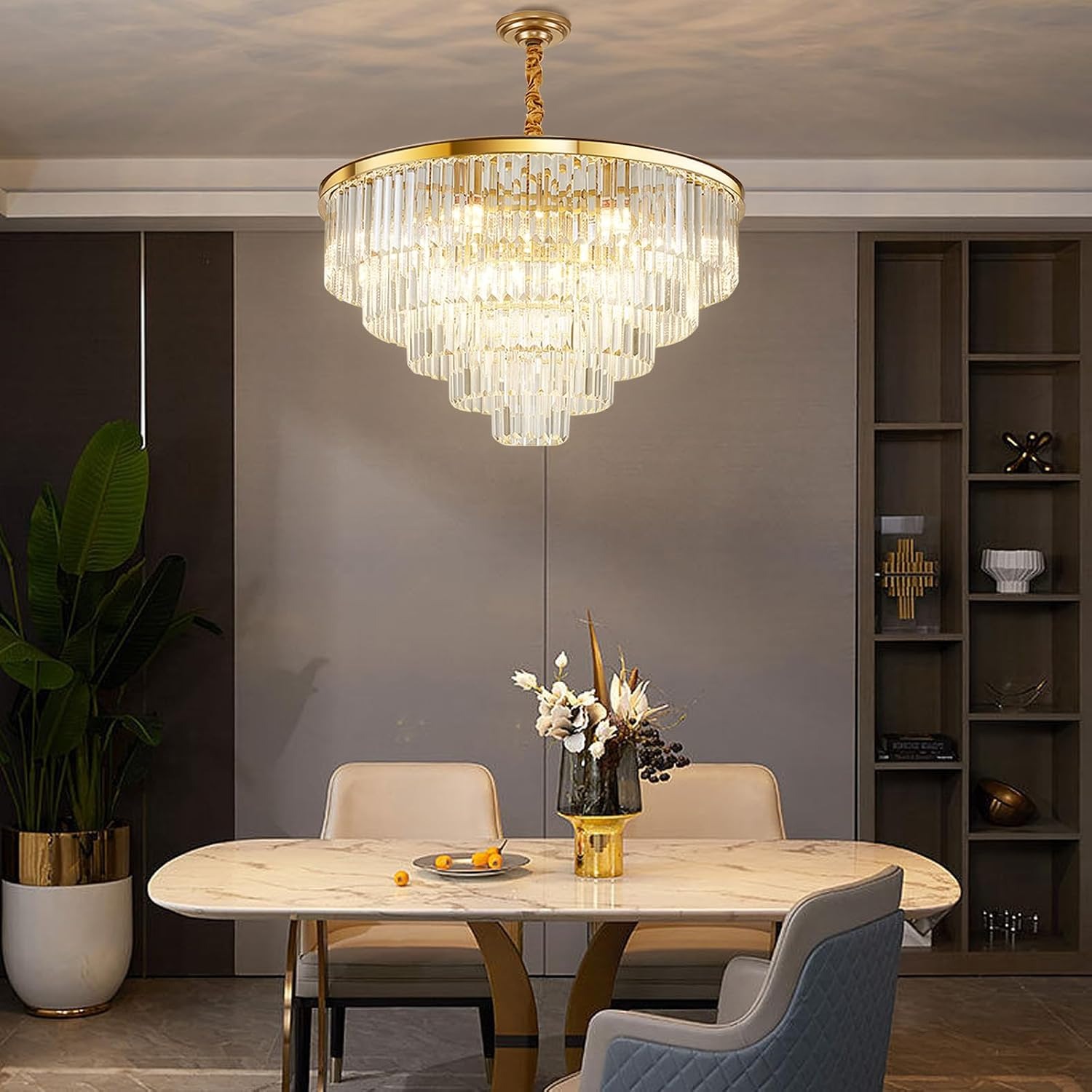
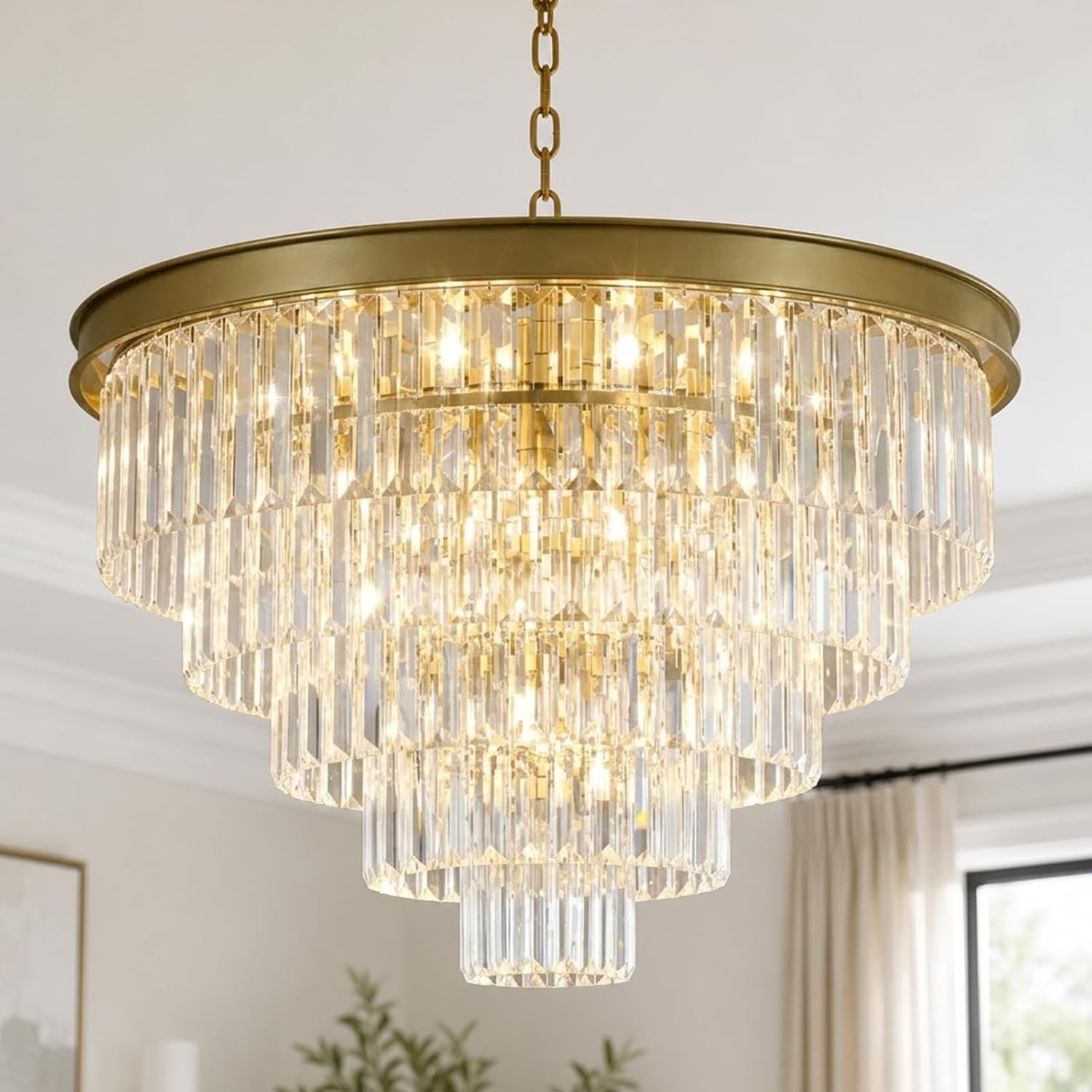
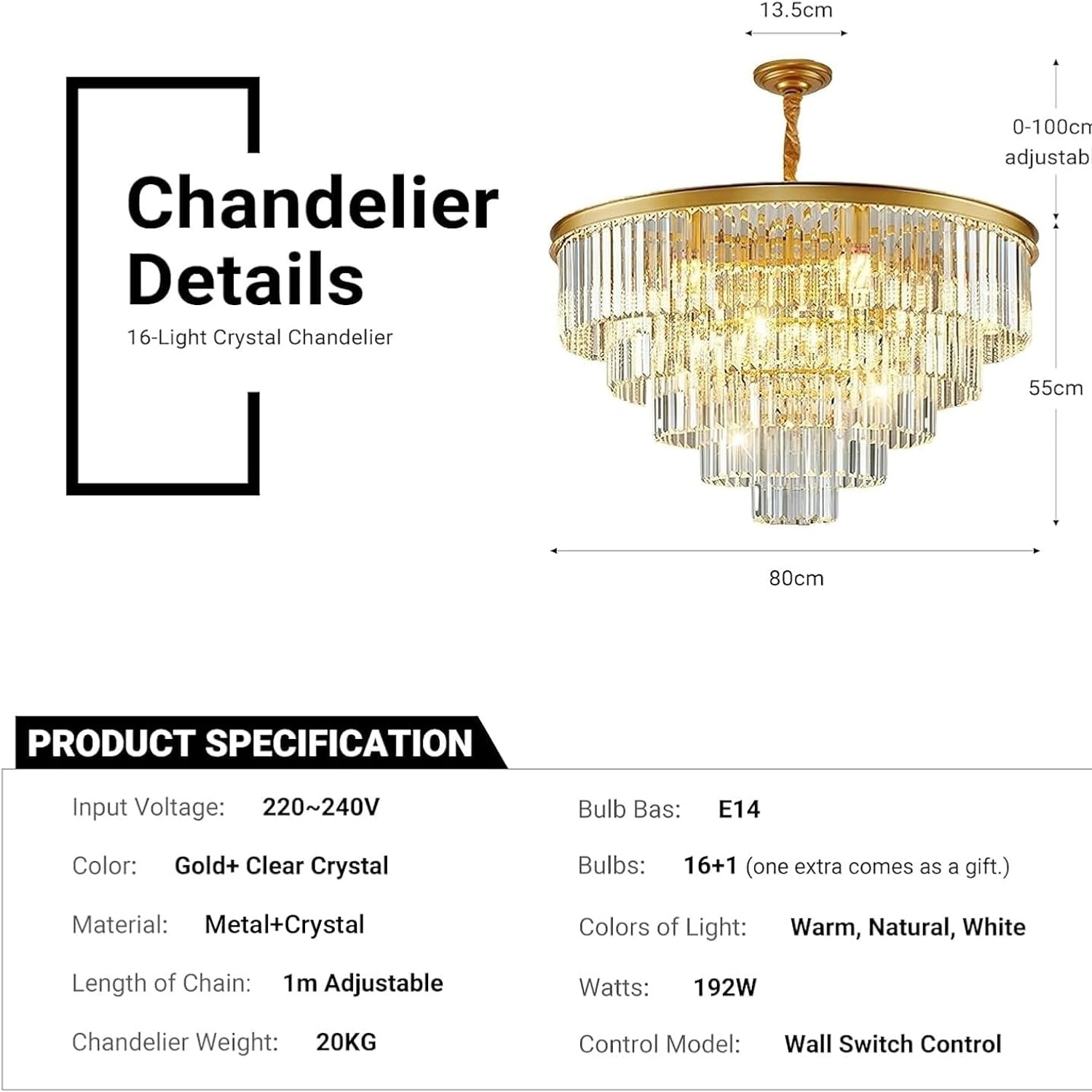
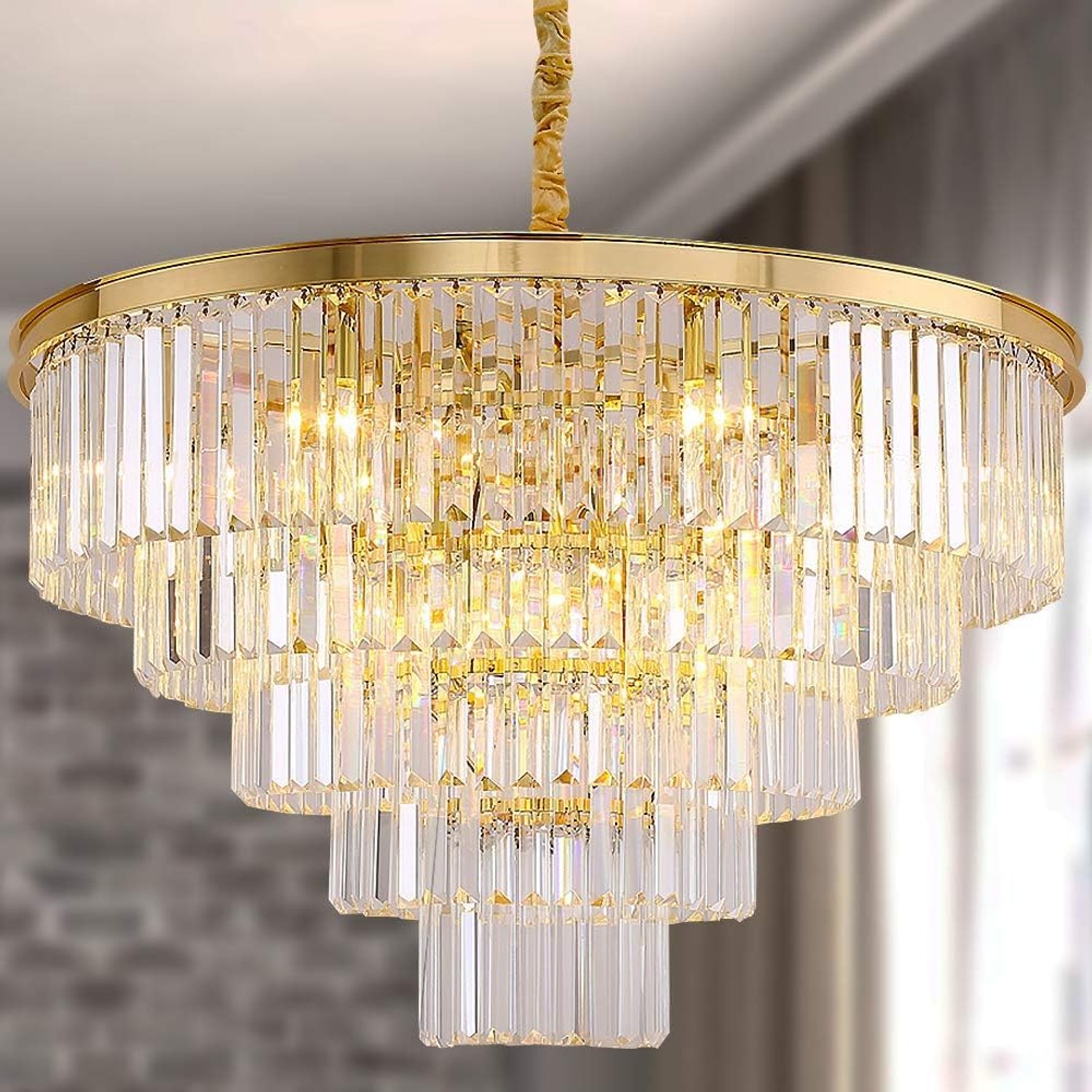
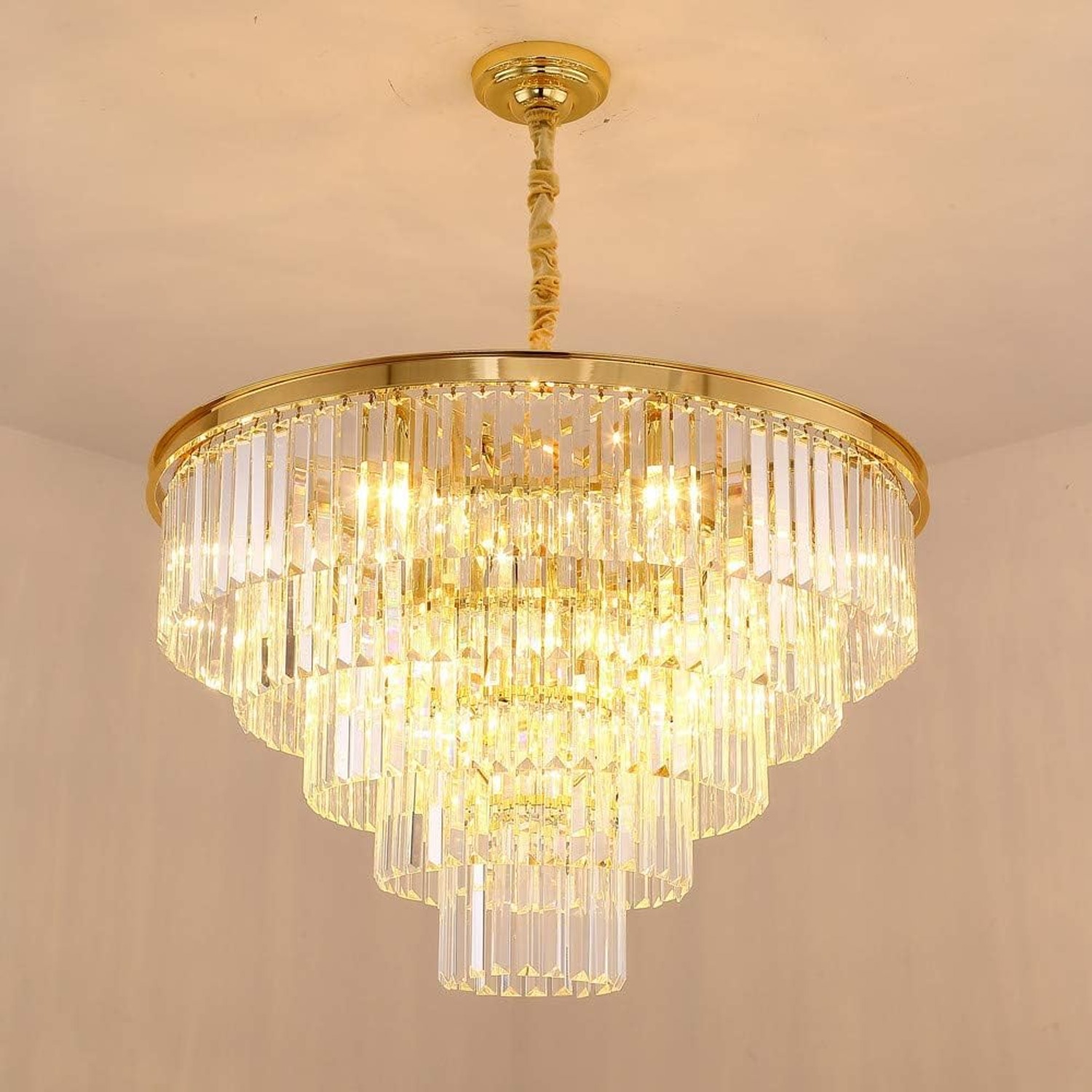
That is the job this one is built for. The body is 80cm across and 50cm high, with 16 E14 light positions and clear crystal over a polished gold frame.
How a crystal chandelier actually lights a room
The simple version: each cut crystal acts like a small lens. Light hits it, bends, and comes out in several directions. Multiply that across a layered fixture and you get a spread of light instead of a single beam.
The practical result is that the light reaches more of the room. Over a long dining table, a fixture with 16 light sources spread across 80cm lights the whole surface. One central globe lights the middle and leaves the ends in shade.
The second thing worth knowing is colour temperature. This fixture offers warm white, white and natural white. Warm white is the yellowish light most people want at dinner, because it makes skin tones and timber look better and signals to your brain that the day is winding down. White and natural white are cooler and crisper, which is what you want when you are reading, cooking or helping with homework at the same table. Being able to switch between them with a remote means the room does two jobs without you installing two light fittings.
Who this suits
The listed room types are bedroom, living room and hallway, and in practice it also goes over dining tables and in kitchen-diners. Here is how it tends to play out.
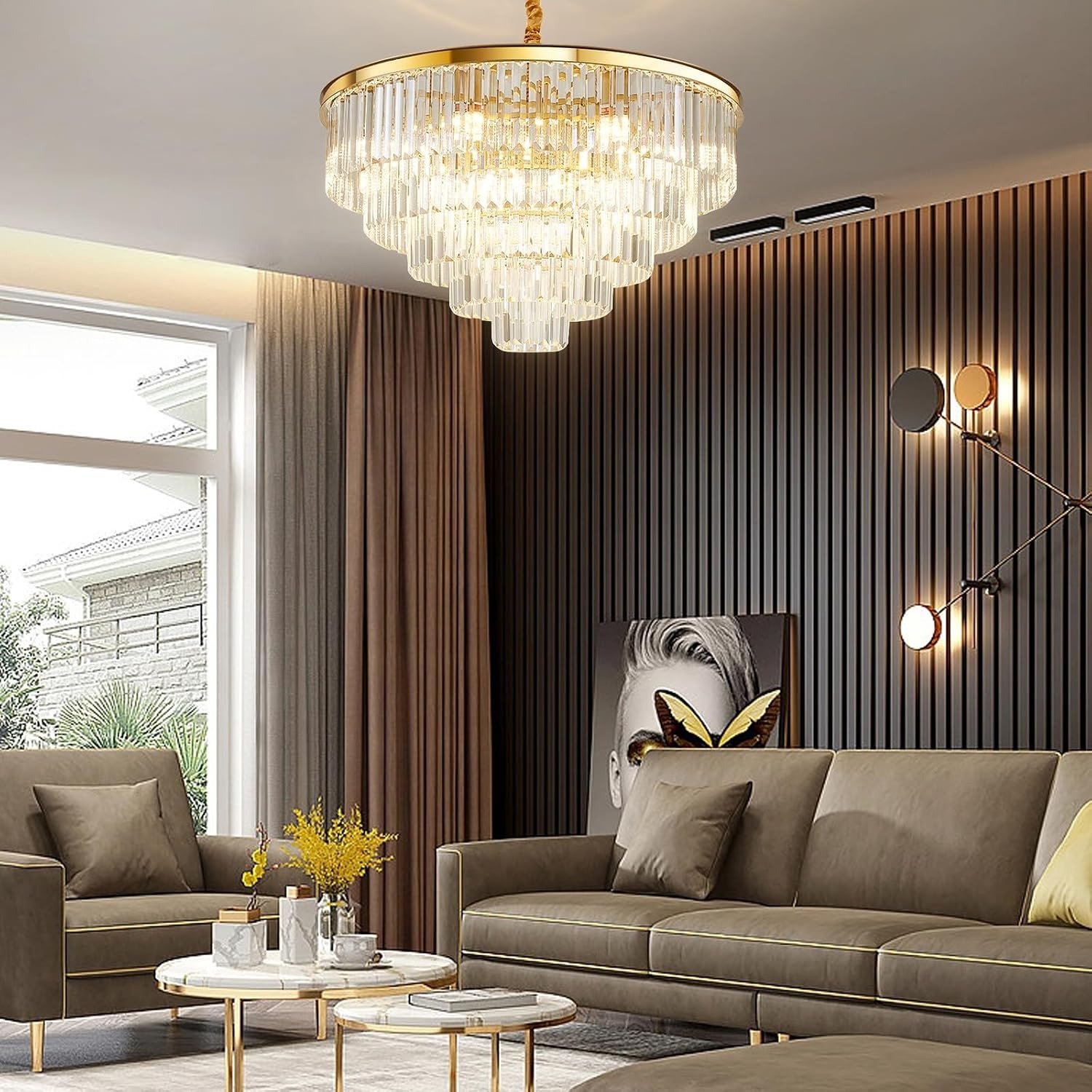
If you have an open-plan living and dining space with a decent ceiling, this is close to the sweet spot. The 80cm spread fills the visual gap above a table or seating area without needing a long chain drop.
If you have an entry or stairwell with a tall void, it can work, but measure carefully. Semi flush fittings sit close to the ceiling, so in a double-height void the fixture may look small and far away. A long-drop design often suits those spaces better.
If your room is small, be honest with yourself. An 80cm fixture in a 3 by 3 metre room will dominate it. That is not always wrong, but it is a deliberate choice rather than an accident you want to discover after installation.
And if you rent, remember this is a hardwired fitting. You will need permission and an electrician, and you will probably want to keep the original fitting to put back later.
Working out the size and height
Two numbers matter before you buy: ceiling height and table or room width.
For ceiling height, the semi flush mount keeps the fixture tight to the ceiling, which helps in rooms around standard height. You still want to check that nobody is going to walk into it. Over a dining table there is more room to play with, since nobody is walking under it, and the usual guide is around 75 to 90cm from the tabletop to the bottom of the fixture.
For width, the common approach is to look at the table. An 80cm fixture suits a table roughly 150cm to 220cm long. Much shorter and it starts to look oversized. Much longer and you may want two smaller fixtures instead of one.
Also think about what is around it. A ceiling fan, a skylight, a beam or a sloped section can all change what is possible. Take a photo of your ceiling and send it to us if you are not sure.
Installation, in plain terms
This is a corded electric fixture rated at 220 volts, indoor use only. It is not a plug-in lamp. A licensed electrician should install it, both for safety and because in most places the wiring work legally has to be done by one.
Two things to flag to your electrician before the day. First, the ceiling mounting point needs to be rated to carry the fixture. Crystal chandeliers are heavier than a standard batten fitting, and the weight is not specified by the maker, so have them check the actual item before mounting. Second, confirm the 220 volt rating matches your local supply.
Bulbs are included, with an E14 base. If you ever replace them, stay with E14 and keep inside whatever wattage limit your electrician confirms.
Keeping it looking good
Crystal shows dust. That is the honest trade-off for a fixture that sparkles. The good news is that cleaning it is easy if you do it occasionally rather than once every three years.
Turn the power off at the wall first and let the bulbs cool. A soft dry microfibre cloth handles most of it. For marks that will not shift, dampen the cloth very lightly with water, wipe, then dry immediately. Never spray cleaner at the fixture, because liquid runs down into the electrics and solvents can lift the painted gold finish.
Twice a year, do a quick safety check. Make sure the canopy is tight to the ceiling, the bulbs are seated firmly, and nothing is loose. It takes two minutes and it is the difference between a fixture that lasts and one that develops a rattle.
In a kitchen, grease is the enemy more than dust. Mount it away from the cooktop if you can, and wipe it a bit more often.
Comparing it with the alternatives
A flush-mount ceiling panel is cheaper and easier to clean, but it adds nothing to the room visually. A single pendant over a table is a good look but lights a narrower area. A row of three small pendants spreads light well across a long bench, though it suits kitchens more than formal dining rooms. Track lighting is flexible and dull.
A large crystal chandelier sits at the decorative end. You buy it because you want the room to feel finished, not just lit. If the ceiling is the first thing people see when they walk in, that is a reasonable thing to spend money on.
The short version
This is a large gold crystal chandelier, 80cm across and 50cm high, with 16 E14 lights and bulbs included. It mounts semi flush, runs at 220 volts, and is for indoor use. Three light colours (warm white, white and natural white) are switchable by remote or touch, so one fixture covers both a relaxed dinner and a bright weekday morning.
Measure your ceiling height and table width before you order. Get an electrician to install it and to confirm your ceiling point can carry the weight. Dust the crystal a few times a year with a dry cloth, keep liquids away from the electrics, and it should look as good in five years as it does on day one.
If you are weighing this against a smaller fitting, the deciding question is simple. Do you want the ceiling to disappear, or do you want it to be the part of the room people mention? This one is firmly the second option.