
The complete guide
How to Choose a Rattan Chandelier for Your Room
The problem with a bare ceiling
You can spend months getting a room right. The paint, the rug, the chairs, the plants. Then you look up and there is a bare globe on a plastic rose, or a flat round disc that came with the house in 2004. Nothing about it matches anything else, and it throws hard, flat light across everything you just spent money on.
Lighting is the one thing in a room you cannot hide. It sits in the middle of your eyeline every time you walk in. Change it and the whole room reads differently, which is why swapping a ceiling fixture gives you more visible change per dollar than almost any other single purchase.
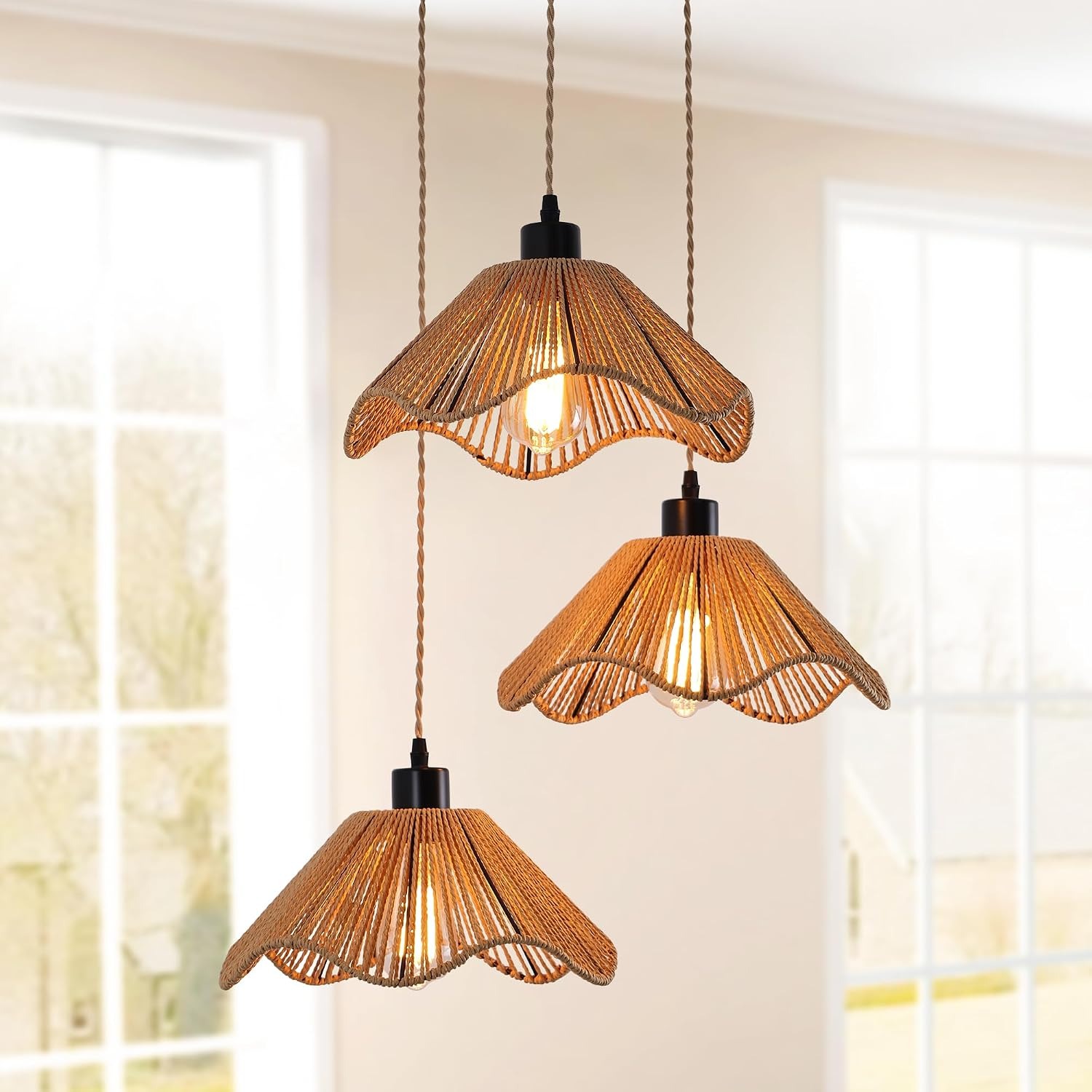
A rattan chandelier does two jobs at once. It puts usable light where you need it, and it adds a material that most rooms are short on. Woven fibre has grain, shadow and irregularity. It breaks up all the flat surfaces around it, the painted walls, the laminate bench, the glass splashback.
How this fixture works
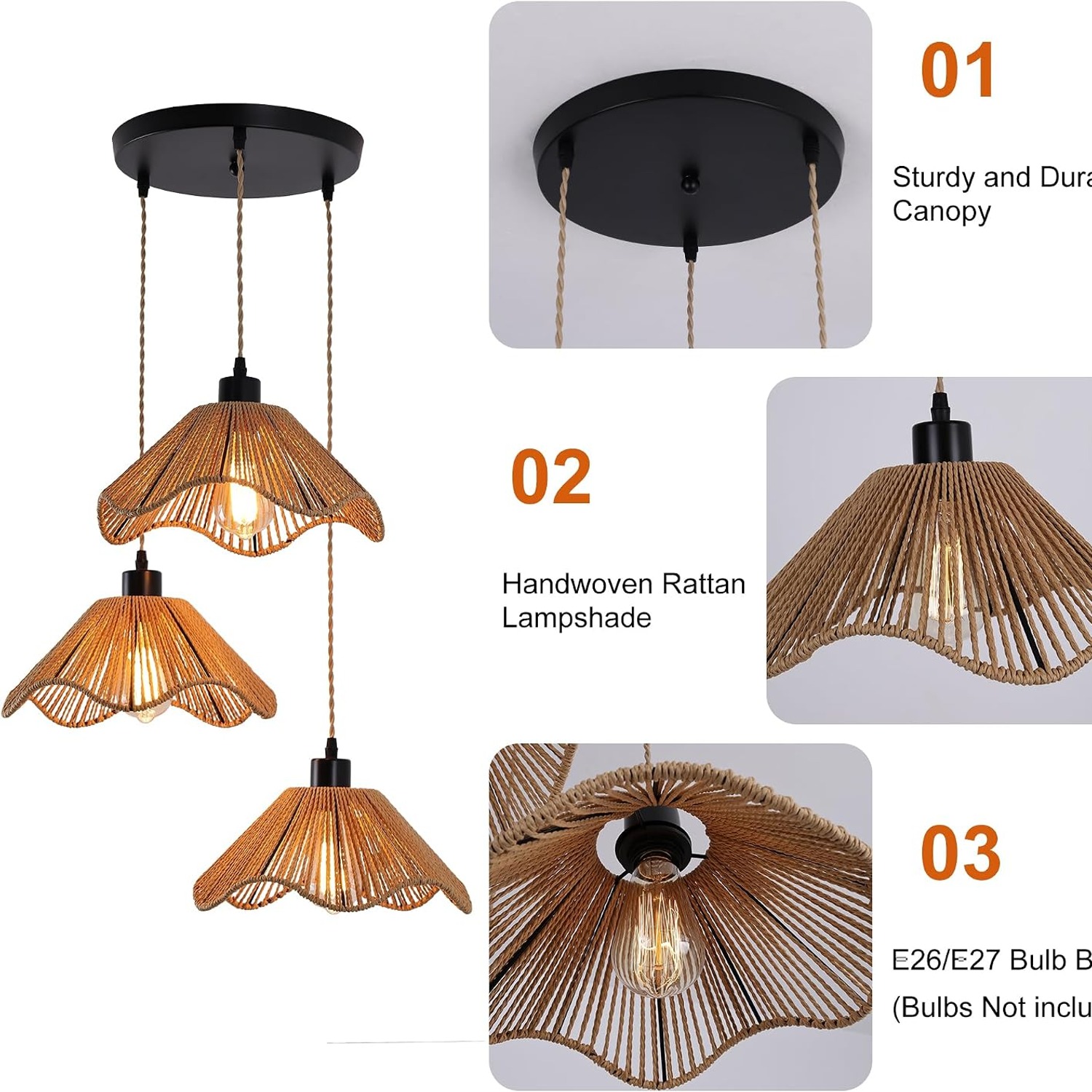
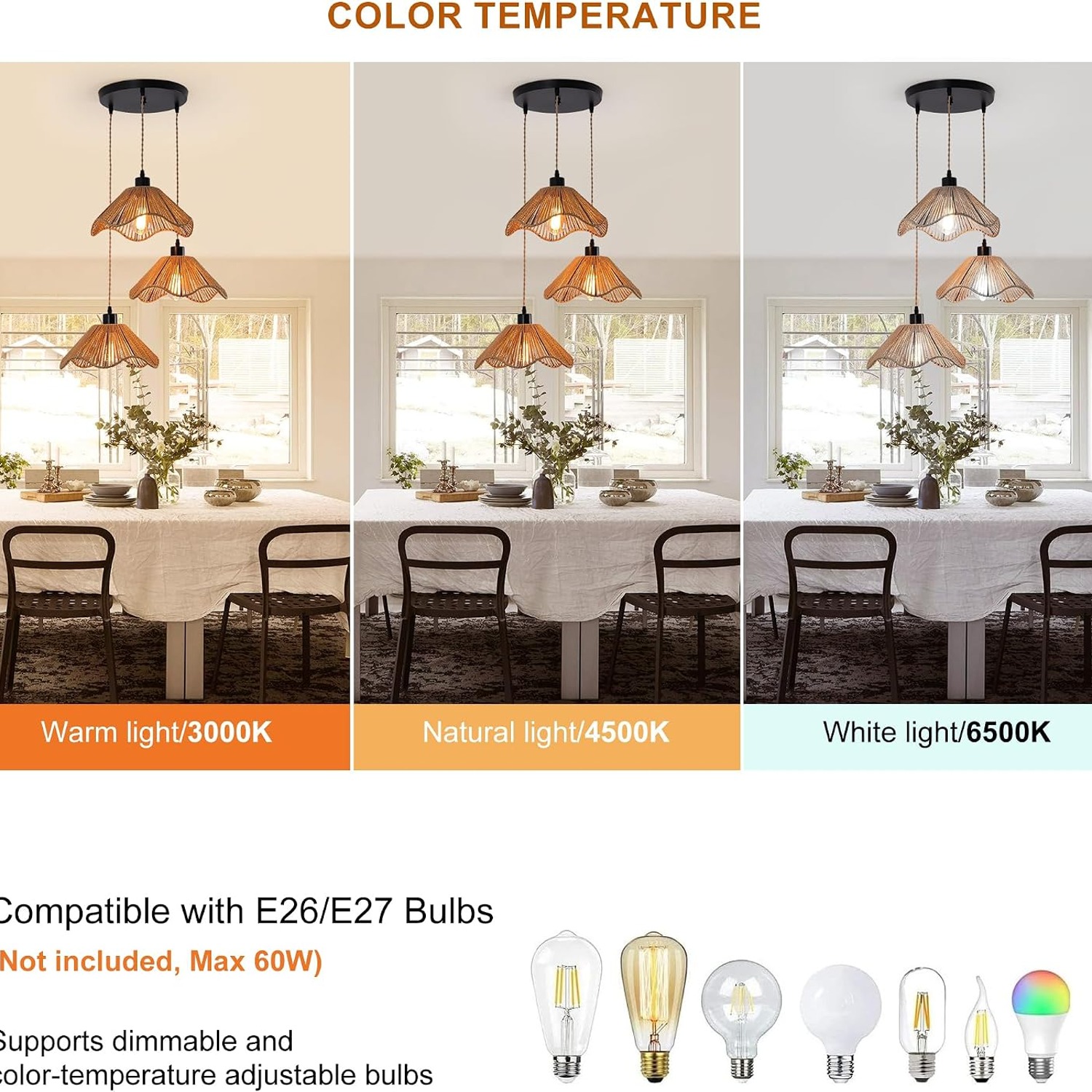
This is a three-light pendant with hand-woven rattan shades and a black painted frame. Each shade takes an E27 globe, the standard large screw base, rated to a maximum of 60 watts. That wattage ceiling matters more than it used to. An old incandescent globe at 60 watts was fairly dim by modern standards. A modern LED at eight or ten watts puts out far more light while staying well inside the limit, so you are not forced to choose between brightness and safety.
The shades are drop shaped and open at the bottom, which makes this a downlight. The useful beam goes straight down onto the table, bench or floor below. Some light escapes through the gaps in the weave and lands on the ceiling and nearby walls as soft, broken shadow. That second effect is the whole reason people buy woven shades. You get a working light and a feature in one fitting.
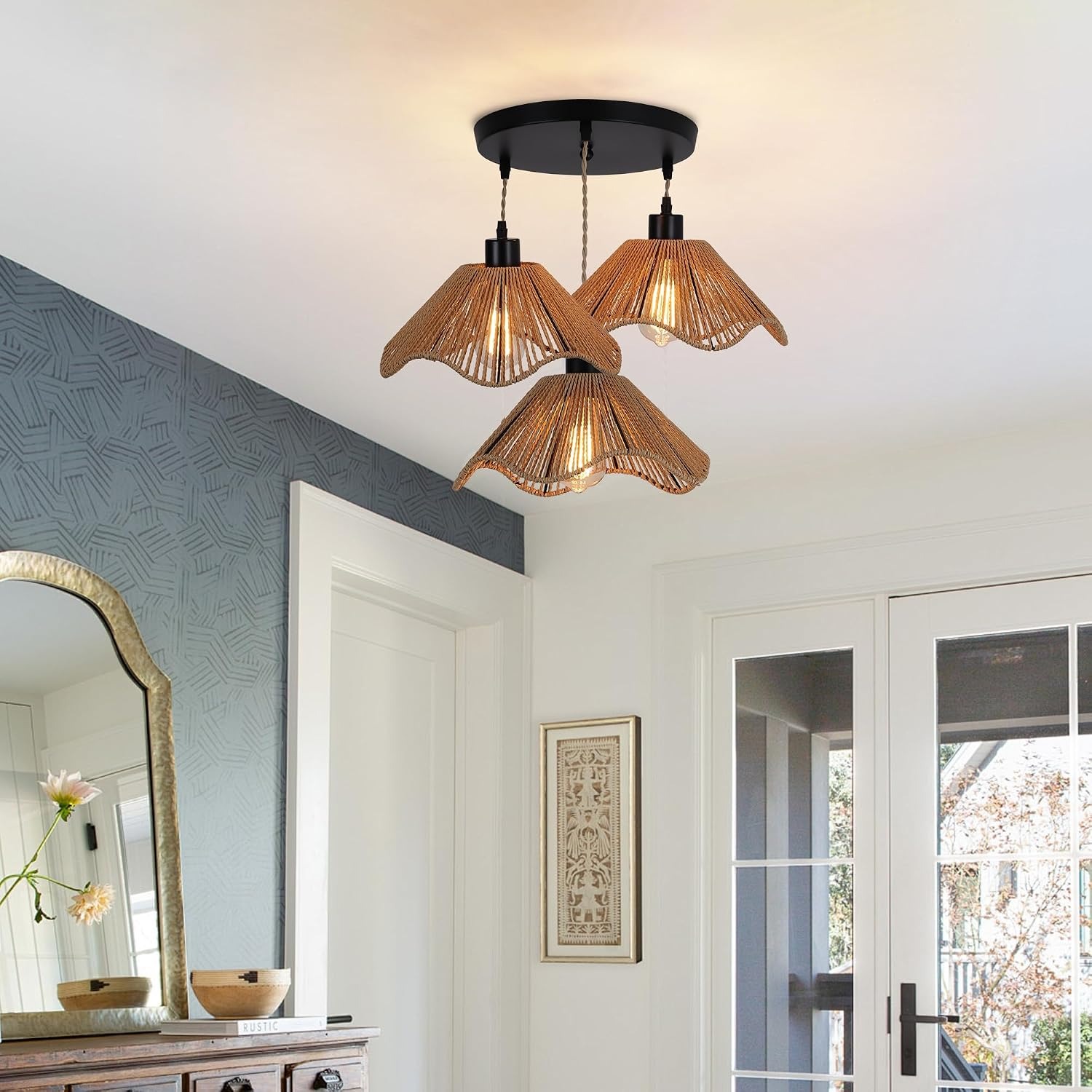
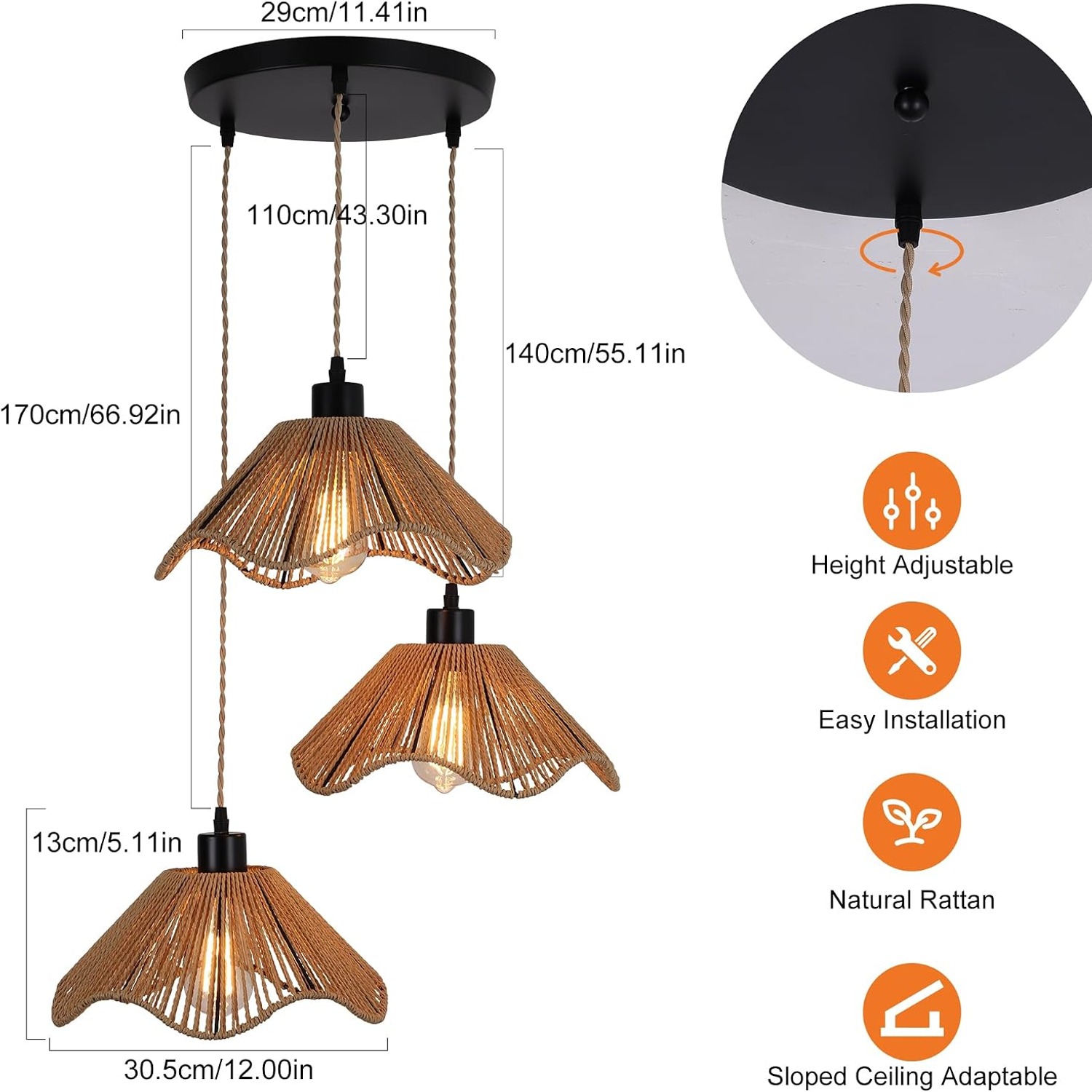
The mount is semi flush, meaning the body of the fixture sits close to the ceiling rather than dangling from a long rod. Height is adjustable, so you have some control over where the shades finish. Across the three drops you can stagger the heights or run them level, depending on what sits below.
Who it suits
The listed rooms are bedroom, dining room, entryway, kitchen and living room, and that covers most of the places this makes sense. A few specific situations it handles well.
Over a kitchen island, three staggered shades follow the length of the bench and give you light across the whole working surface rather than one hot spot in the middle. This is a common setup for anyone hunting for a farmhouse kitchen island light that does not look like commercial track lighting.
Above a dining table, the downward throw puts light on plates and faces. Warm globes at a moderate brightness work better here than cool white. Nobody wants to eat under an operating theatre.
In an entryway, it does the first-impression job. A woven ceiling light in a hall sets the tone before anyone gets to the living room, and the semi flush mount means taller visitors are not ducking.
In a bedroom, it works as a softer general light, particularly if you run it on a dimmer with bedside lamps as backup. The pattern cast on the ceiling is genuinely nice to look at from a bed.
Where it does not suit: bathrooms, laundries, outdoor areas and anywhere with steam or weather. The fixture is not water resistant and is rated indoor only. Natural rattan and damp are a bad pairing over the long term.
Matching it to your interior
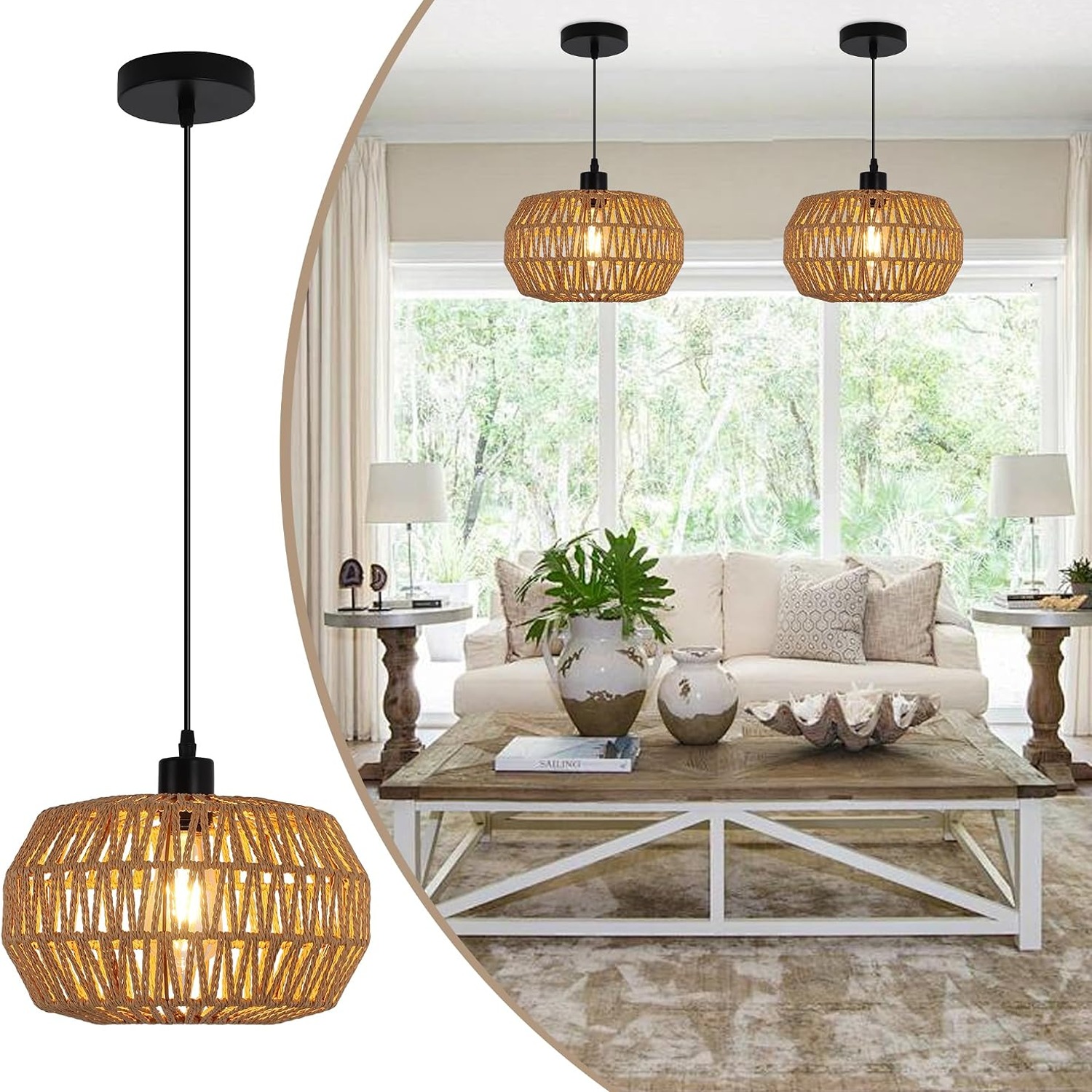
Rattan is forgiving. It leans coastal with white walls, linen and pale timber. It leans rustic against brick, stone or a scrubbed farmhouse table. It leans bohemian with plants, woven baskets and layered textiles. Because the frame here is black rather than brass or chrome, it also sits well in rooms that already have black tapware, black window frames or black cabinet handles.
If your room is very modern and minimal, one woven piece can still work as the single warm element. If your room is already full of texture, make sure the chandelier has clear visual space around it so it does not get lost.
The one combination that needs thought is a room with lots of competing metals. Rattan plus black metal plus brass plus chrome starts to look accidental. Pick one metal to repeat and let the woven texture carry the rest.
Getting the size and height right
The fixture measures 32 cm long, 22 cm wide and 32 cm high, with each shade at 13 x 30.5 cm. That puts it in the moderate range, not a tiny single pendant and not a huge statement piece. It suits a table up to about two metres long and a standard island.
For hanging height over a table, the common rule is to leave roughly 75 to 90 cm between the tabletop and the bottom of the shades. That keeps the light out of the eyeline of people sitting opposite each other. Over a kitchen bench, allow more clearance so nobody knocks it while working. In a walkway or entry, keep the bottom of the fixture at least two metres from the floor.
Measure your ceiling height before ordering. With a semi flush mount, the total drop is modest, but low ceilings in older homes can still make it tight.
Installation and safety
Assembly is required, and this is a hard-wired fixture running on 220 to 240 volts. In most countries, connecting a ceiling light to mains supply is work that must be done by a licensed electrician. It is not expensive and it protects your insurance. Mounting hardware and an instruction manual are included in the box.
Before the electrician arrives, do three things. Unpack and check the shades and frame for any transit damage. Decide on your hanging height and whether you want the shades staggered or level. Buy your globes, three E27 at 60 watts or less, so the job can be finished and tested in one visit.
Weight is 2.3 kg, which is light for a three-light fixture. Most standard ceiling mounting points handle that without extra bracing, but your electrician will confirm based on what is above your plasterboard.
Choosing globes
This is where you control the final look. A few pointers.
Colour temperature sets the mood. Around 2700K gives a warm, yellowish light that suits dining and bedrooms. Around 3000K is slightly crisper and works in kitchens. Anything above 4000K will feel clinical under a warm brown weave.
Brightness is measured in lumens, not watts. Three globes at around 800 lumens each will light a medium dining area well. Drop to 400 or 500 lumens each for a bedroom or a mood-lit lounge.
Globe shape shows. Because the shades are open at the bottom, the globe is partly visible from below. A plain pearl globe disappears. A clear Edison filament globe becomes part of the look. Both are valid, just decide on purpose.
If you want dimming, check that your globes are marked dimmable and that your dimmer suits LED loads. Mismatched dimmers and LEDs cause flicker and buzzing.
Care over the years
Rattan asks very little. Turn the power off, then dust the shades every few months with a soft dry brush or a vacuum brush attachment, moving with the weave rather than fighting it. Wipe the black metal with a barely damp cloth and dry it straight away. Skip solvents, bleach and abrasive cleaners, which will mark the painted finish.
Do not soak the shades. Water swells natural fibre and can loosen the weave over time. Let globes cool fully before you touch them for replacement.
If the fixture hangs near a window with harsh afternoon sun, the fibre may lighten slightly over several years. Normal indoor light will not cause any noticeable change.
The fixture carries a 2 year manufacturer warranty. Keep your order confirmation somewhere you can find it.
The short version
This is a 3-light pendant with woven rattan shades, three E27 sockets rated to 60 watts each, adjustable height and a semi flush ceiling mount. It runs on 220 to 240 volts, weighs 2.3 kg, and comes with mounting hardware and an instruction manual plus a 2 year warranty. It is indoor only and not water resistant.
It suits kitchens, dining rooms, entryways, bedrooms and living rooms, and it pairs easily with black hardware, pale timber and natural textiles. Get a licensed electrician to install it, buy warm dimmable LED globes, and measure your hanging height before the job starts. Do that and you will have a ceiling worth looking at.