
The complete guide
How to Choose a Flush Mount Ceiling Light for Low Ceilings
The problem with lighting a room that has a normal ceiling
Most homes have ceilings somewhere between 2.4 and 2.7 metres. That is enough room to live in comfortably and not quite enough room for the hanging lights that fill every interiors magazine. Put a long pendant over a dining table in a 2.4 metre room and the table stops being a place you can lean across. Put one in a hallway and tall visitors learn to duck.
So people fall back on whatever came with the house. Usually that is a single round oyster light in the middle of the ceiling, or an old fluorescent batten in the kitchen that hums slightly and makes everyone look tired. It works, in the sense that the room is not dark. It does not do anything else. You cannot turn it down, you cannot warm it up, and it throws all its light into one circle in the middle of the room while the corners stay gloomy.
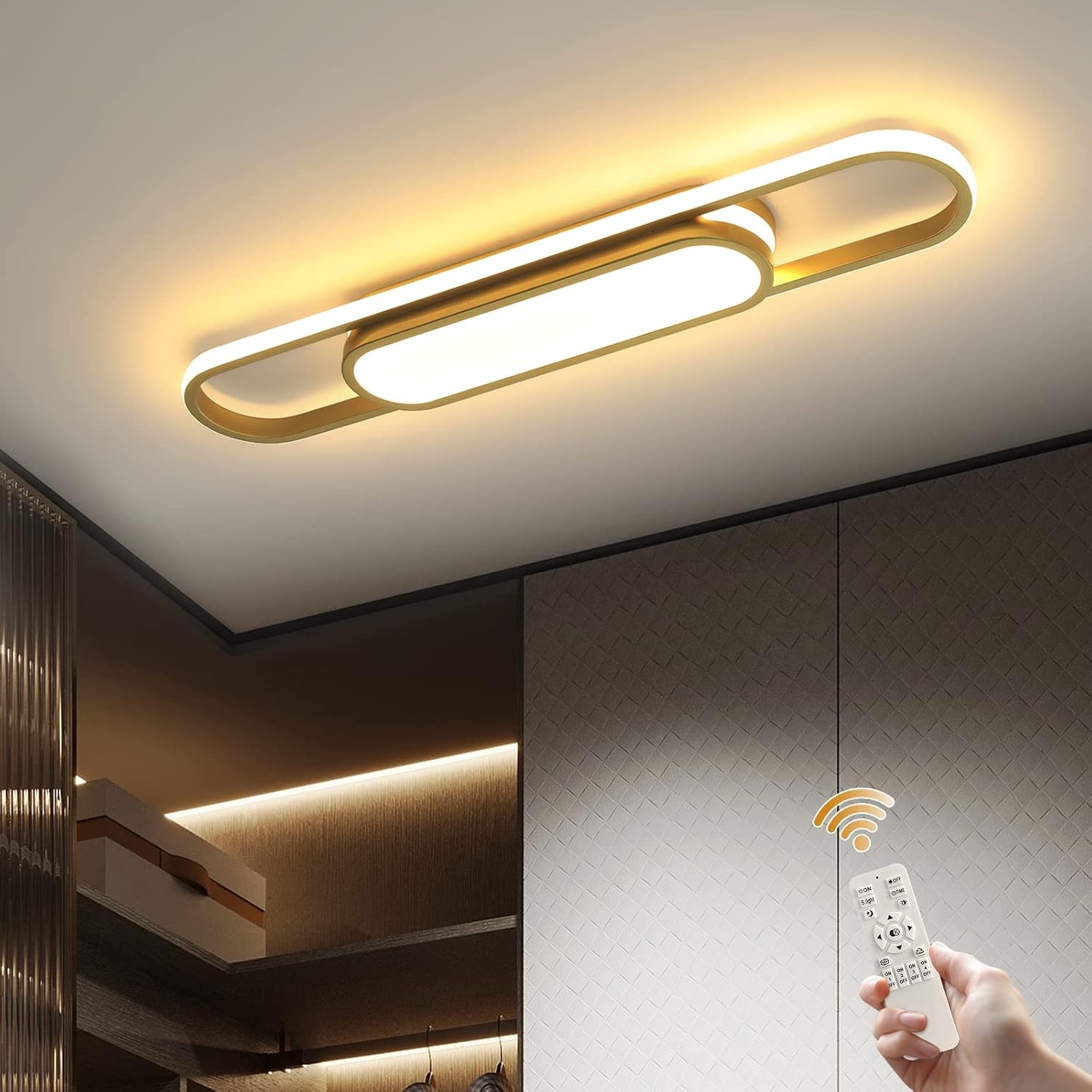
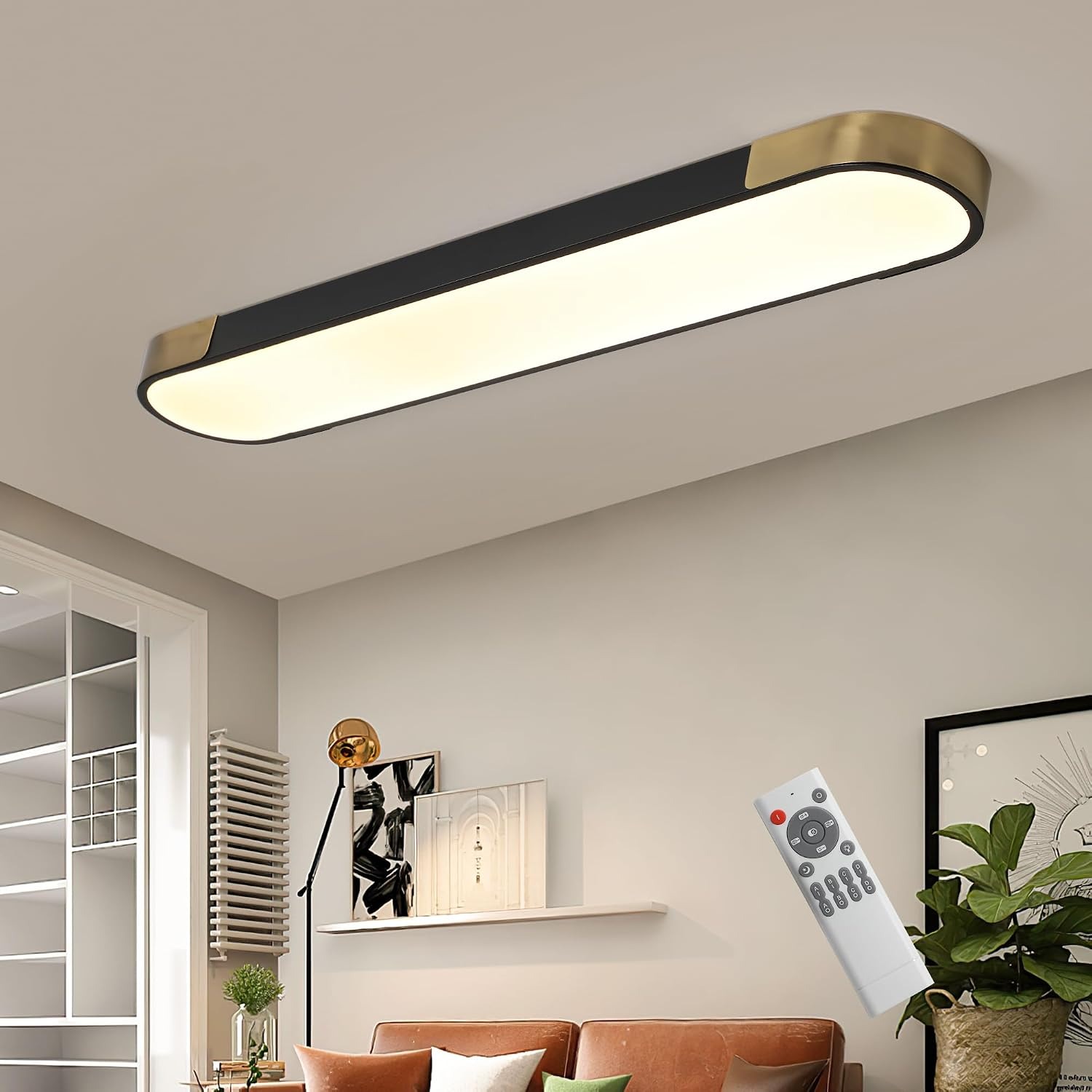
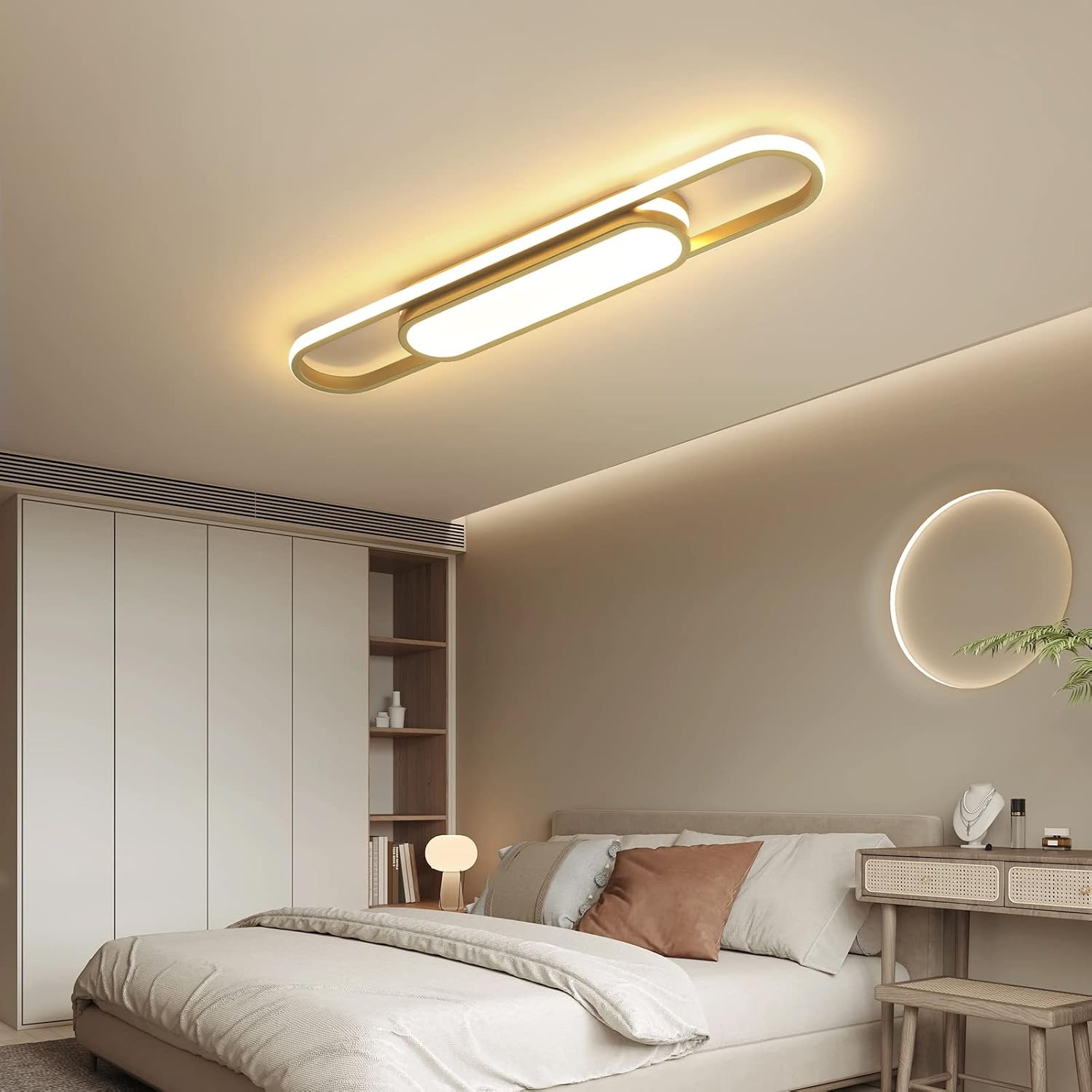
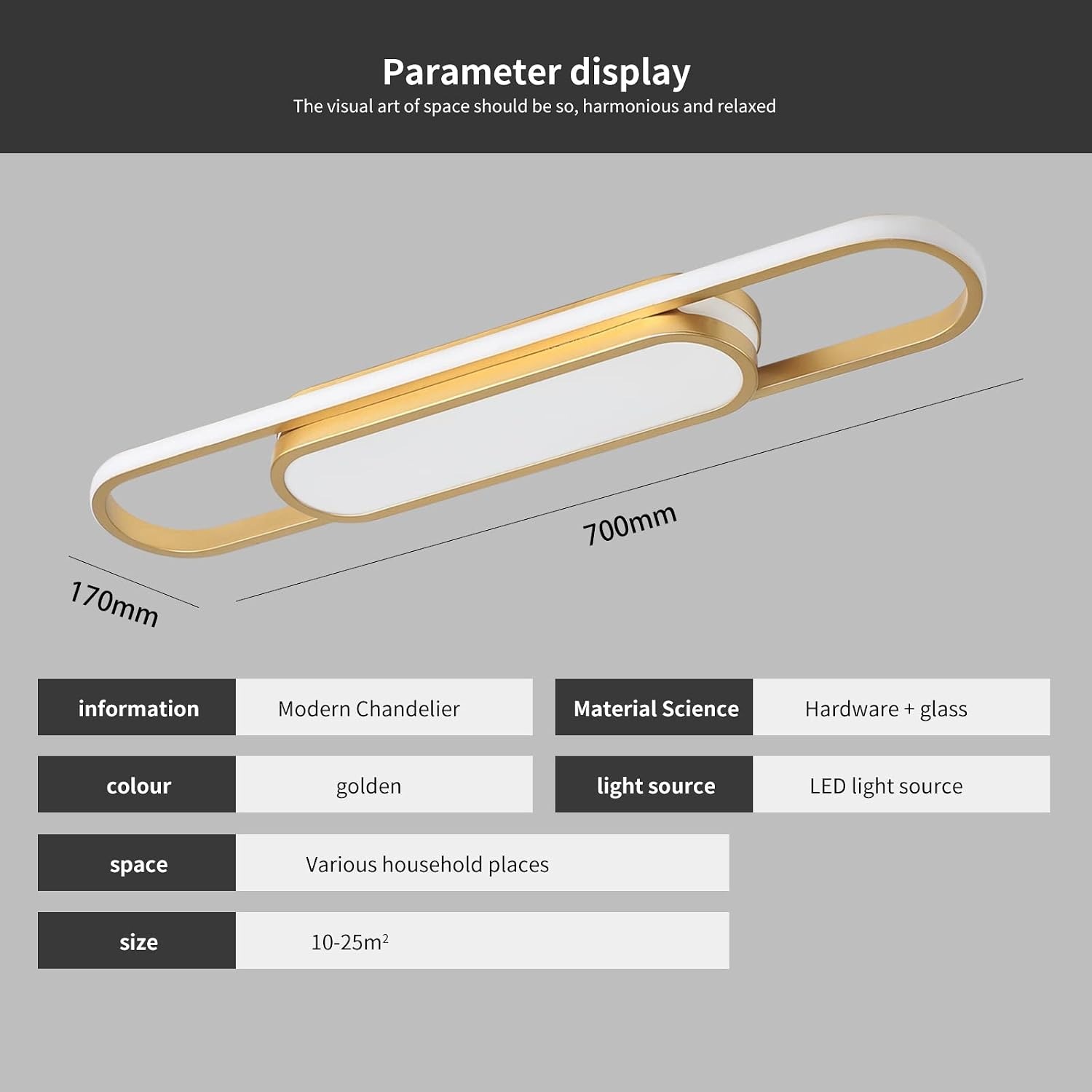
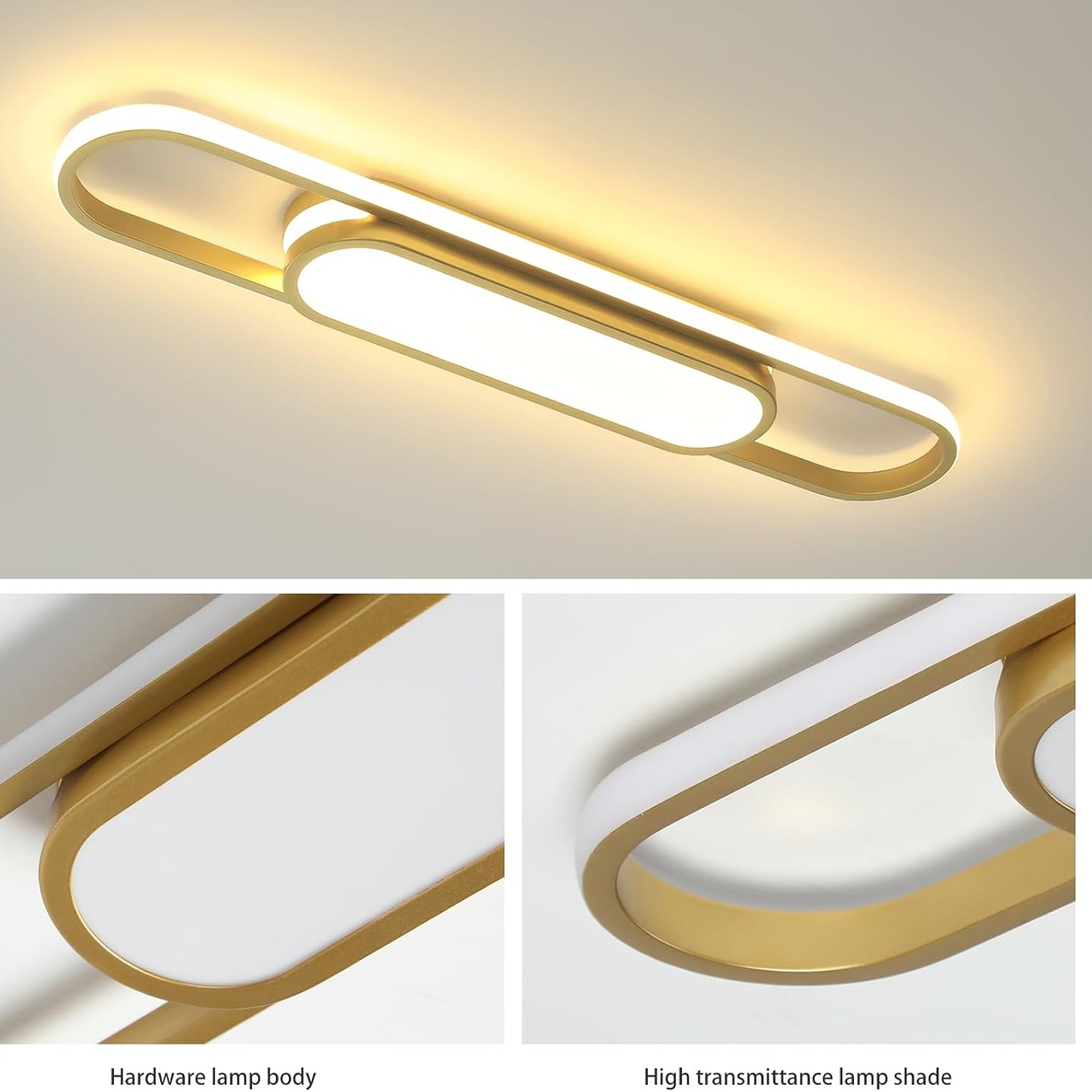
A flush mount ceiling light is the answer to that gap. It sits tight against the ceiling, so headroom is never an issue, but it can still be long, shaped and properly specified. This particular model is 70cm of linear fitting that stands just 8.5cm proud of the ceiling, with dimming and colour control built in.
How a dimmable LED ceiling light actually works
Older ceiling lights were a bulb and a cover. The bulb made the light, the cover hid the bulb, and if you wanted to dim it you needed a special dimmer switch on the wall and a bulb that agreed to cooperate. Half the time it flickered anyway.
An integrated LED fitting like this one works differently. The LEDs are built into the body as an array, with a driver that controls how much current reaches them. Because the control sits inside the fixture, dimming is handled electronically rather than by chopping up the mains supply at the wall. That is why the instructions are clear that this light should go on a standard on and off wall switch, not a wall dimmer. Trying to put a dimmer in front of it will cause problems rather than solve them.
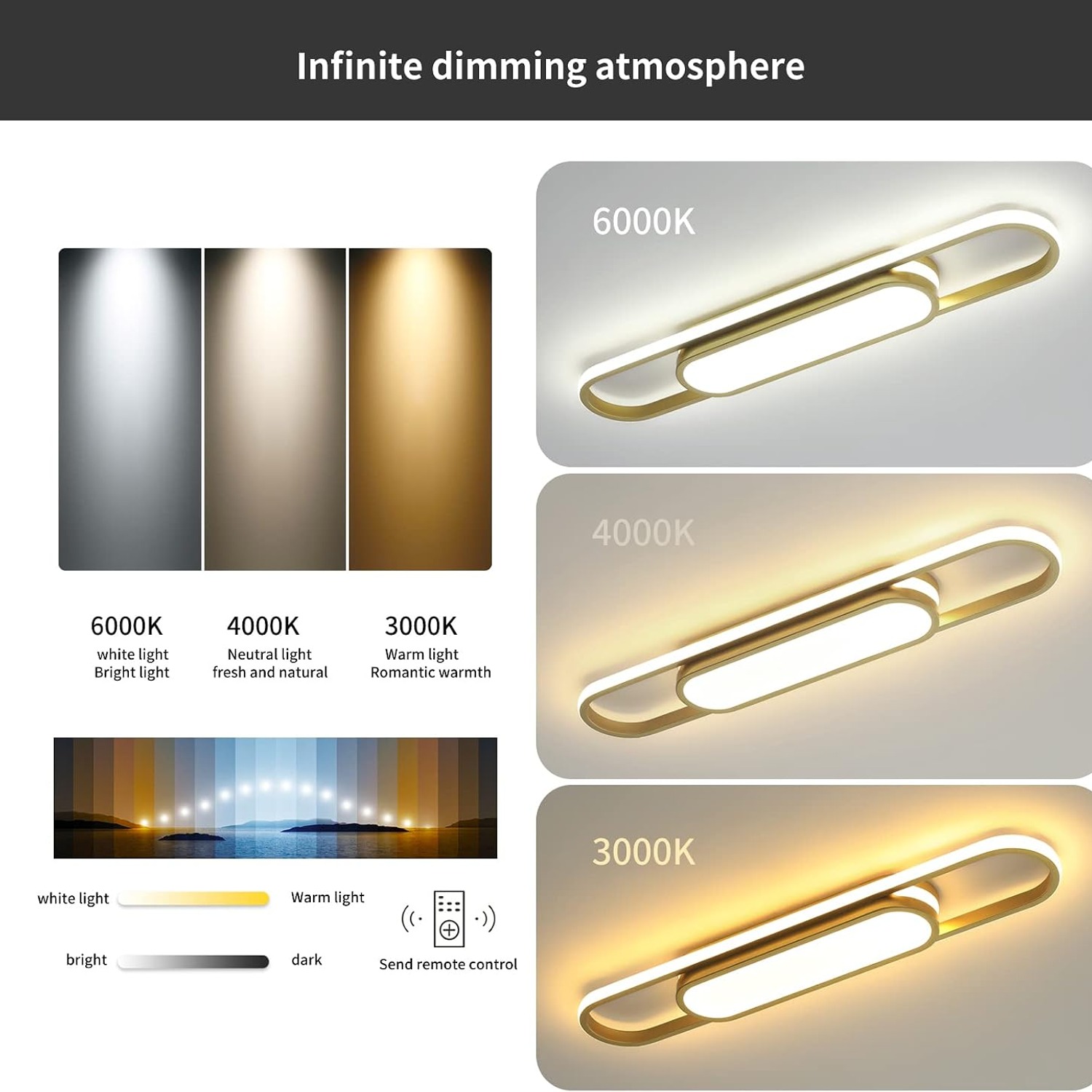
The second thing the driver controls is colour temperature. The array carries LEDs of different tones, and shifting the balance between them moves the light from warm to cool. Warm light at the lower end of the scale feels like the end of the day. Cooler white reads as daylight and makes detail easier to see. The listed colour temperature for this fitting is 3000 Kelvin with adjustable output across the range.
All of it runs from the remote. Brightness goes from 10 percent up to full, which is a genuinely useful range. Ten percent is enough to cross a room safely without waking anyone. Full output is 2400 lumens, which is enough to clean under furniture or chop vegetables without squinting.
The memory function ties it together. Leave the wall switch on, use the remote to turn the light off, and it comes back the way you left it. Most evenings you will never touch the remote at all.
Who this suits
If your ceiling is on the low side, this is an easy decision. Anything that hangs is working against you. A low profile fitting gives you the light without the obstacle.
It also suits long rooms and narrow spaces. A round light in a corridor lights the middle and leaves both ends dim. A 70cm linear fitting runs with the room and spreads light along it. The same logic applies over a kitchen bench, a dining table or a laundry run.
Rental properties are another good fit, as long as you are allowed to change fittings and keep the original to put back. The 1.4kg weight and standard ceiling mounting mean it is not a major job for a qualified electrician.
Where it does not suit is anywhere damp or exposed. This is an indoor fitting and it is not water resistant. Bathrooms, laundry tubs directly beneath it, covered outdoor areas and enclosed porches with weather coming in are all outside what it is built for. Check the listed uses and stay inside them.
Working out the right size and brightness
Start with the room. This light is suggested for spaces of roughly 15 to 20 square metres as the main source. A standard bedroom or a modest living room sits comfortably inside that. A large open plan living and dining space does not, and you would be better off with two fittings or adding lamps for the corners.
Then look at the shape. Measure the longest run you want lit. If that run is three or four metres, a 70cm fitting placed centrally will cover it well. If it is six metres, one fitting will leave the ends short.
Ceiling height matters for a different reason than you might expect. Lower ceilings spread light more widely from the same fitting, so you often need less brightness than you would guess. If your ceiling is high, light has further to travel and arrives weaker at the floor. In a tall room, 2400 lumens may be a supporting light rather than the main one.
Finally, think about what happens in the room. A room used for relaxing wants warm light and the ability to go dim. A room used for work, cooking or craft wants cooler, brighter light. A room used for all of those wants the ability to switch between them, which is exactly what a tunable, dimmable fitting gives you. That flexibility is the main reason people search for the best dimmable ceiling light rather than just the brightest one.
Installation, in plain terms
The fitting arrives with mounting material, a manual and the remote. Assembly is required, which here means attaching the mounting bracket to the ceiling, connecting the wiring and fixing the body to the bracket.
The wiring part is the part to take seriously. This is a corded electric fitting running at 220 volts and it connects to your home's ceiling circuit. In many countries that work legally has to be done by a licensed electrician. Even where rules are looser, it is cheap insurance to have someone qualified do it. Switch off at the circuit breaker, not just the wall switch, before anything else happens.
Check your ceiling before you order. Plasterboard needs the bracket fixed into a joist or into proper anchors rated for the weight. At 1.4kg this is not a heavy fitting, but a bracket that pulls loose over time is a problem nobody wants.
If you are replacing a fluorescent batten, expect the old mounting holes not to line up. Have a little filler and touch up paint ready.
Keeping it looking good
Acrylic is easy to keep clean and easy to ruin. Wipe it with a soft cloth, dry or barely damp, and nothing else. Solvent cleaners, window spray and abrasive pads all leave permanent marks or a milky haze on acrylic that no amount of polishing removes.
Turn the light off and let it cool first. Not because it runs hot, LEDs do not, but because a warm surface attracts fingerprints and a live fitting is not something to be poking at.
The sealed body helps here. Dust and insects struggle to get inside, which is the usual reason old ceiling lights go grey and patchy. Once or twice a year, give the outside a wipe and check that the mounting screws are still firm.
The short version
This is a 70cm linear flush mount ceiling light built for rooms where a hanging fitting is impractical. It sits 8.5cm off the ceiling, puts out up to 2400 lumens from a 40 watt integrated LED array, and lets you set both brightness and colour temperature from a remote. The memory function means it comes back on the way you left it.
It is acrylic over an iron frame with a gold electroplated finish and a white shade, weighs 1.4kg, and carries a 2 year manufacturer warranty. It is for indoor use only, needs a standard on and off wall switch rather than a wall dimmer, and requires installation.
If you have a room between roughly 15 and 20 square metres, a ceiling that will not take a pendant, and you want light that changes with the time of day, this is a straightforward and sensible choice.