

The complete guide
How to Choose a Small Black Crystal Chandelier for a Normal-Sized Room
The problem with most chandeliers
Walk into a lighting showroom and almost everything on display assumes you have a room you probably do not have. The big crystal fittings are built for stairwells with a two-storey void, or formal dining rooms with a long table underneath. Bring one of those home to a standard bedroom with a 2.4 metre ceiling and it does two unhelpful things. It eats the headroom, and it makes the rest of the room look smaller by comparison.
Meanwhile the alternative on offer is usually a flat round ceiling light. Practical, yes. Interesting, no. There is a wide gap between those two options, and that gap is where a small black crystal chandelier lives.
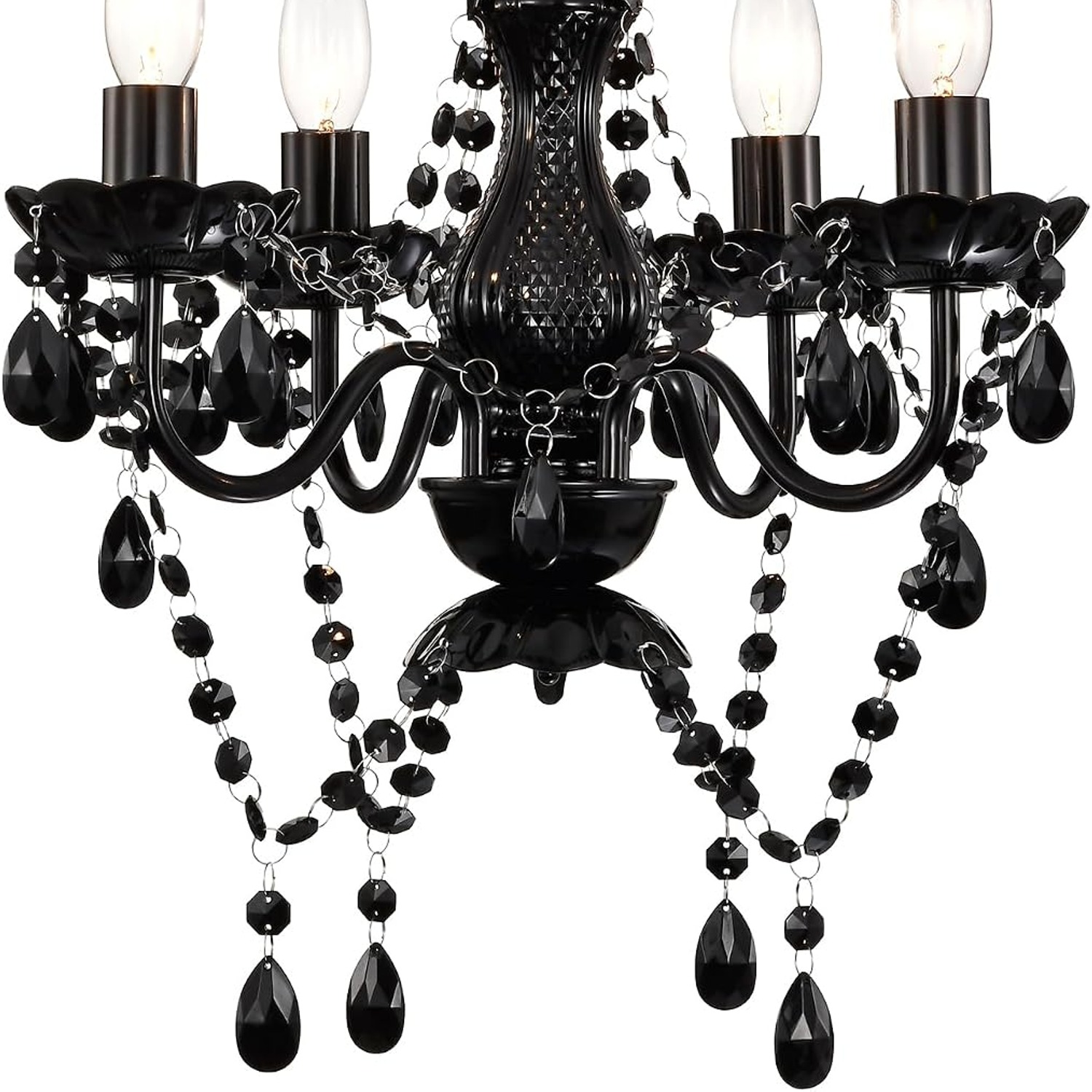
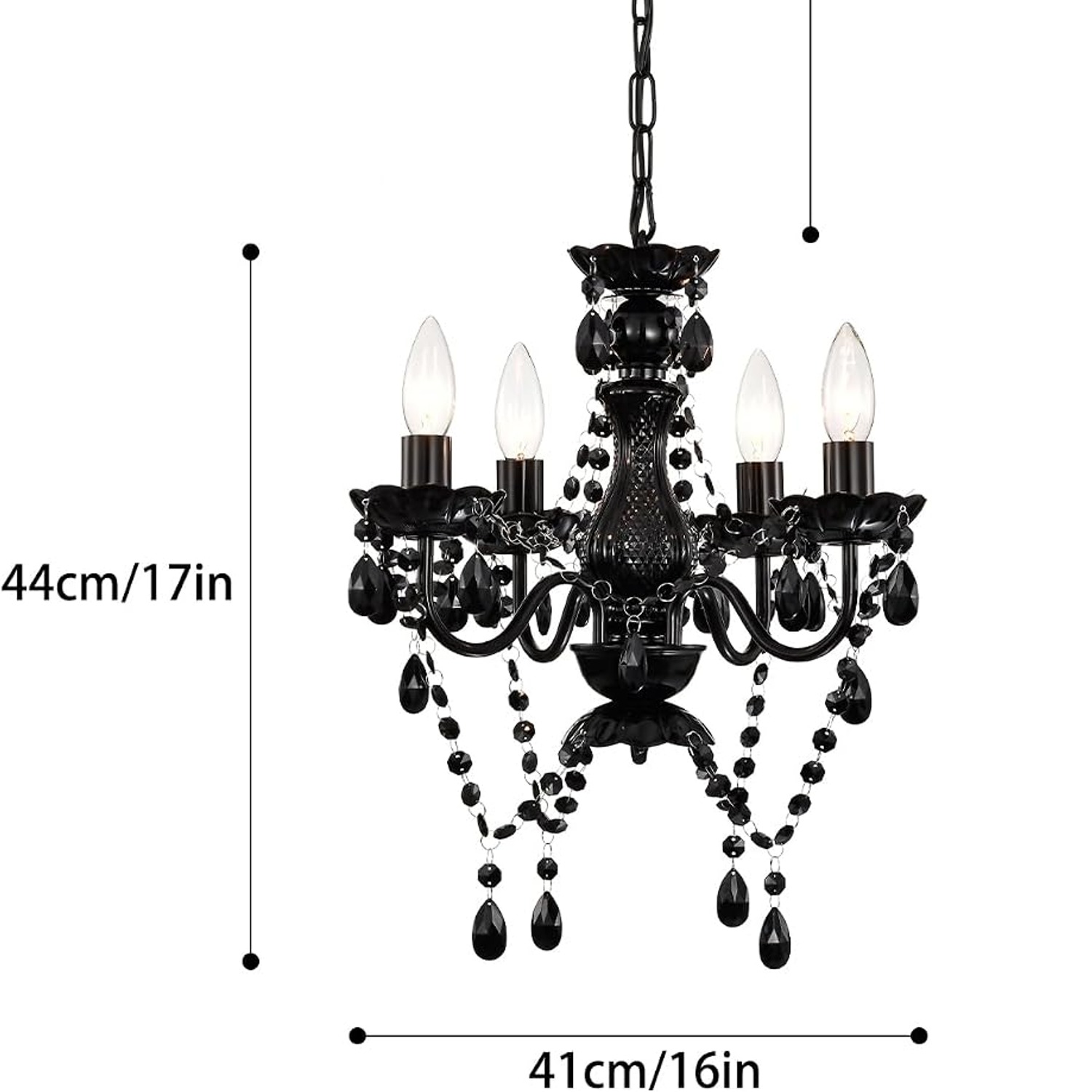
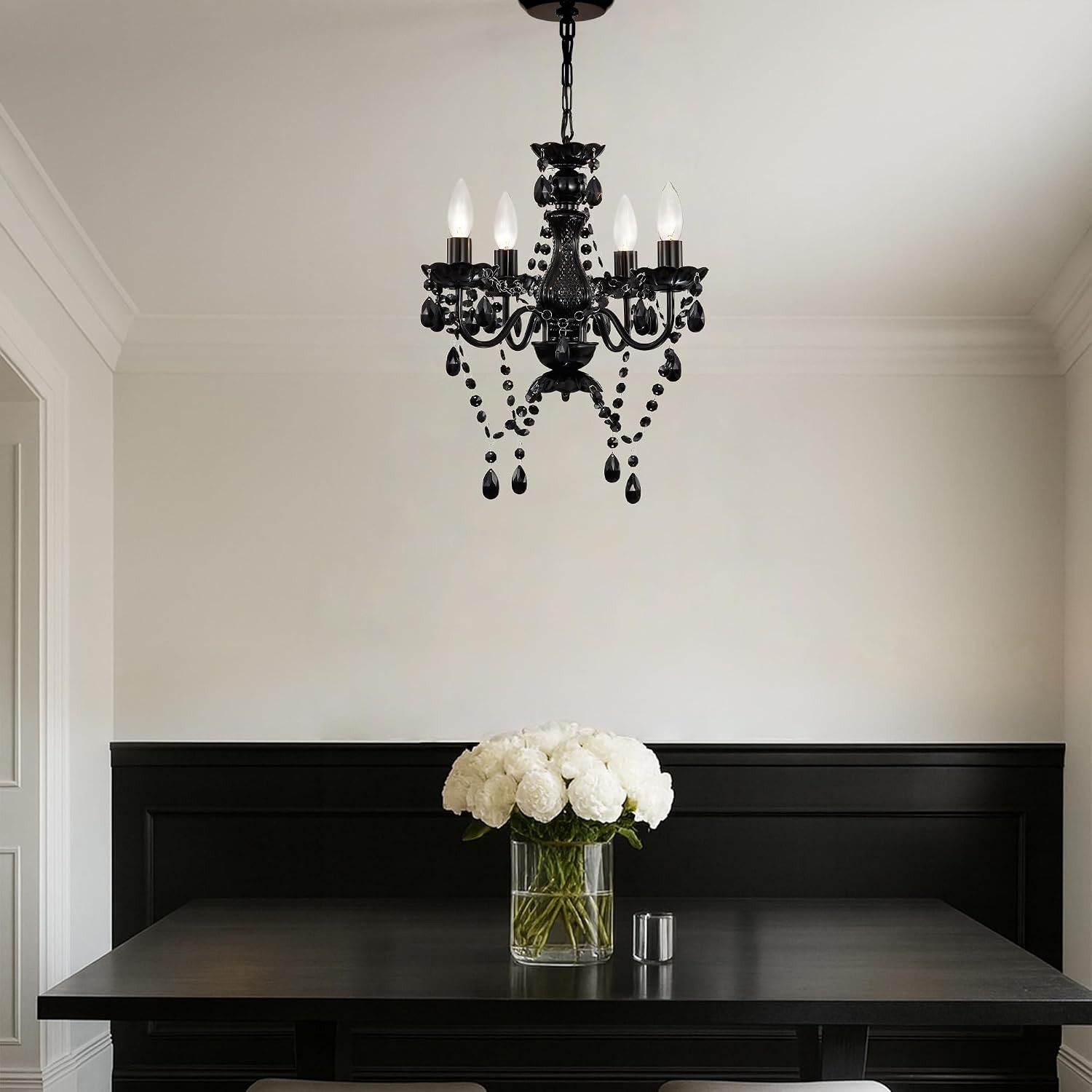
At 41cm across, this one is roughly the width of a large dinner plate plus a bit. It reads clearly as a chandelier, with four separate lights and acrylic crystal drops catching the glow, but it does not dominate the ceiling. In a bedroom it becomes the detail you notice last and then keep looking at. Over a kitchen island it gives the bench a focal point without blocking the view across the room.
How it works
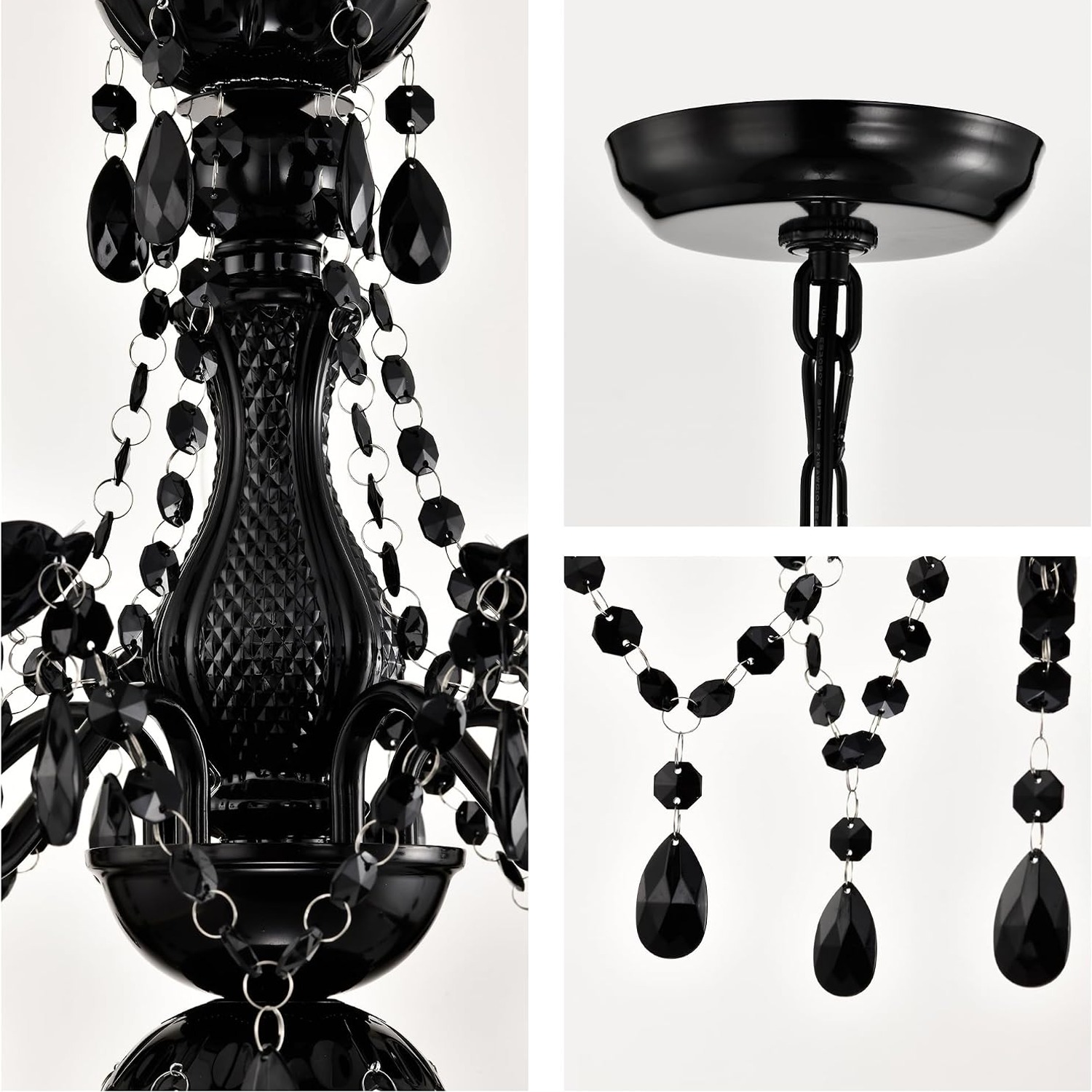
The construction is simple, which is part of why it suits smaller rooms. A black metal frame holds four E14 lamp holders, each rated for bulbs up to 60 watts. Around the frame sit acrylic crystal accents that pick up and scatter the light.
Four light sources instead of one makes a real difference in how a room feels. A single central bulb throws one strong pool of light down the middle and leaves hard shadows at the edges. Four spread around a frame overlap, so the light lands more evenly and faces look better under it. This is the same reason why a four-light chandelier often feels more comfortable in a bedroom than a single bright pendant of equal total output.
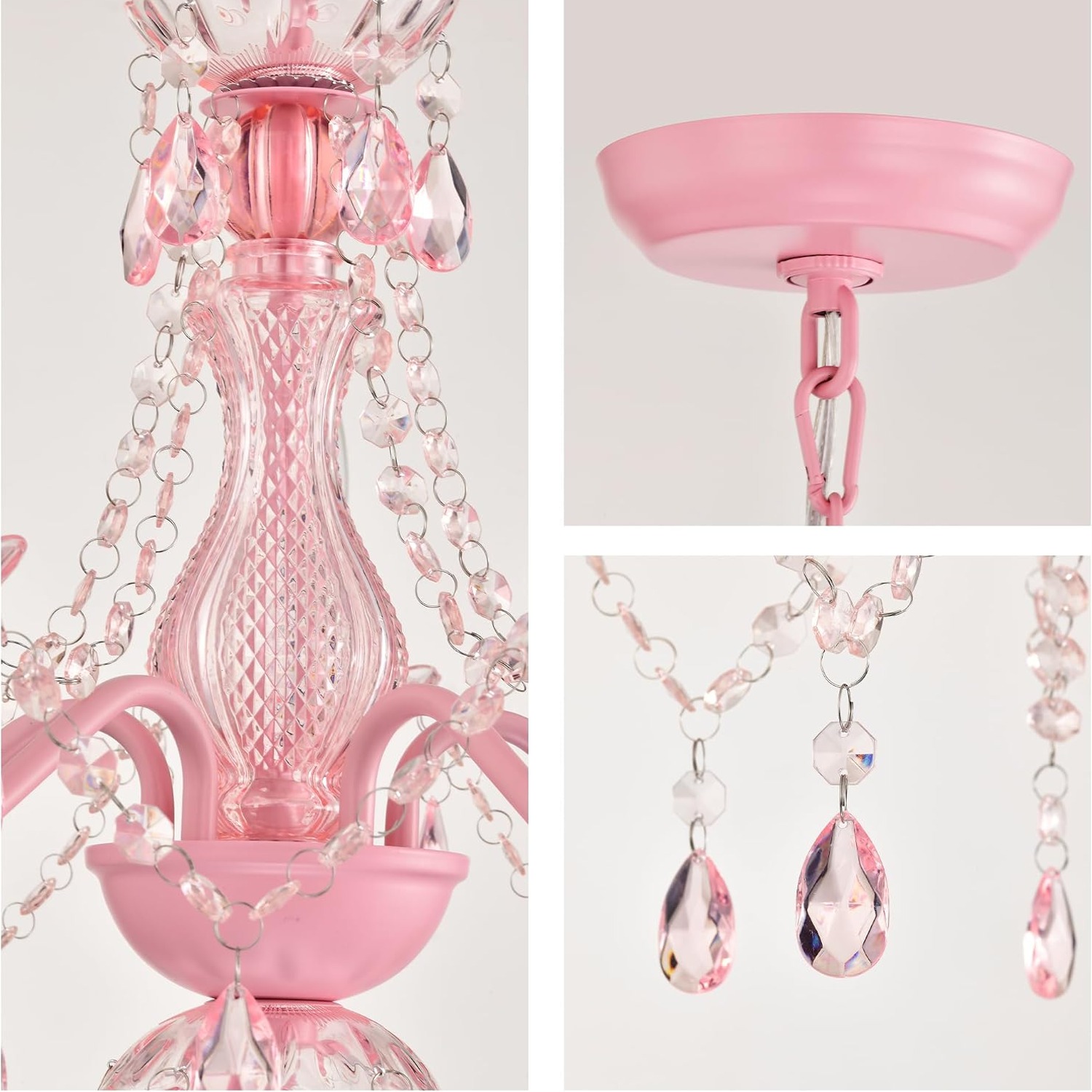
The acrylic is a practical choice rather than a compromise. Real cut crystal is lovely and heavy. Heavy means a more serious ceiling fixing, more care during installation, and a fitting you worry about when somebody slams a door. Acrylic gives you the sparkle at a fraction of the weight, with no sharp edges and no risk of a shattered drop on the floor. If the chandelier is going into a teen bedroom or a playroom, that matters.
Height is handled with a 100cm chain. The listed overall height of 144cm is the measurement with that chain at full stretch, which is not how most people will hang it. Your electrician removes links until the drop is where you want it. The canopy is designed to sit against flat or low ceilings, so you are not forced into a long drop you did not want.
Who it suits
This fitting makes most sense if you fall into one of these groups.
People redoing a bedroom who want more character than a flush ceiling light but have standard ceiling height to work with. The compact width is the whole point here.
Anyone lighting a landing, hallway or entry. These are narrow spaces where a wide fitting becomes an obstacle, but they also benefit enormously from something that looks considered rather than functional.
Kitchen island owners who want decorative light over the bench. The maker's description names kitchen island as a use, and a 41cm fitting suits an island that is not enormous. On a very long island, two smaller fittings spaced along the length often look better than one wide one.
Parents setting up a teen bedroom or study corner. The acrylic drops, light weight and black finish work for a room that needs to look grown-up without being fragile.
It is less suitable if you have a double-height void, a long formal dining table, or a very large open-plan living area. In those spaces 41cm will look lost, and you want something with more presence.
How to choose the right drop
The most common installation regret with any hanging light is the height. Here are the rules of thumb worth knowing before the electrician arrives.
Over a kitchen island, aim for roughly 75cm to 90cm between the bench surface and the bottom of the fitting. That keeps it out of your eyeline when you are standing at the bench but still low enough to feel like it belongs to the island rather than the ceiling.
Over a dining table, something like 75cm to 85cm above the table top usually works. You want people seated opposite each other to see each other clearly.
In a bedroom or hallway with nothing underneath, the fitting should clear the tallest person's head by a comfortable margin. On a 2.4 metre ceiling, that often means hanging it close to the canopy with only a short chain showing.
Walk through the installation in your head first. Does the bedroom door swing anywhere near it? Does anyone get up on that side of the bed in the dark? A five-minute think saves an awkward rehang later.
Bulbs matter more than you expect
The fitting takes four E14 bulbs, and bulbs are not given by the maker. That sounds like an inconvenience, but it is actually a useful bit of freedom. The character of the light in your room will come almost entirely from what you screw into those holders.
For bedrooms, warm white LEDs around 2700K suit the acrylic well. The light looks gentle, the drops glow rather than glare, and the black frame stays as a quiet outline. Something around 400 to 500 lumens per bulb usually gives enough ambient light for a normal bedroom when combined across four lamps.
For kitchen islands, step up to neutral white, somewhere around 3500K to 4000K, and more lumens per bulb. You are cutting vegetables under this light, so clarity beats cosiness. Even then, most kitchens want separate task lighting as well.
If you want control, buy bulbs marked dimmable and fit a compatible dimmer switch. The fitting has no dimming electronics of its own, and the switch is not included. Done properly, a dimmer turns the same chandelier from bright morning light to a low evening glow, which is the best height adjustable chandelier trick there is for a room that does more than one job.
Stay within the 60 watt per bulb limit regardless of bulb type. With LEDs you will not come anywhere near it, which is another reason they are the sensible choice here.
Installation and care
Assembly is required, and the box includes the chandelier, mounting hardware and installation accessories. The fitting hard-wires to your ceiling, which in most places means a qualified electrician does the work. Do not treat this as a weekend job unless you are licensed to do it.
Have your electrician check the ceiling fixing is into something solid, confirm the canopy suits your ceiling type, and set the chain length before anything goes up. Adjusting the drop afterwards means taking the whole thing down again.
Care is light work. Turn the power off and let bulbs cool. Dust the frame and acrylic with a soft dry cloth or a clean soft brush, which handles most of it. For marks, a barely damp cloth followed by an immediate dry is enough. Skip solvents, abrasive cleaners and spray polish, all of which can haze acrylic permanently. Every few months, give the chain, canopy screws and bulbs a quick check to make sure nothing has worked loose.
Heat is the main thing that ages acrylic over years, so running cool LED bulbs rather than halogen quietly protects the finish.
The short version
If you like the look of a crystal chandelier but your rooms are a normal size, this is the scale that actually works. Four lights spread the glow more kindly than one. The acrylic drops sparkle without weight or breakage risk. The black frame keeps it sharp instead of fussy, and the adjustable chain means you can set it high on a flat ceiling or lower over an island.
Buy the bulbs at the same time, have an electrician fit it, and spend two minutes deciding the drop before they start. That is most of the job done.