
The complete guide
How to Choose a Rattan Semi Flush Ceiling Light
The problem with small-room lighting
Think about the last time you walked down your own hallway. You probably did not look up. Most halls, entries and landings get the cheapest possible ceiling fitting, a flat plastic disc or a bare bulb, and nobody ever revisits the decision. The same thing happens in bedrooms, nurseries and walk-in robes. These are rooms where you cannot hang a big pendant, so people assume there is no real choice.
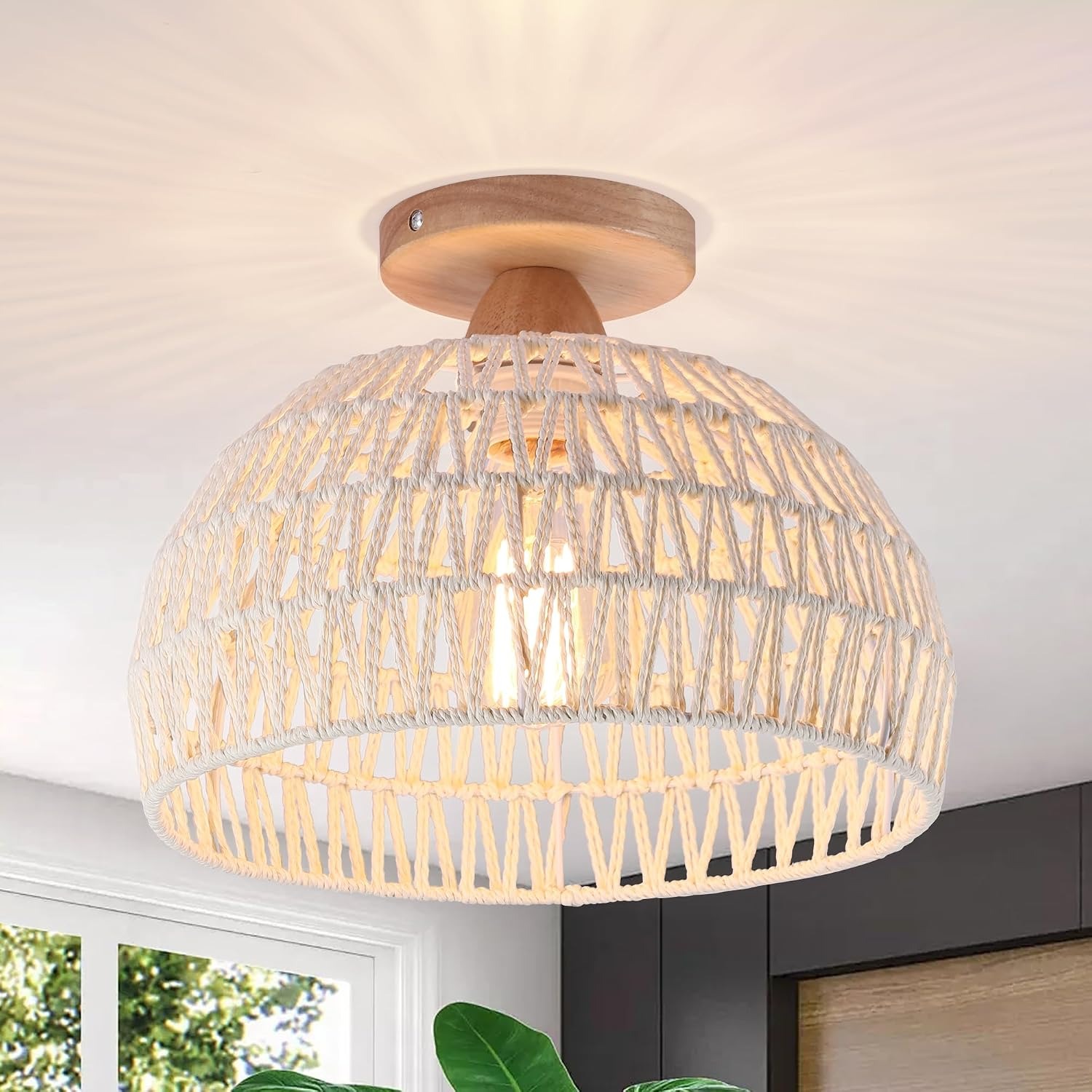
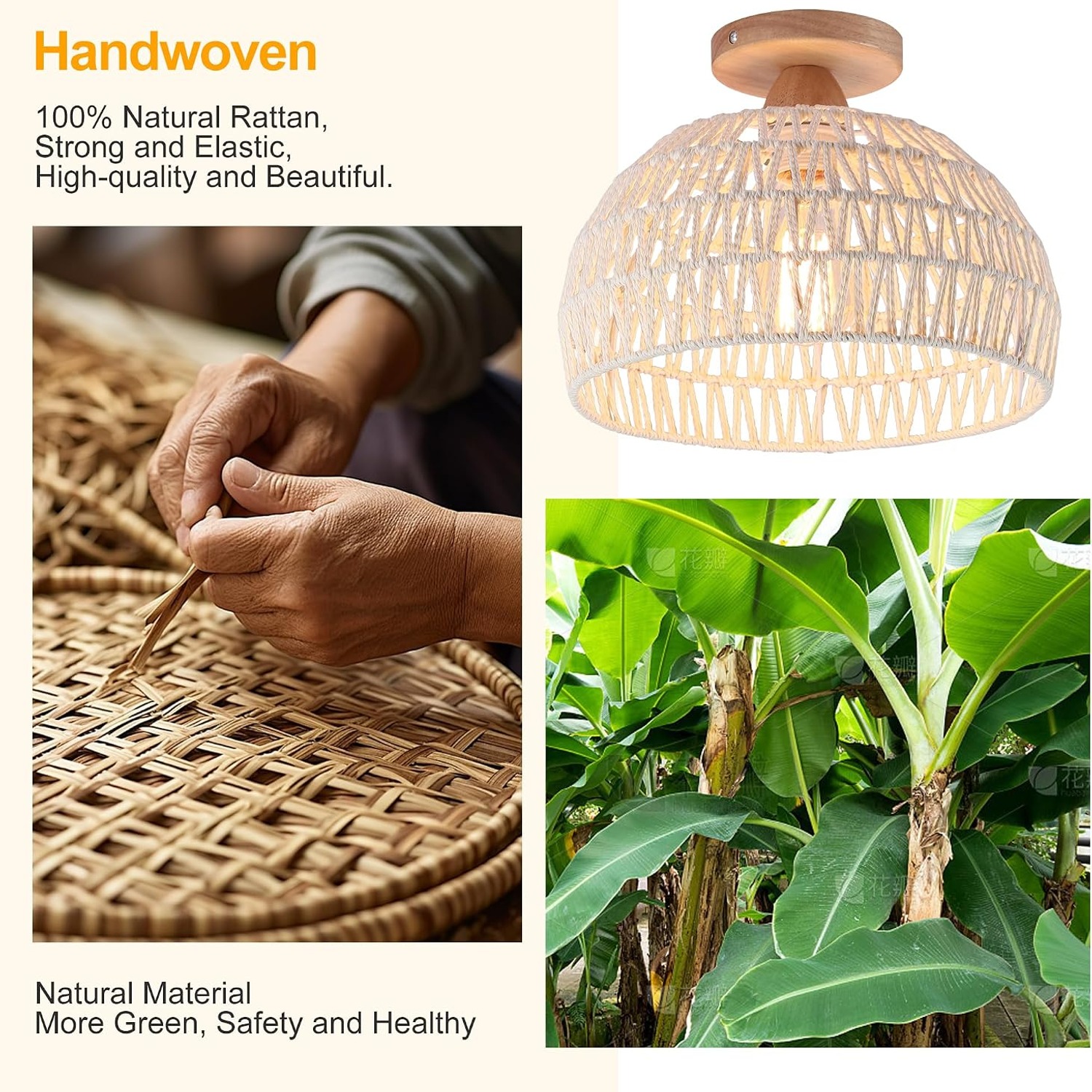
There is. A semi flush mount light sits close to the ceiling but still has a shade, a shape and some presence. You get the clearance of a flat fitting with the character of a pendant. And when that shade is hand-woven rattan, you also get something a plastic diffuser can never do, which is a pattern of light and shadow that moves across the ceiling.
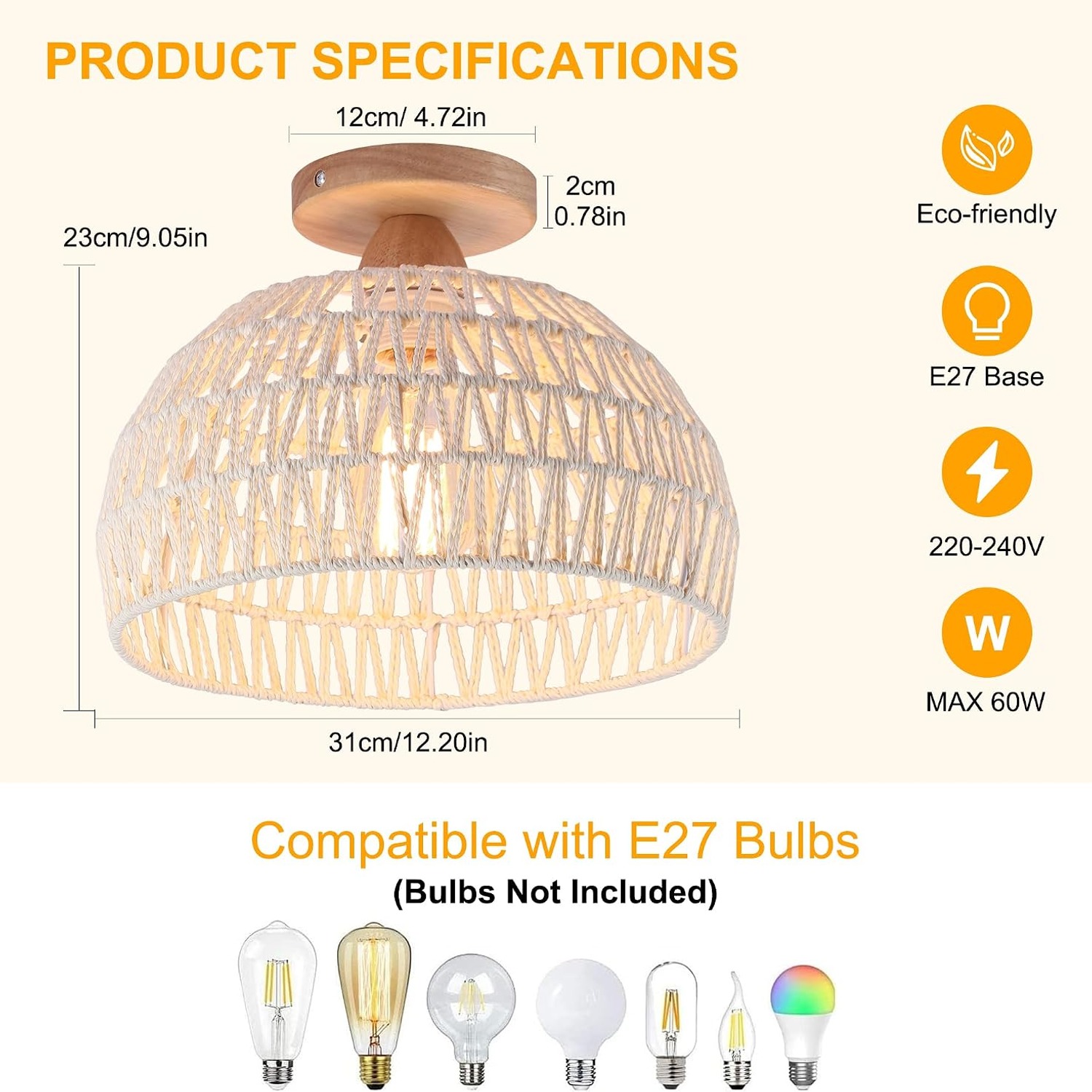
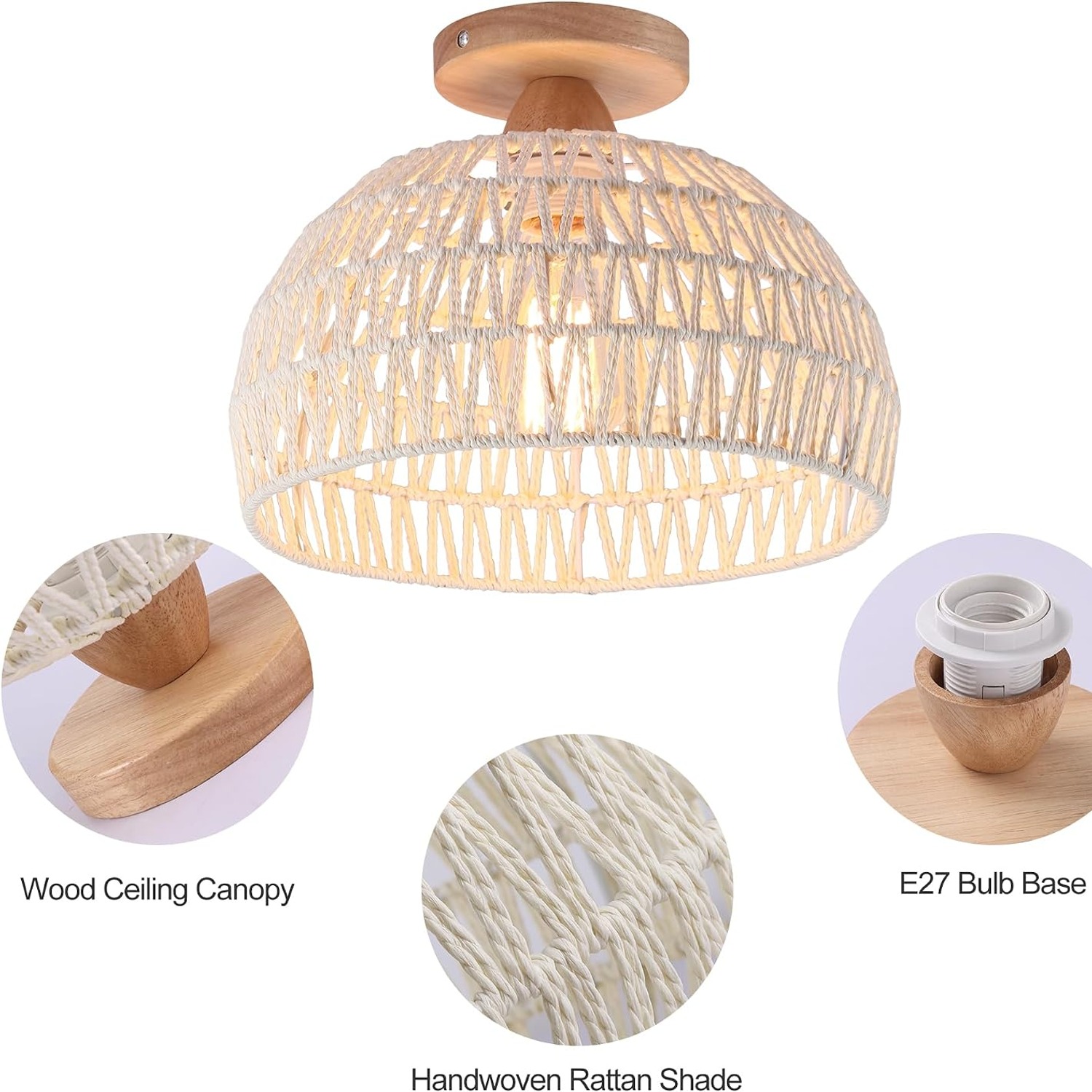
This particular fixture is 31cm across and 31cm tall. That is small. It is meant to be. A rattan ceiling light at this scale slips into tight spaces without crowding them.
How a woven shade changes a room
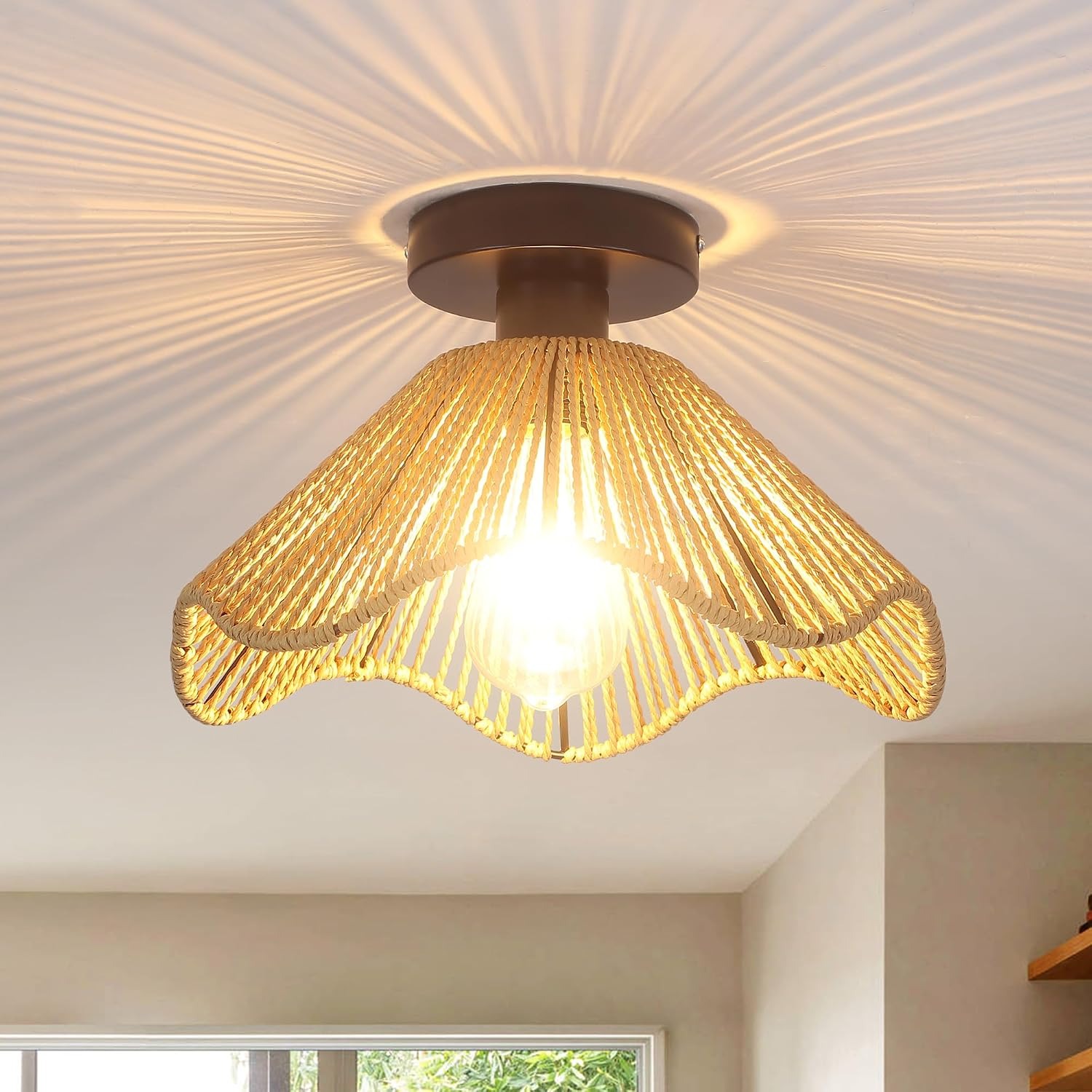
Solid shades push light in one direction. Open weaves do something more interesting. Some light goes straight down, which is what you want for seeing where you are going. The rest escapes sideways and upward through the gaps in the rattan, hitting the ceiling and the top of the walls in a soft, uneven pattern.
The effect is strongest on plain pale ceilings, which most of us have. On a white ceiling the woven shadow reads clearly and makes the room feel less flat. In a nursery it is gentle enough to be calming. In an entry it gives visitors something to look at in the first three seconds of walking in.
Light colour matters a lot here. A warm bulb around 2700K to 3000K makes the rattan glow honey-coloured and suits bedrooms and hallways. A neutral bulb around 4000K keeps things crisper and works better in a kitchen or laundry. The fixture takes a standard E27 screw bulb up to 60 watts, and the bulb is not given by the maker, so that choice is entirely yours.
If you want control beyond on and off, fit a dimmable bulb and a dimmer-capable wall switch. Both need to be bought separately. Some LED bulbs also let you switch between warm, neutral and cool temperatures, which is handy if you are not sure what you want before you live with it for a week.
Who it suits
This fitting makes most sense if any of the following describe you.
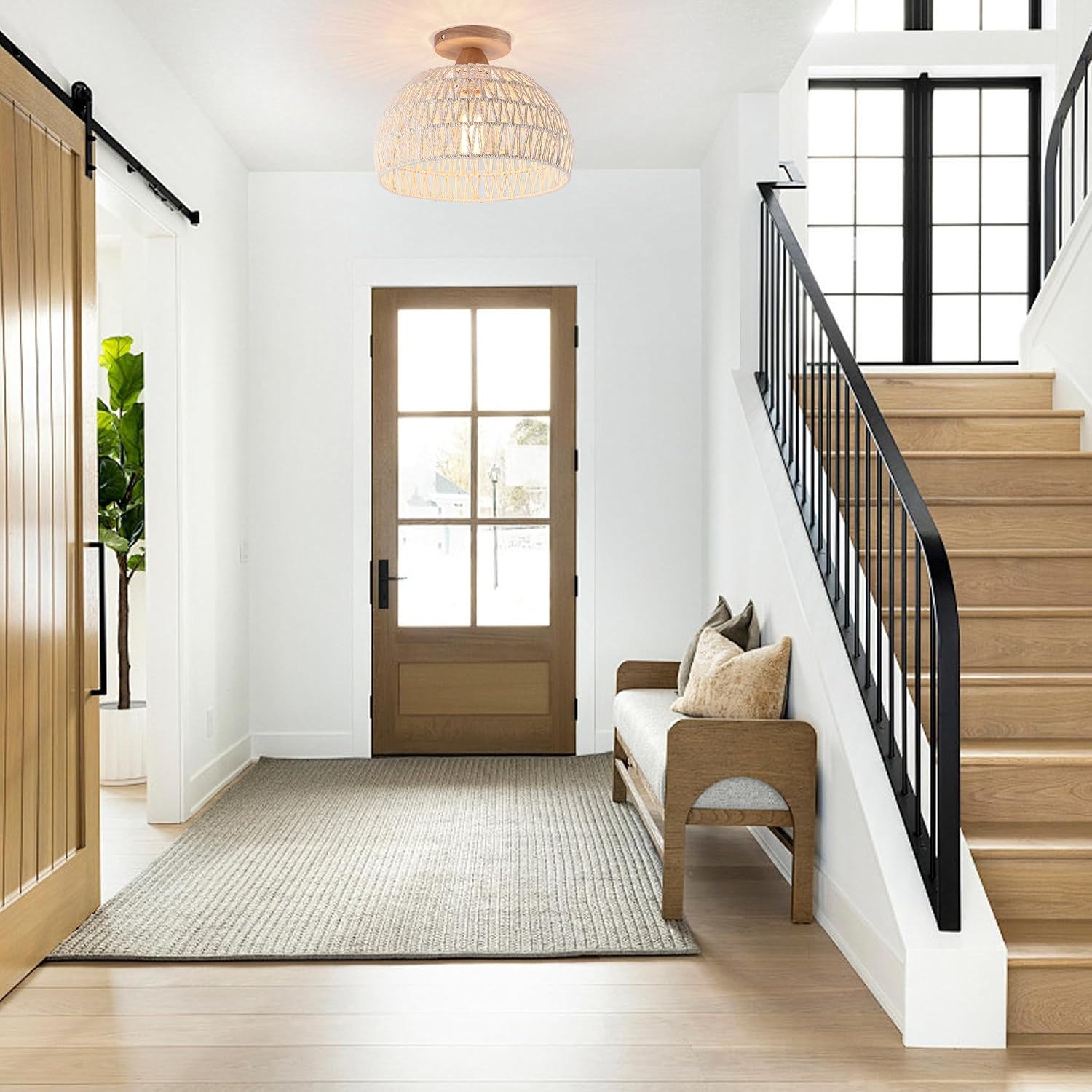
You have a ceiling under about 2.6 metres and a pendant would feel oppressive. You rent and want visual impact from something you can swap back when you leave. You are furnishing a coastal, boho or natural-materials interior and the lighting is the last piece that still looks builder-grade. Or you have a hallway, landing or entry that has been functional but dull since the day you moved in.
It suits nurseries and children's bedrooms too, since there is no glass, no sharp edges and no low-hanging glare. Many people searching for the best nursery ceiling light land on woven shades for exactly this reason.
Where it does not suit: anywhere wet. The fixture is not water resistant and the shade is a natural fibre. Keep it out of shower zones, away from steamy ensuites with poor ventilation, and off covered porches that still catch rain. Indoor only means indoor only.
It also runs on 220-240 volts. If your home uses a 110-120 volt supply, this one is not compatible.
Working out how many and where
For a single small room, one fitting in the middle of the ceiling is the standard answer and usually the right one. A 31cm shade lights a space of a few square metres nicely as ambient light.
Longer spaces are where people get it wrong. A six metre hallway with one light in the centre has two gloomy ends. Two or three fittings spaced roughly 1.5 to 2 metres apart give an even wash and look deliberate rather than accidental. If you are running more than one, buy them together so the weave tone matches, since natural rattan varies slightly between pieces.
In a kitchen, treat this as ambient light rather than task light. It is not going to light a chopping board the way under-cabinet strips do. Used alongside other sources, though, it softens a room that can otherwise feel hard and bright.
Over a stairwell landing, check the clearance at the highest step. Semi flush shapes are usually fine here where a pendant would be a hazard.
Installing it without drama
Assembly is required, but it is straightforward. The base plate fixes to the ceiling, the wiring connects, and then the shade secures to the base. An instruction manual and mounting hardware are included in the box.
The weight helps. At 1.1kg, this is a light fitting by any standard. Holding it overhead while someone else connects the wires is not the shoulder workout that heavy metal fixtures can be. It also means the existing ceiling box is very unlikely to be under strain.
The important part is the electrical work. In many countries, connecting a mains light fixture legally requires a licensed electrician. Even where it does not, if you are not completely confident about isolating the circuit and identifying the wires, pay someone. Turn off the power at the switchboard, not just at the wall switch, and confirm it is dead before touching anything.
One small tip: install the bulb before you fit the shade if the shade opening is tight. It saves a fiddly moment at the end.
Looking after it
Rattan is low maintenance, but it is not no maintenance. Dust settles in a weave faster than it does on a smooth surface.
Once a season, switch the power off, let the bulb cool, and run a soft brush or a vacuum brush attachment over the shade. Work along the direction of the weave rather than across it, which stops you catching and lifting the fibres. For a mark that will not brush off, use a cloth that is barely damp and dry the area immediately. Do not soak natural fibre and never put it under running water.
Keep it out of long periods of direct harsh sunlight if you can. Strong sun can gradually warm the tone of natural fibres over years. The painted white finish on this shade holds up better than raw cane would, but no material is immune.
Use LED bulbs. They run cool, which is kinder to a fibre shade, and they will outlast several incandescent replacements. Just stay at or under the 60 watt maximum regardless of bulb type.
Matching it to what you already have
Rattan plays well with a lot of things. Timber furniture, linen, jute rugs, cane chairs, white walls, green plants. If your home already leans natural or coastal, this fitting will slot in without any effort.
It also works as a deliberate contrast in a more modern space. A woven shade against flat white walls and black hardware reads as intentional rather than mismatched. What it does not love is a heavily ornate traditional scheme with lots of brass and crystal, where the simple weave can look out of place.
If you are buying lighting across several rooms, repeating the same woven texture in a hallway, a bedroom and a landing ties a home together more effectively than matching every metal finish.
The short version
This is a 31cm hand-woven rattan semi flush ceiling light that takes one E27 bulb up to 60 watts on a 220-240 volt supply. It weighs 1.1kg, needs assembly, comes with mounting hardware and an instruction manual, and carries a 2 year limited manufacturer warranty.
Buy it if you have a small or low-ceilinged room that deserves better than a plastic disc, and you like the look of natural fibre and patterned shadow. Skip it if the space is wet, outdoors, or running on 110 volts.
Pick your bulb colour carefully. It is the cheapest decision in the whole project and it changes the result more than anything else.