
The complete guide
How to Choose an 8-Light Industrial Chandelier
The problem with one bulb in the middle of the ceiling
Walk into most rooms and the lighting is doing the bare minimum. One fitting, one bulb, straight down from the centre of the ceiling. It lights the floor, casts hard shadows under people's eyes, and leaves the corners of the room in a kind of permanent dusk. You can buy nice furniture, paint the walls a good colour and hang art you actually like, and that single bulb will still flatten all of it.
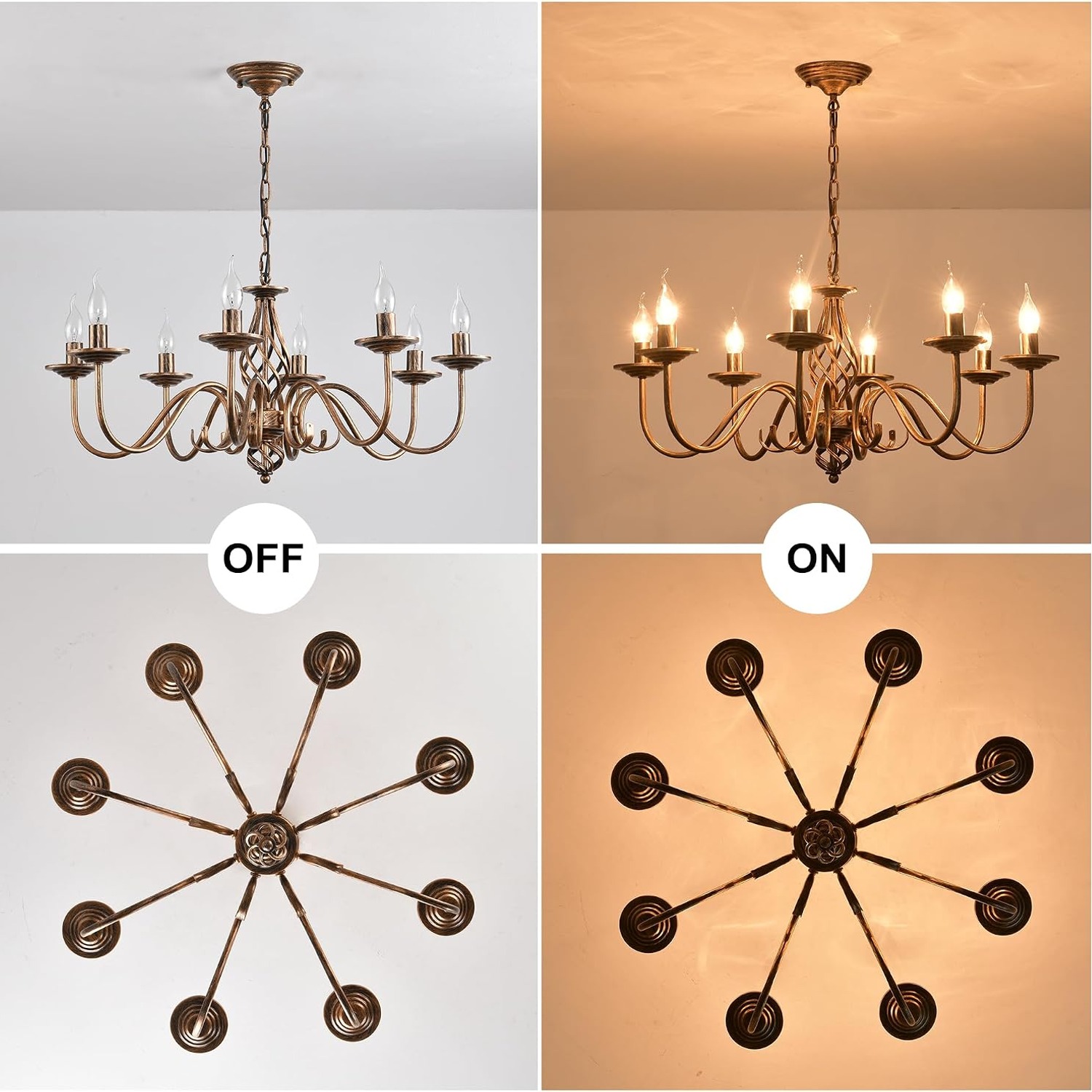
An eight-light chandelier works differently. Instead of one source, you get eight smaller ones spread across a 77cm frame. The light leaves from eight points at slightly different angles, so it bounces, overlaps and softens. Shadows get gentler. The glow reaches walls and table tops instead of just the rug. That is the real reason people put chandeliers over dining tables, and it has very little to do with looking fancy.
How this fixture is put together
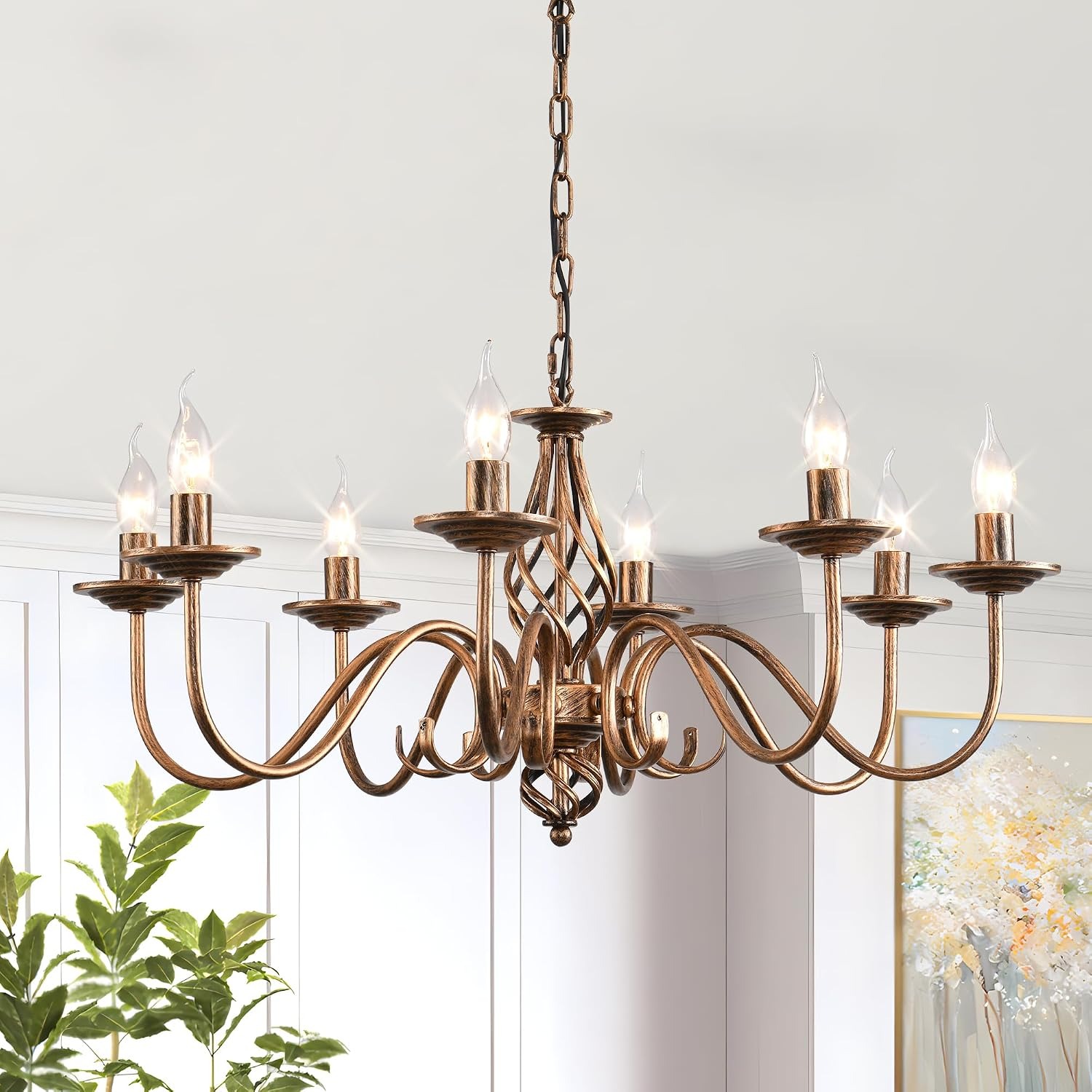
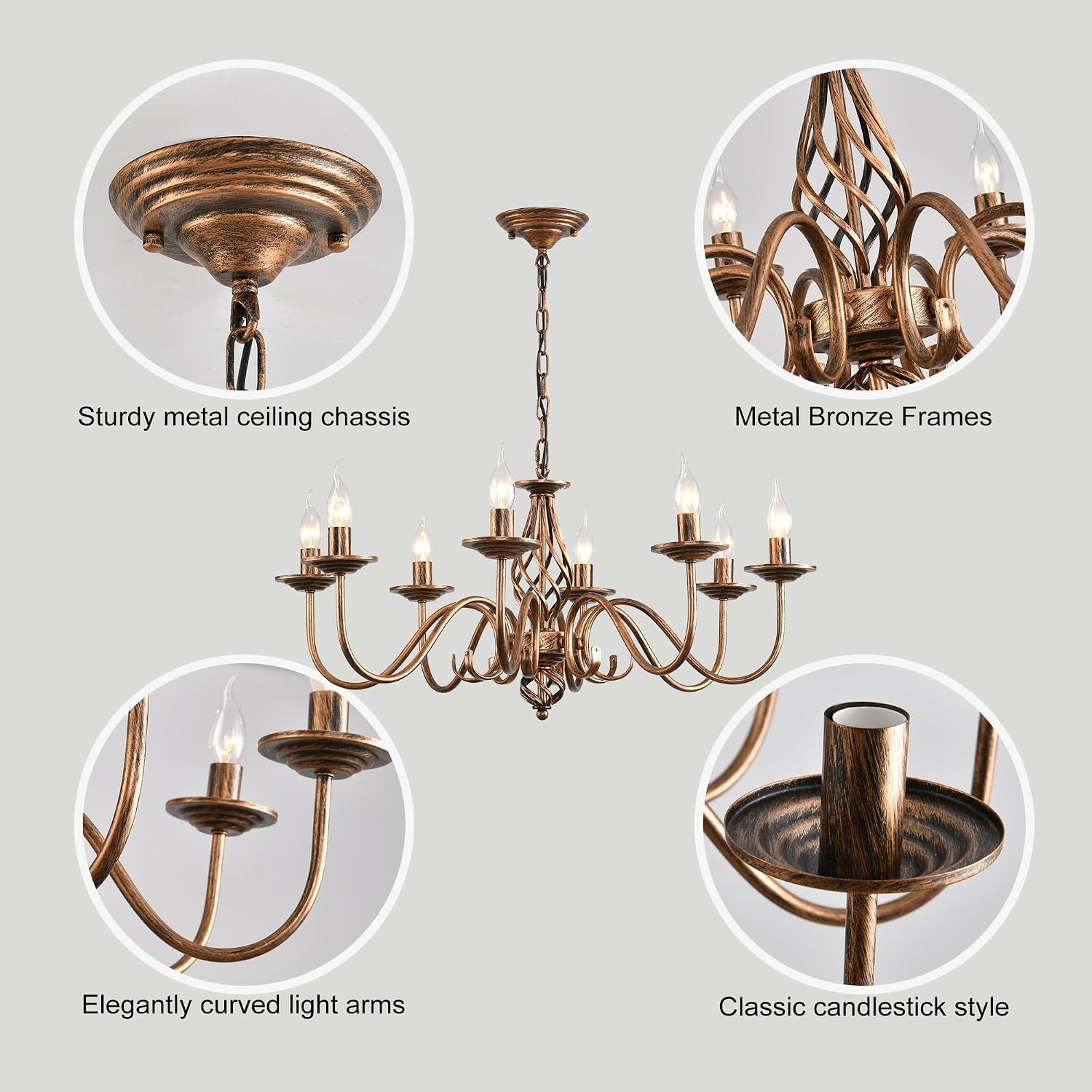
The frame is alloy steel and metal, finished in a bronze paint. The arms curve out and up from a central column in a drop shape, each one ending in an E14 lamp holder. There is no glass, no fabric shade and nothing fragile hanging off it, which makes it a lot easier to live with than a crystal piece.
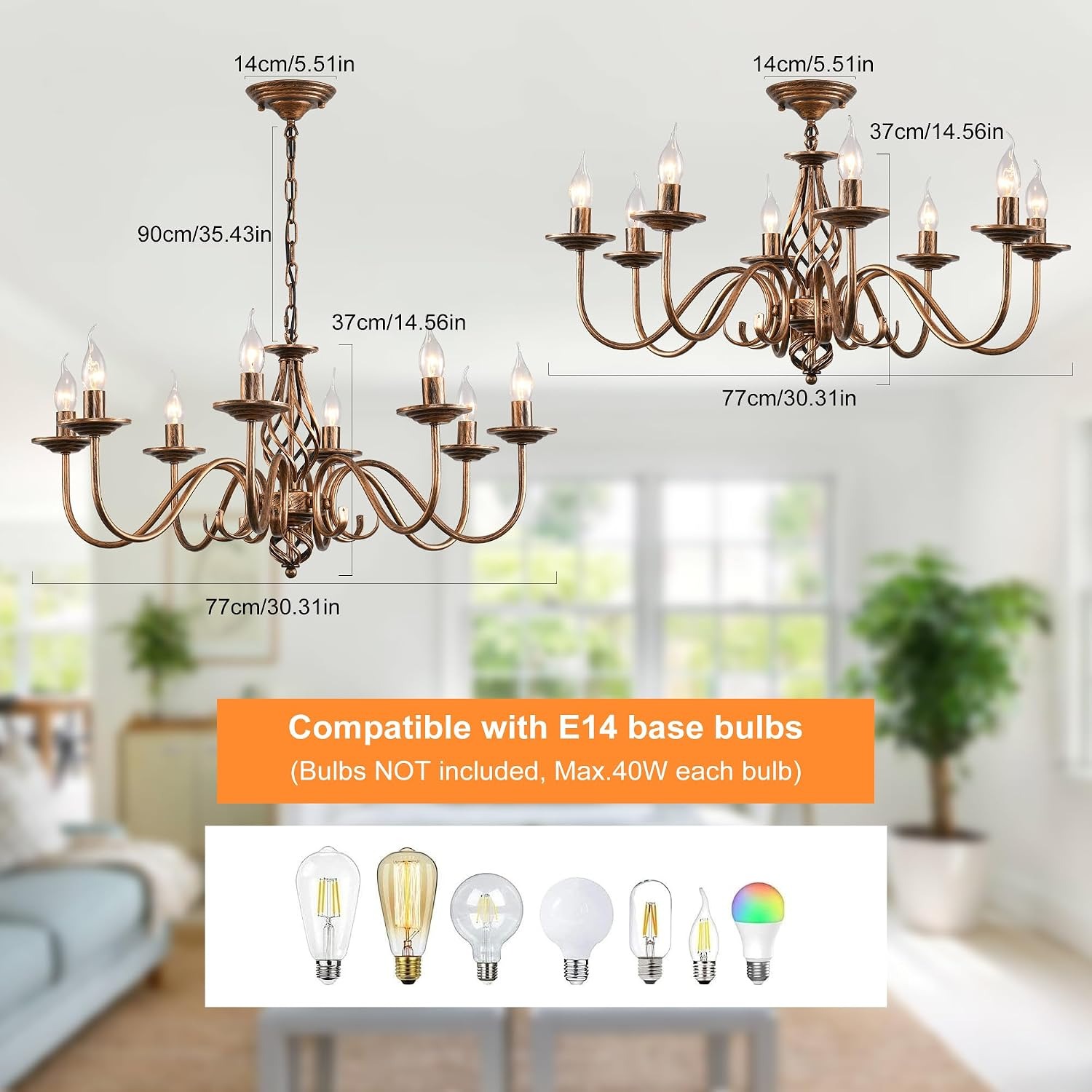
Dimensions are 37 x 77 x 77 centimetres. The 77cm width is the number that matters most for planning, since that is the footprint it claims on your ceiling. The round canopy is about 14cm across, which is small enough to sit neatly over a standard ceiling box.
The chain extends to 90cm. That range is what makes a chain-hung fixture flexible: you remove links for a low ceiling and leave them in for a high one. It mounts semi flush, so even at its shortest the fixture sits tight to the ceiling rather than dangling. The maker states it works on flat, sloped and vaulted ceilings, which is one of the advantages of a chain over a rigid stem. Gravity sorts out the angle for you.
Each holder takes an E14 bulb up to 40W. You can run LED, CFL or incandescent. Dimming works when you pair dimmable bulbs with a compatible dimmer switch, which is worth knowing before you buy eight bulbs that turn out to be the wrong kind.
Who it suits
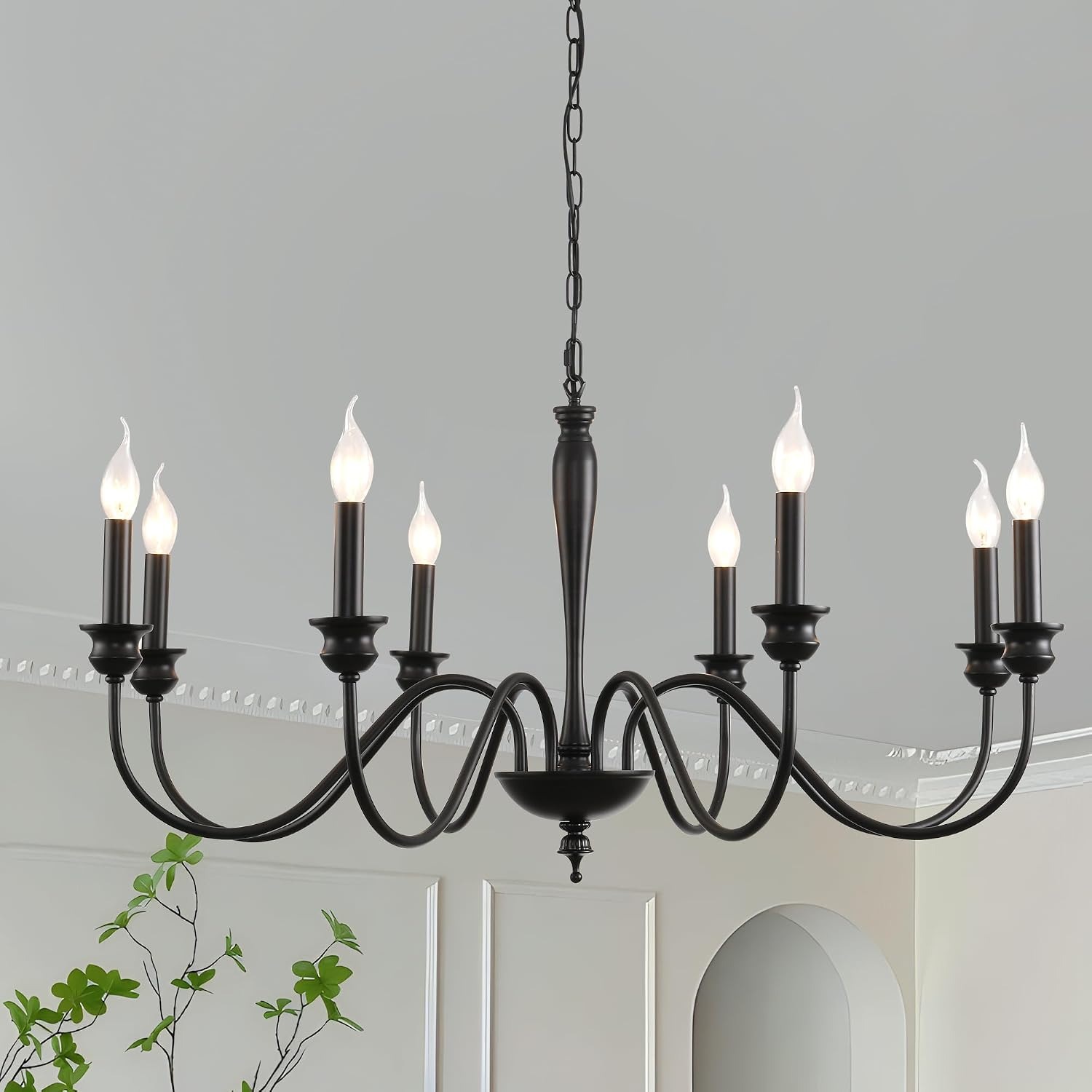
This one fits people with warm, slightly rustic or industrial rooms. Think timber floors, exposed brick, painted panelling, older cottages, converted spaces, and newer homes styled to feel lived-in. The bronze finish is the key. It is warmer than black and less showy than brass, so it blends with timber and warm paint rather than fighting them.
It also suits anyone who wants a best statement ceiling light without taking over the room. At 77cm wide it registers as a proper feature, but it is not a hotel-lobby piece. Eight arms in a drop form read as generous, not theatrical.
Where it does not suit: bathrooms, laundries, covered patios or anywhere with steam and damp. The fixture is listed as not water resistant and recommended for indoor use only. That is not a style decision, it is a safety one.
Picking the right drop height
This is where most chandelier buys go wrong, and it costs nothing to get right.
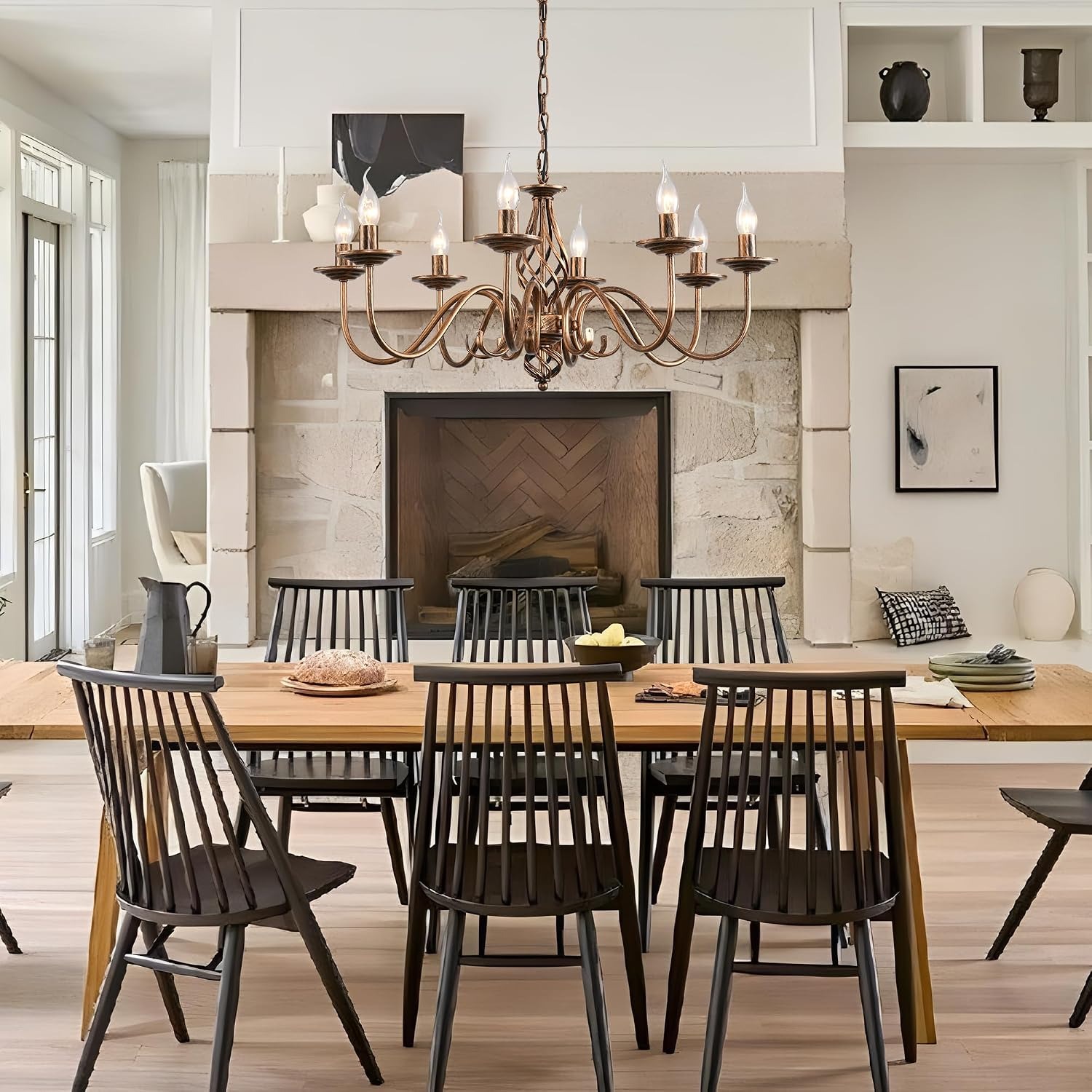
Over a dining table, the usual approach is to leave around 75 to 85cm between the table surface and the bottom of the fixture. That keeps the light out of eye level when you are seated and stops anyone leaning across the table from meeting metal. In a room with a 2.4m ceiling and a 75cm table, that puts the fixture base somewhere near 1.5 to 1.6m off the floor.
In a hallway, entry or anywhere people walk underneath, the rule changes. Keep at least 2.1m of clear space below the fixture. Tall members of the household will thank you. For a stairwell or a double-height entry, you can run the full 90cm of chain and the fixture will still read as proportionate because the volume of the space absorbs it.
Width matters too. A 77cm fixture looks right over a table of roughly 100cm across or wider. Over a narrow 80cm table it starts to feel like it is overhanging, and in a tight hallway it can crowd the walls. Measure before you order, then measure the doorway it has to come through.
Choosing your bulbs
Eight bulbs is a real decision, not an afterthought. Three things to think about.
First, colour temperature. The fixture is designed around warm light, and warm bulbs in the 2400K to 2700K range are what make a best vintage ceiling light look convincing. Cool white bulbs in a bronze candle chandelier look wrong in a way that is hard to explain but obvious the moment you see it.
Second, bulb shape. Clear filament-look candle bulbs show the glowing element and lean hard into the vintage look. Frosted or opal globes diffuse more and give a softer, cleaner result with less glare. If the chandelier hangs in your eyeline, frosted is often kinder.
Third, dimmability. If you want the option of low evening light, buy dimmable LEDs and have your electrician fit a compatible dimmer. Standard LEDs on a dimmer tend to flicker or hum, and people usually blame the fixture when the bulbs are the problem.
Buy all eight bulbs from the same batch. Mixed batches can vary slightly in tone, and on a chandelier that difference is visible from across the room.
Installation, honestly
Assembly is required. The arms, centre column, chain and hardware ship separately and you put the frame together before it goes up. Most people manage that part in under an hour with the parts laid out on a blanket. All the mounting hardware is included.
The wiring is a different matter. This is a hardwired 220 volt ceiling fixture, and the maker recommends professional installation. In many places that work legally has to be done by a licensed electrician anyway. There is also the mounting point to consider. An eight-arm metal chandelier needs a ceiling box or brace rated to carry it, and plasterboard on its own is not enough. A good electrician will check that and upgrade it if needed.
Book the electrician for after the fixture has arrived and been checked, not before. Boxes get delayed and parts occasionally arrive damaged.
Keeping it looking right
Painted metal is forgiving, but it is still paint. Turn the power off at the wall and let the bulbs cool before you touch anything. Dust the frame and arms with a dry microfibre cloth or a soft duster, working from the top down so you are not resettling dust on parts you already did. For actual marks, a barely damp cloth followed by an immediate dry wipe is enough.
Avoid household sprays, solvents and abrasive pads. They can dull a painted bronze finish, and once it goes patchy there is no fixing it without repainting.
Once a year, check the mechanical bits. Chain links, canopy screws and bulb seating all work slightly loose over time, especially in a room with a heavy door or foot traffic on the floor above. Thirty seconds with a screwdriver prevents the kind of rattle that drives people mad.
The short version
Eight E14 lamp holders, 40W maximum each, in a 77cm wide bronze painted metal frame that stands 37cm tall. Adjustable chain to 90cm, semi flush ceiling mount, suitable for flat, sloped and vaulted ceilings. Warm light, downward throw, dimmable with the right bulbs and switch. Indoor only, not water resistant, assembly required, and a licensed electrician for the wiring.
If your dining table is 100cm or more across, or you have an entry or living room where a single bulb has never quite worked, this is the kind of fixture that fixes the problem and looks good doing it. Measure first, buy matched warm bulbs, and get the drop height right. The rest takes care of itself.