
The complete guide
How to Choose a Linear Crystal Chandelier for a Kitchen Island
The problem with one light in the middle of the ceiling
Walk into most kitchens and you will find a single light fitting roughly in the centre of the ceiling. It was probably put there before the island existed. The result is predictable. You stand at the bench with your back to the light, your body blocks it, and you chop in your own shadow. Meanwhile the ends of the island sit dim and the whole room feels flatter than it should.
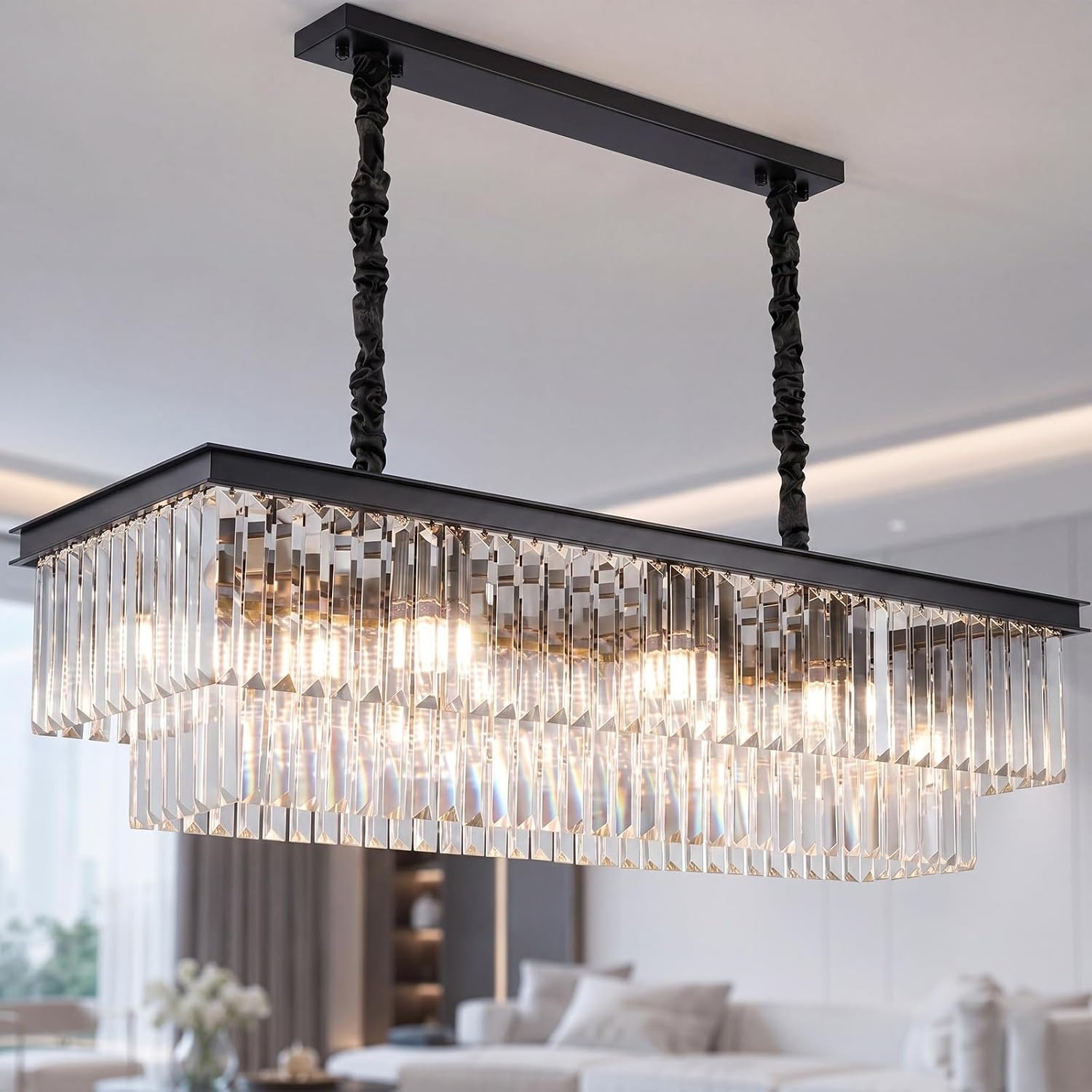
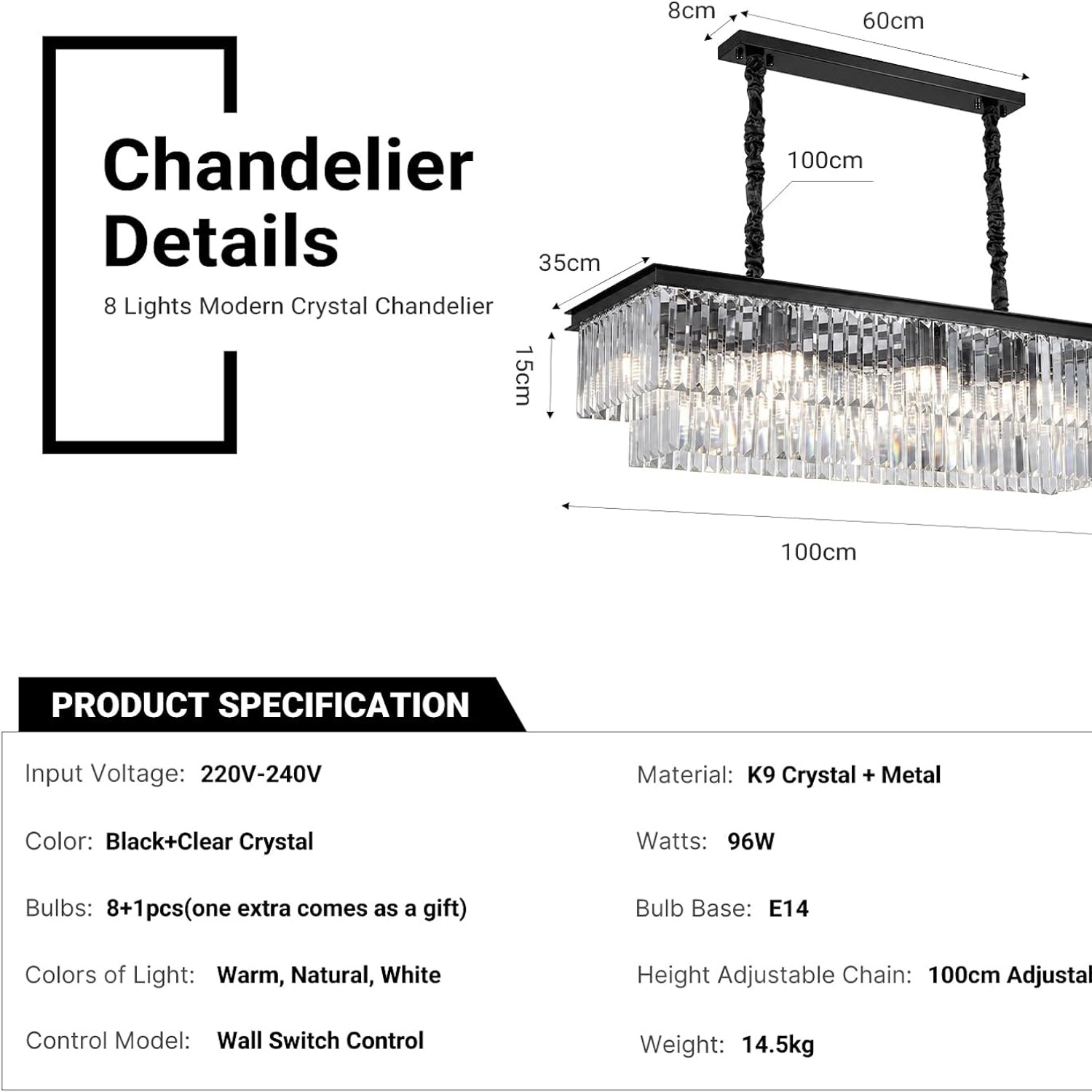
Islands and long dining tables are linear objects. Lighting them properly means using a linear light, or several lights in a row. That is the entire logic behind a fixture like this one. It runs 100cm along the length of the surface, so the light falls across the whole working area instead of pooling in one spot.
The second thing people want from an island light is a bit of presence. A kitchen island is usually the piece of furniture everyone gathers around. A plain metal bar can light it fine and still look like nothing. Crystal gives you the decorative element without needing a huge ornate fitting that would feel wrong in a modern kitchen.
How this one works
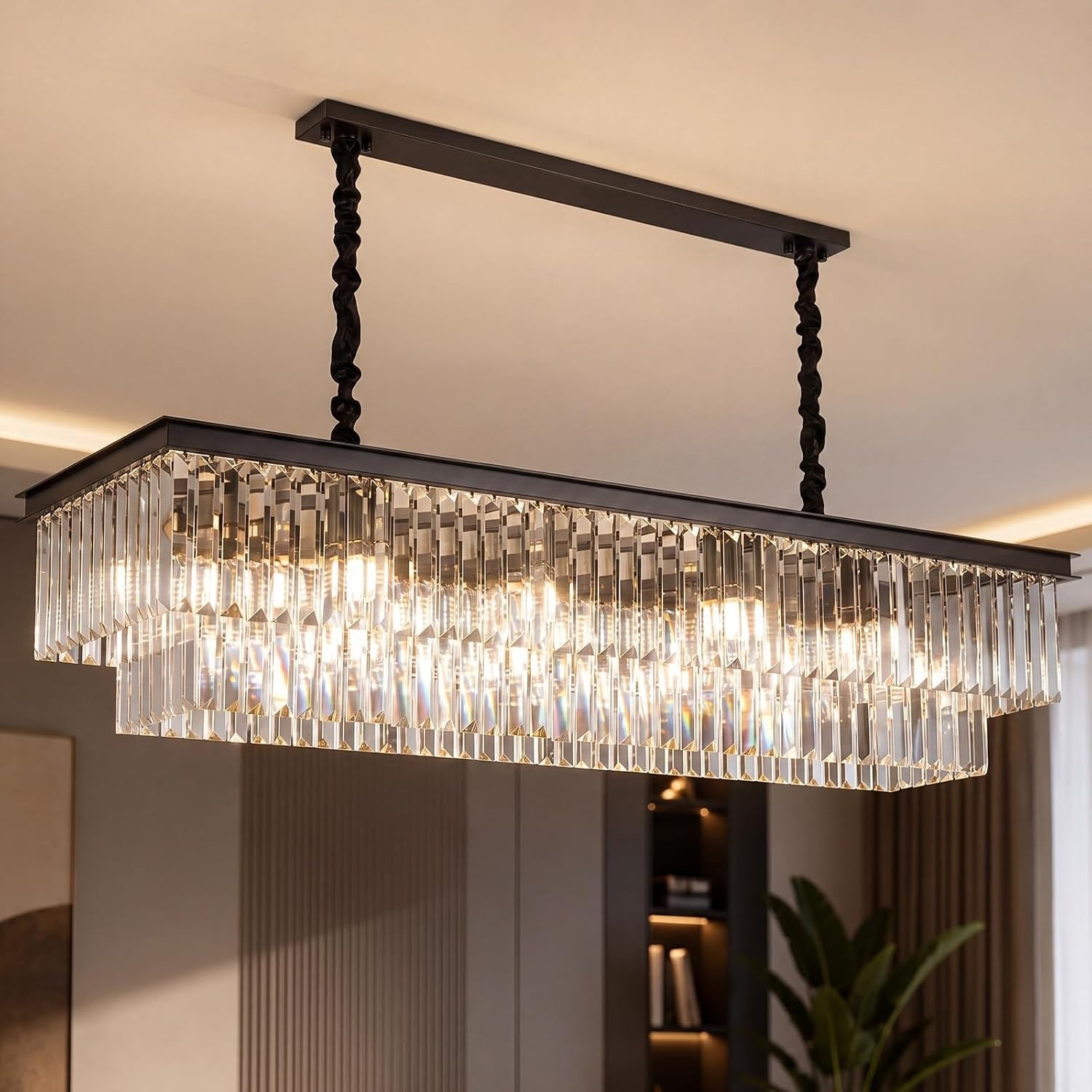
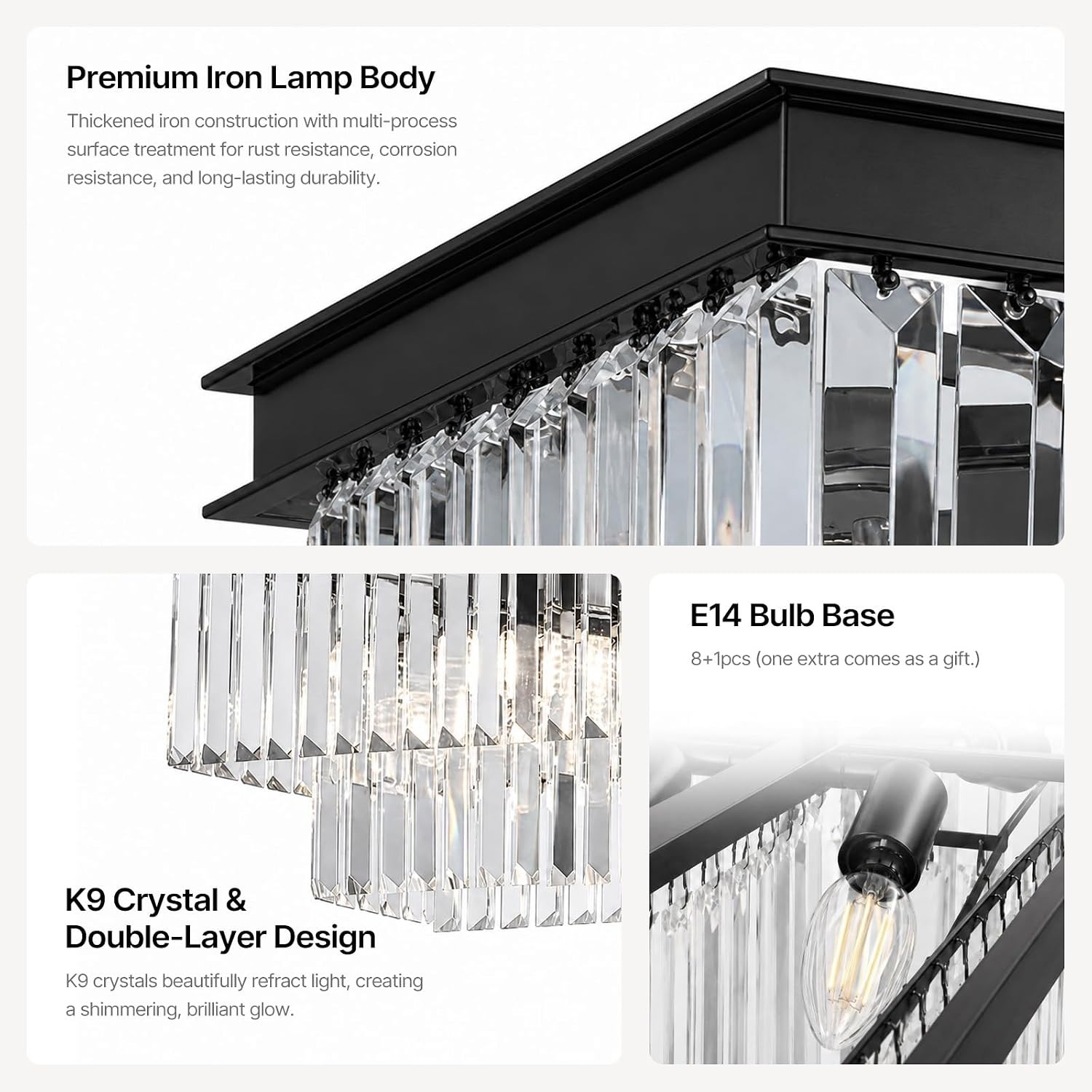
The build is a two-tier crystal arrangement held in a black iron frame, with eight E14 lamp positions inside. Light passes out through the faceted crystal rather than straight down from a bare lamp, so it breaks up into points and scatters. That is why crystal fittings make a room feel livelier than a diffused panel does, even at the same brightness.
The black frame is doing more than decoration. A fully clear crystal fitting against a white ceiling can look vague, like it is half dissolving. The black outline defines the shape, so the piece reads as a deliberate object from across the room and still sparkles up close.
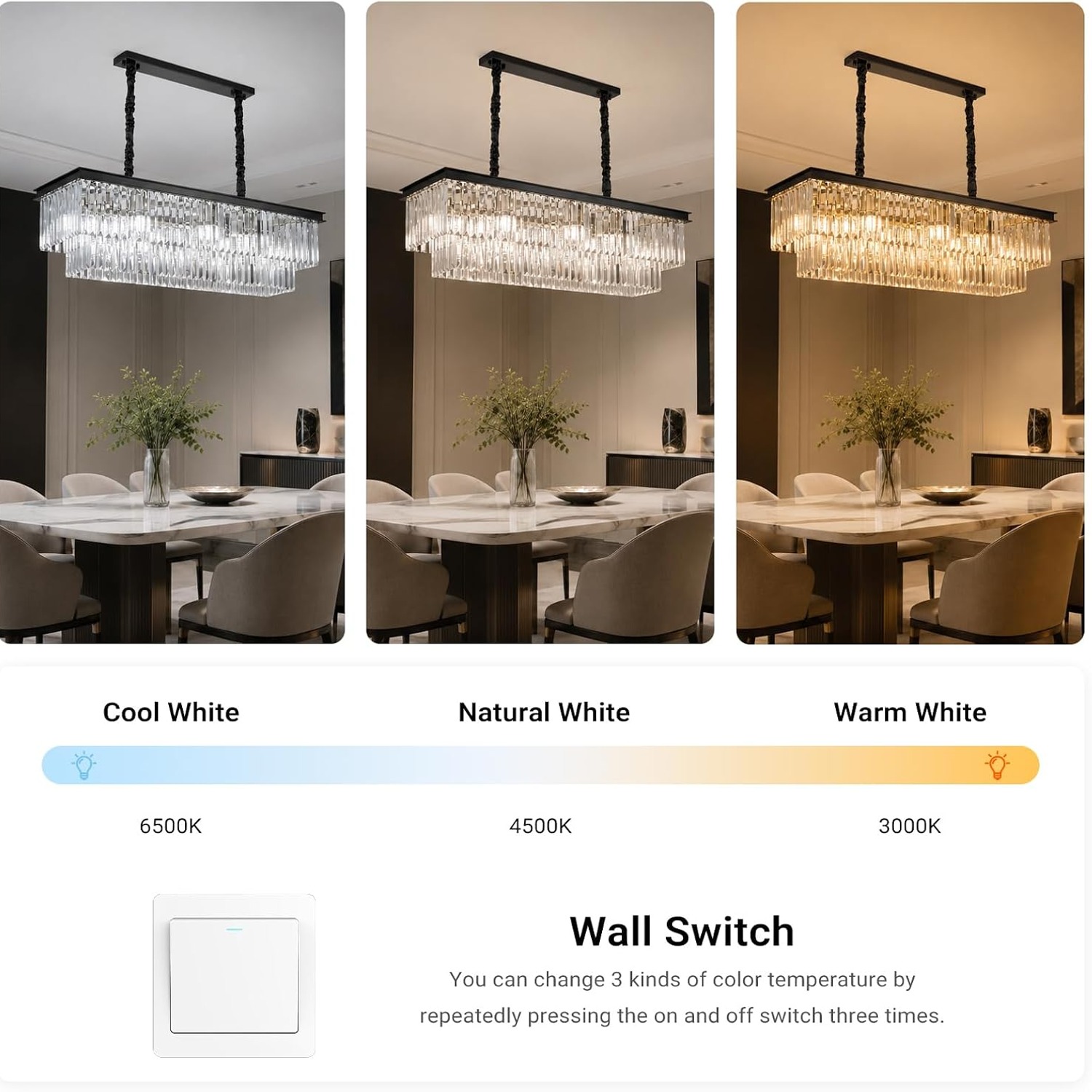
Then there are the three colour settings, which is the feature most people end up using daily. White light is what you want when you are actually cooking and need to see colour and detail properly. Natural light sits in the middle and suits reading recipes, homework at the bench or paying bills. Warm light is the evening setting, the one that makes a meal feel relaxed. You cycle between them using a push button through the normal wall switch, so there is nothing extra to pair, charge or lose down the back of the couch.
Who it suits
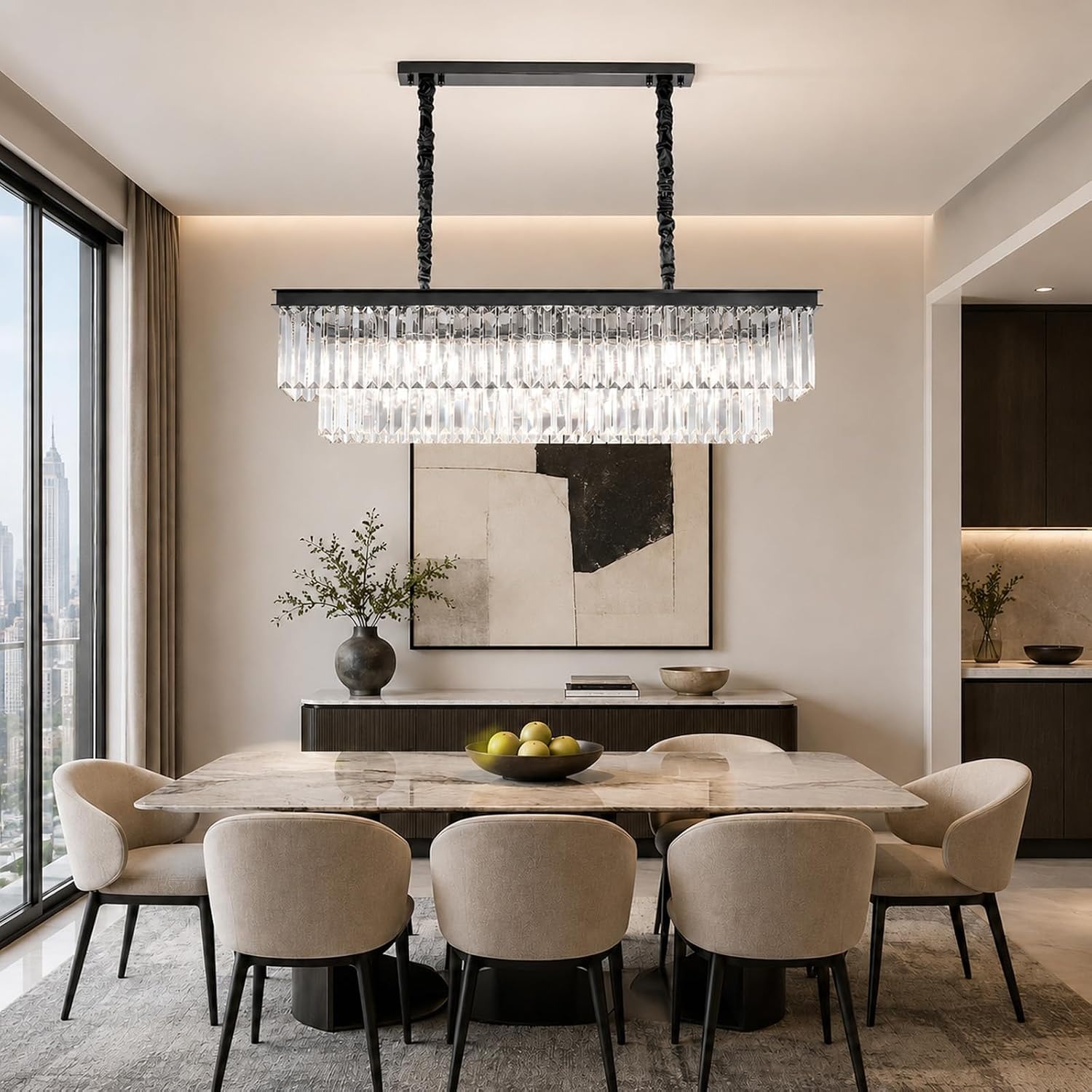
This is a good fit if you have an island or dining table somewhere between roughly 1.5 and 1.8 metres long and you want one fitting to handle the whole thing. It also works over a pool table, a bar or a long hallway console.
It suits people who want a modern dining room chandelier that is not stark. If your kitchen is mostly white cabinetry, or timber and stone, the black and crystal combination gives the room a focal point without introducing a loud colour.
It is less suitable if your ceiling is low and you need people to walk under the fitting, or if you want a dimmable light above all else, since dimming is not listed as a feature here. It is also not for bathrooms, covered outdoor areas or anywhere damp. The fitting is indoor only and carries no water resistance rating.
Getting the size and height right
Start with the length of the surface. A common guideline is to pick a fixture about two thirds as long as the island or table. At 100cm, this one lands nicely over a surface around 1.5 to 1.8 metres. If your island is 2.4 metres or more, consider two fittings in a row or step up to a longer piece, because a single 100cm fixture will look small and leave the ends dim.
Then think about width. At 35cm deep, it sits comfortably on a standard island of 90cm to 100cm, leaving clear space on each side so the fitting does not crowd the bench.
Height is the part people get wrong. Over an island, most installers aim for around 75 to 90cm between the bench surface and the bottom of the light. That keeps it out of sight lines when you are standing across the island talking to someone, while still placing the light close enough to be useful. Over a dining table the gap is usually similar, measured from the tabletop.
The cord here is 100cm and adjustable, which gives you room to set the drop to suit your ceiling. On a standard ceiling you will shorten it. On a high ceiling you have the length available. It is a semi flush ceiling mount, so the canopy sits tight against the ceiling and the body hangs below.
Lamps, power and installation
Eight E14 lamp positions is generous for a fitting this size. The maker lists a 60W maximum per position and includes eight LED lamps plus a spare. LED is the sensible choice here anyway, since you will be running eight of them and the heat in an enclosed crystal body is better kept low.
The fitting is listed at 220 volts and corded electric. If your home runs on different mains voltage, have that confirmed before you order rather than after the box arrives.
Installation itself is not complicated, but the wiring part is not a DIY job in most places. Hanging the fitting and connecting it to ceiling wiring is electrical work that generally requires a licensed electrician. Book that in advance. Also ask them to confirm the ceiling fixing can carry the load. Crystal chandeliers are heavier than plain pendants, and the exact weight is not specified by the maker, so a quick check is worthwhile.
Once the frame is mounted, the crystal pieces hang on their hooks. Do this with the power off and work slowly. It is the fiddly part, not the hard part, and it is much easier with a second person handing you pieces.
Keeping it looking good
Crystal picks up dust, and crystal above a kitchen picks up a fine cooking film on top of that. Both dull the sparkle, which is the whole reason you bought it. The fix is simple maintenance rather than a big annual clean.
Turn the light off and let everything cool. Dust the drops and the black frame with a soft dry cloth. If the crystal needs more than dusting, use a barely damp cloth and dry each piece immediately. Never spray any cleaning liquid at the fitting, because liquid near lamp holders is a problem you do not want. Skip abrasive pads and solvents on the painted iron, since they will mark the finish.
Over a kitchen island, every two or three months is about right. In a dining room away from cooking, twice a year is plenty. While you are up there, check the crystal hooks are still seated properly.
The short version
A 100cm linear crystal chandelier solves a specific problem, which is lighting a long surface evenly while giving the room something worth looking at. Eight E14 LED lamps supply plenty of light, and the three colour settings mean the same fitting can be a work light at six and a dinner light at eight.
Measure your island first and aim for a fitting about two thirds its length. Set the drop so the bottom sits roughly 75 to 90cm above the bench. Book an electrician for the wiring, keep it indoors and away from damp, and dust the crystal a few times a year.
Do those things and you get a kitchen island light that actually works for cooking and still looks like someone chose it on purpose.