
The complete guide
How to Choose a Rustic Wood Chandelier for Your Dining Room
The problem with one light in the middle of the ceiling
Walk into most dining rooms and you will find a single light fitting sitting dead centre. It does a job, but not a good one. The middle of the table gets a bright pool of light, the ends fade off, and anyone sitting at the head of the table is lit from a strange angle. Add a shiny tabletop and you get glare straight back into people's eyes.
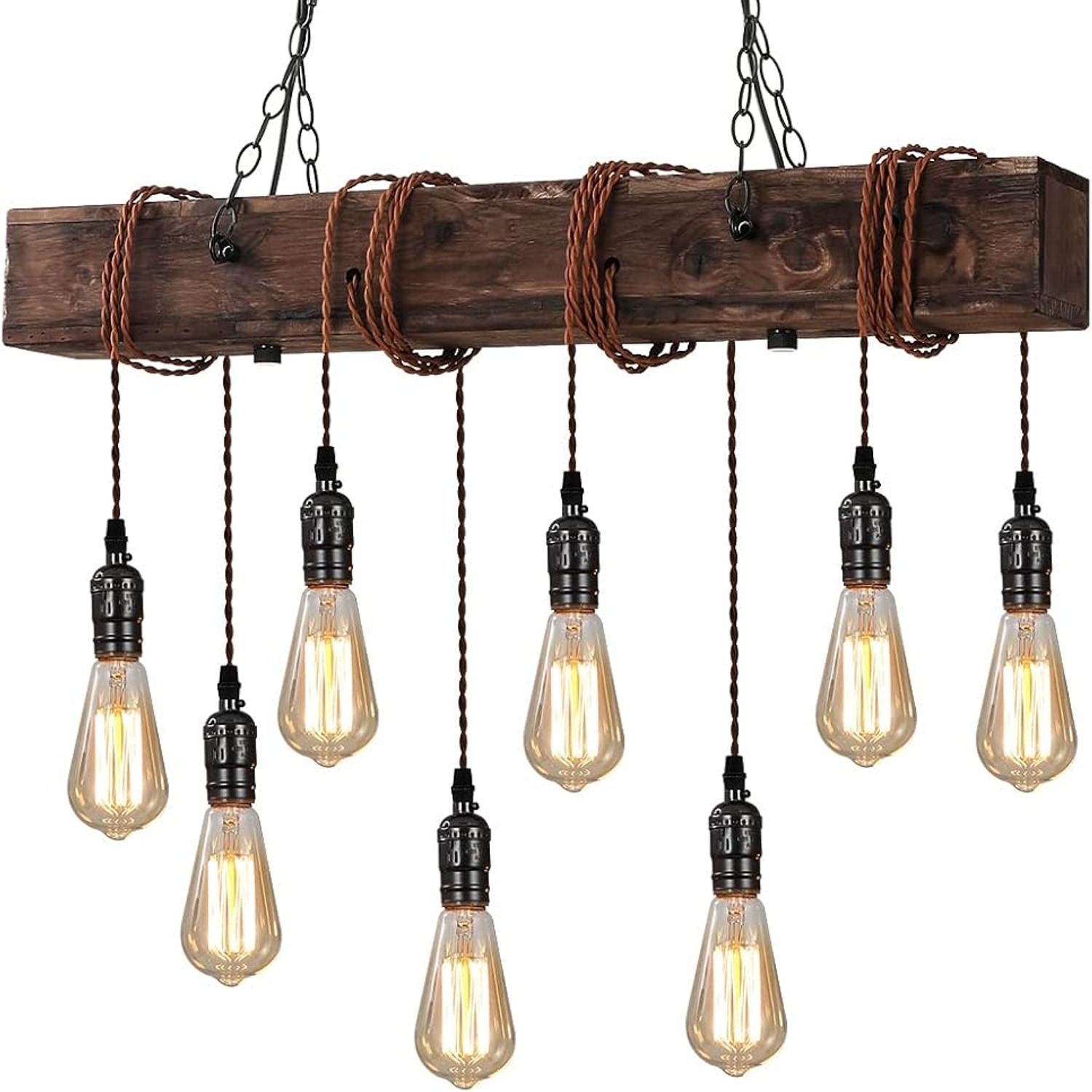
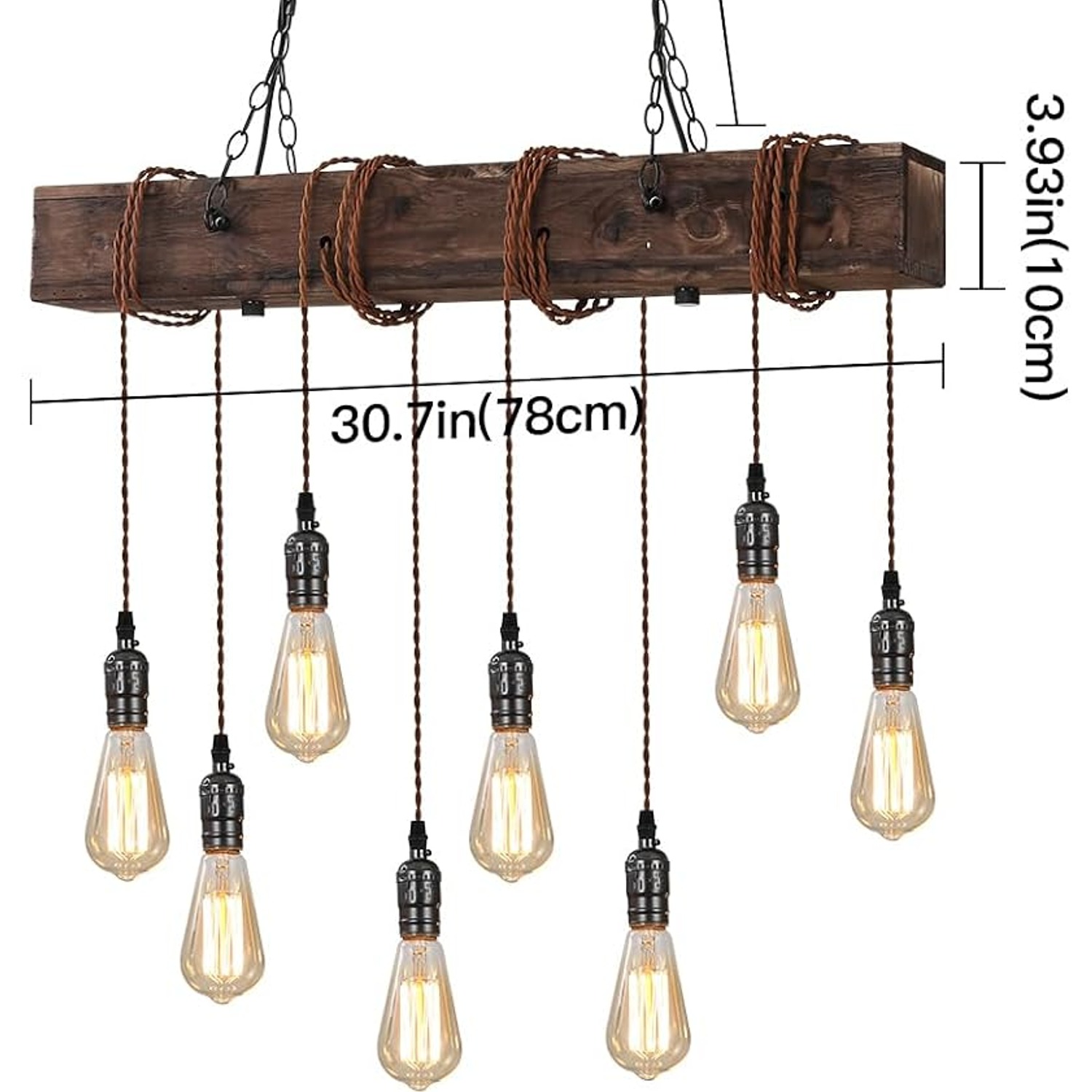
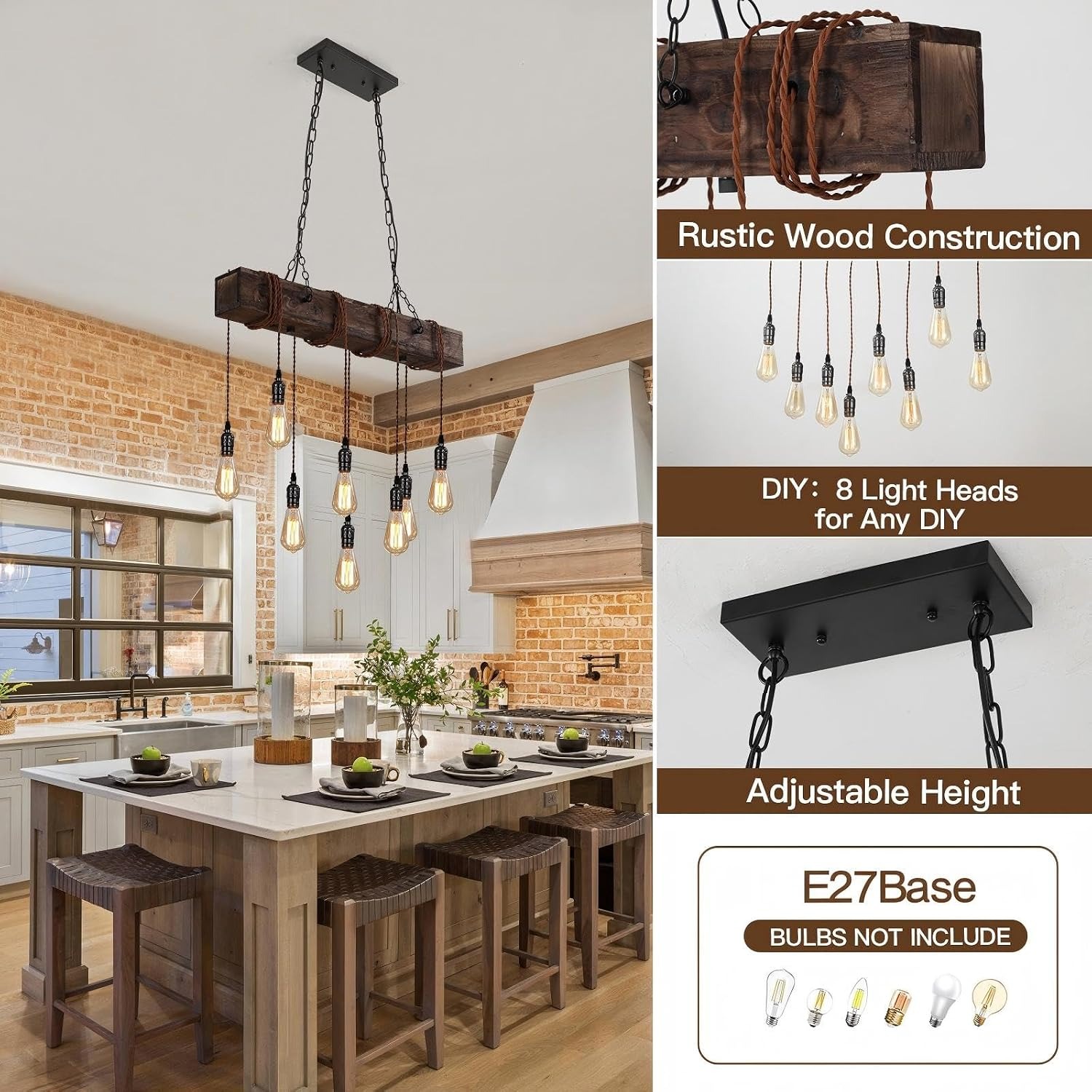
The fix is not a brighter bulb. It is light spread along the length of the table instead of dropped onto the middle of it. That is what a beam-shaped fitting does. Eight lights strung along a 79cm wood beam put soft light across the whole surface, so plates, faces and conversation all get their share. It is a small change that makes a room feel noticeably better to sit in.
How a linear wood chandelier works
The build is simple on purpose. A wood beam forms the spine, metal arms and sockets hang from it, and the whole piece is suspended from the ceiling on a chain. Inside the beam there is space to hide cord you do not need, which is the detail that keeps the finished look tidy.
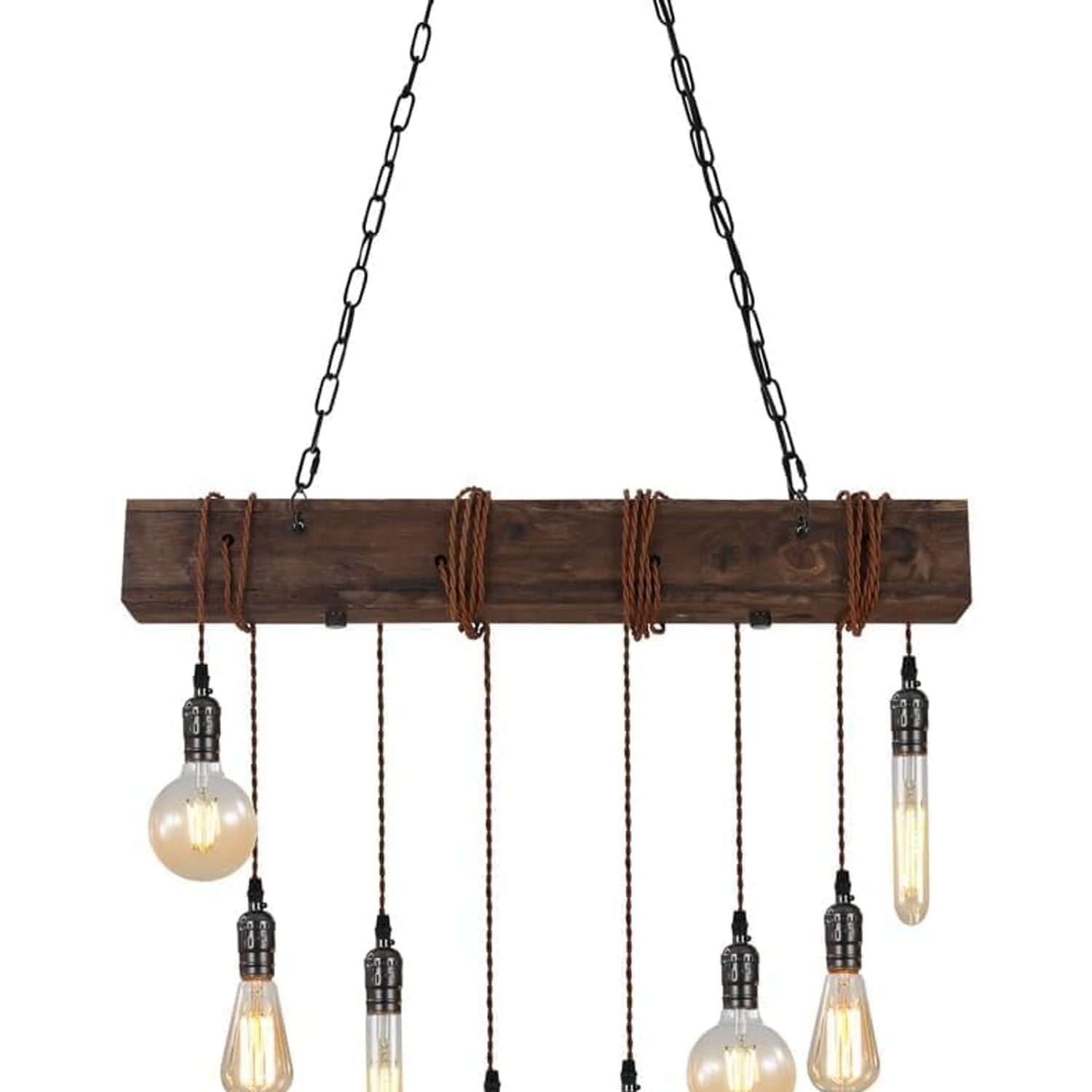
Each of the eight lights hangs on its own cord, and that is where the fitting earns its keep. You are not stuck with the shape it came in. Set every cord to the same length and you get a clean, even row that suits a formal dining room. Stagger them so some hang lower than others and the whole thing looks more relaxed, closer to something a maker put together by hand. The chain controls the drop of the beam itself, so you adjust the overall height and then fine-tune each light.
Sockets are E27, the standard large screw base. That matters more than it sounds. It means you are not hunting for a specialty bulb in two years' time, and it opens up filament, LED, CFL, incandescent and halogen options from almost any maker. Bulbs are not included, so the look and the running cost are your call.
Who it suits
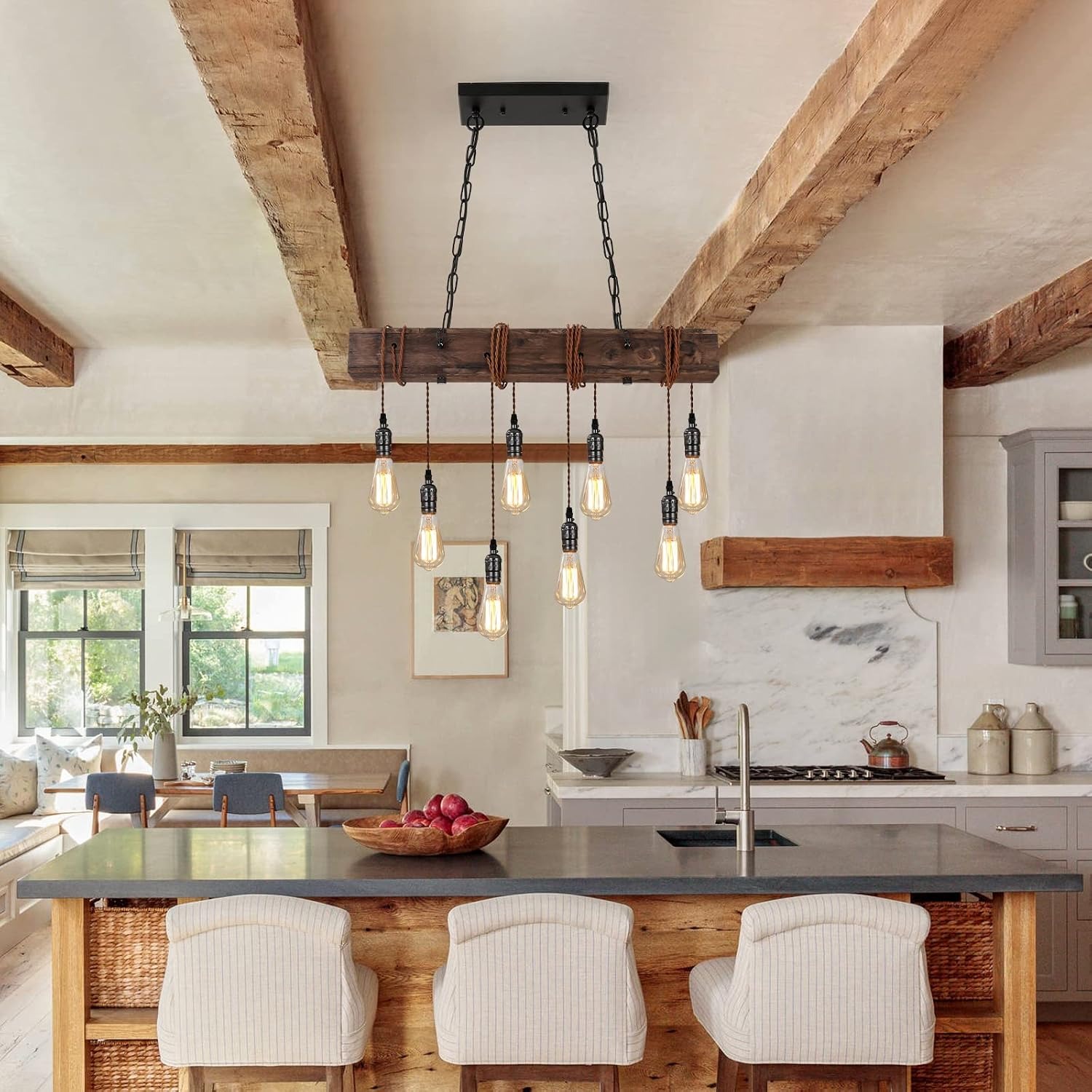
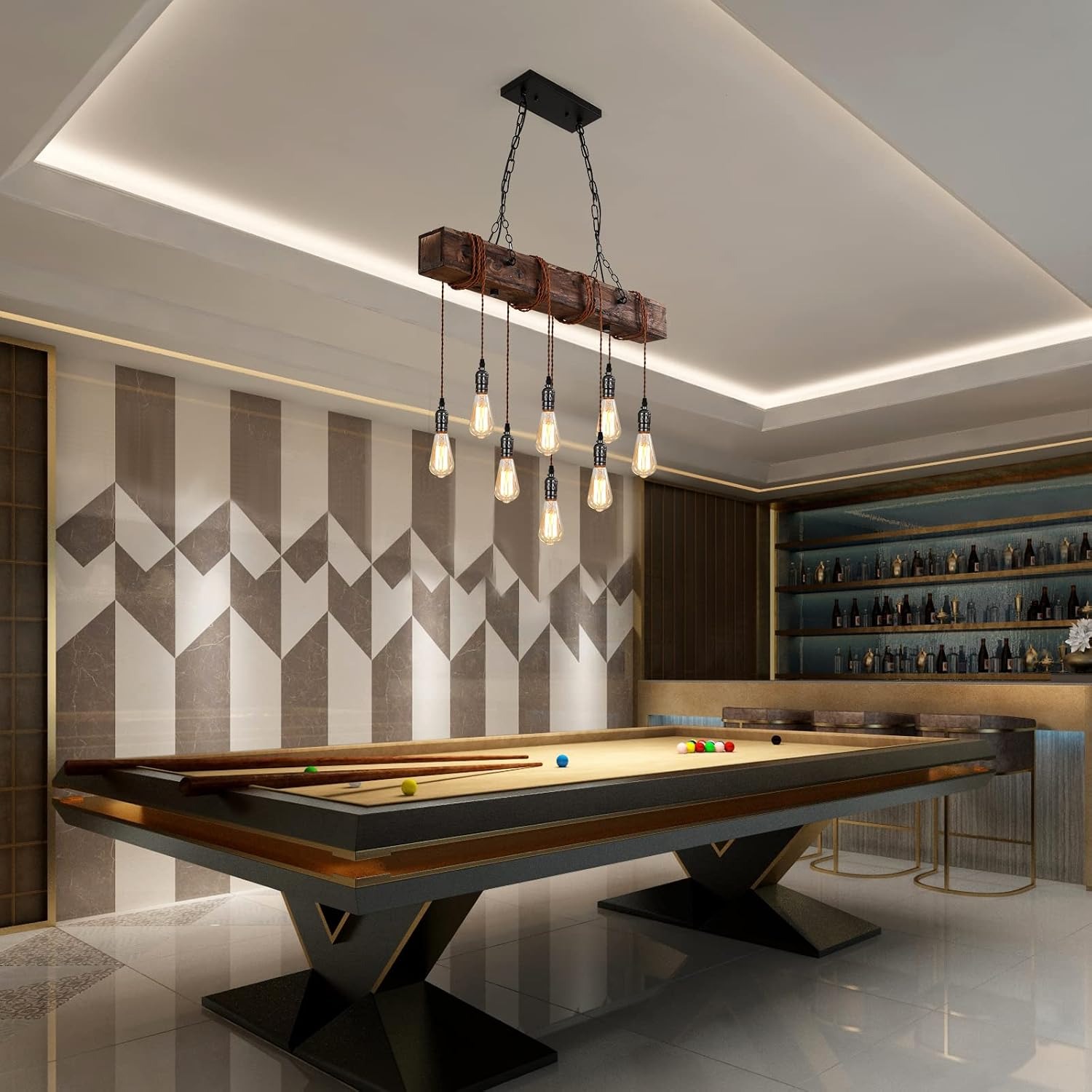
This fitting makes most sense above a long surface. A rectangular dining table, a kitchen island, a bench in a country house or a cabin dining area all suit the shape. It is listed for bedroom, dining room, entryway and kitchen use, and it is indoor only, so damp spots and covered outdoor areas are not an option.
Style-wise, it sits in the country rustic camp. Wood plus black metal softens rooms that have a lot of hard surfaces, which is why people hunting for the best farmhouse chandelier for dining room use keep coming back to this combination. It also works in plainer modern homes, where the timber gives a white or grey room something to warm it up.
It is less of a fit if your table is small and square, or your ceiling is very low. A beam that stretches 79cm over a 90cm round table looks out of scale, and a long drop in a low room becomes a head-height hazard.
Getting the size and height right
Start with the table, not the ceiling. As a rough rule, a hanging fitting should run somewhere between half and two thirds the length of the table below it. A 79cm beam suits tables from roughly 120cm up to around 160cm nicely, and longer tables often look better with two matching fittings spaced evenly rather than one.
Height next. For a dining table, 75 to 90cm from the tabletop to the bottom of the bulbs is a sensible starting point. That clears sightlines across the table while keeping the light close enough to feel intimate. Over a kitchen island, where people stand and work, hang it a little higher so nobody knocks it reaching for a cupboard.
The best way to test is low tech. Get someone to hold the fitting roughly in place while you sit at the table and look across. You will know within a few seconds whether it is too low. Mark the height, then tell your electrician before the chain gets cut to length.
Choosing bulbs
Because the fitting takes eight bulbs and none are supplied, the bulbs you pick decide most of the character. Filament-style LED bulbs are the common choice for a rustic wood chandelier. They give the warm, visible glow people associate with Edison bulbs without the heat and power draw of real incandescents.
Colour temperature matters here. Warm white around 2700K flatters timber and skin tones. Cooler white in the 4000K range will make the same fitting look clinical, which is fine in a workshop and wrong above a dinner table. Go warm.
On brightness, resist the urge to max out. Eight bulbs is a lot of sockets. Something in the range of 400 to 600 lumens each usually lands at a comfortable dining level. If you want flexibility, use dimmable bulbs with a compatible dimmer switch. Neither is included, so sort it out with your electrician while they are already on site.
One more thing. Fit the same bulb in all eight sockets. Mixing brands or colour temperatures across a single fitting is the fastest way to make a nice light look cheap.
Installation, honestly
This is a hard wired, semi flush ceiling fitting rated at 220 volts. It is not a plug-in lamp, and it is not a weekend DIY job unless you are a qualified electrician. Mains work needs a licensed trade in almost every country, and bodged wiring can affect your insurance as well as your safety.
The good news is that there is no assembly. The fitting arrives as one piece, so the electrician's work is connecting the supply, mounting the canopy, setting the chain and screwing in bulbs. That usually keeps the labour short.
Timing tip. Wait until the box has arrived and you have checked the fitting before you book the visit. People who book ahead sometimes end up paying for a call-out they cannot use.
Keeping it looking good
Care is undemanding. Switch off at the wall, let the bulbs cool, then dust the beam and arms with a dry or barely damp microfibre cloth and dry it straight away. Wood does not enjoy sitting wet, so skip the spray bottle and skip solvents, bleach and scouring pads entirely.
Once or twice a year, give it a proper look. Is the ceiling mount still firm? Are the chain links closed? Are any cords twisted or pinched where they enter the beam? Any flicker or wobble is a call to an electrician, not something to poke at with the power on.
The short version
If your dining room has one weak light in the middle of the ceiling, a beam-shaped fitting with eight lights will change how the room feels more than almost anything else you could buy for it. Measure your table, pick a drop height before the electrician arrives, choose warm filament-style E27 bulbs, and fit the same bulb in every socket.
Beyond that, it is a straightforward piece of lighting. Wood and metal, eight sockets, adjustable cords, no assembly, indoor use, 220 volts, and a manufacturer warranty described as one year. Get the height and the bulbs right and it will quietly do its job for a long time.