
The complete guide
How to Choose a Mini Crystal Chandelier for Small Rooms
The rooms that always get the worst light
Walk through most homes and you can spot the pattern. The living room gets a nice fitting. The main bedroom gets something decent. Then the hallway, the spare room, the little dining corner and the top of the stairs all get the same flat plastic dome, because nobody wanted to spend real money on a space they only pass through.
The problem is those spaces are the ones you see most often. A hallway is the first thing you walk into and the last thing you walk through at night. A dull ceiling dome there sets the tone for the whole house, and no amount of good furniture further in quite makes up for it.
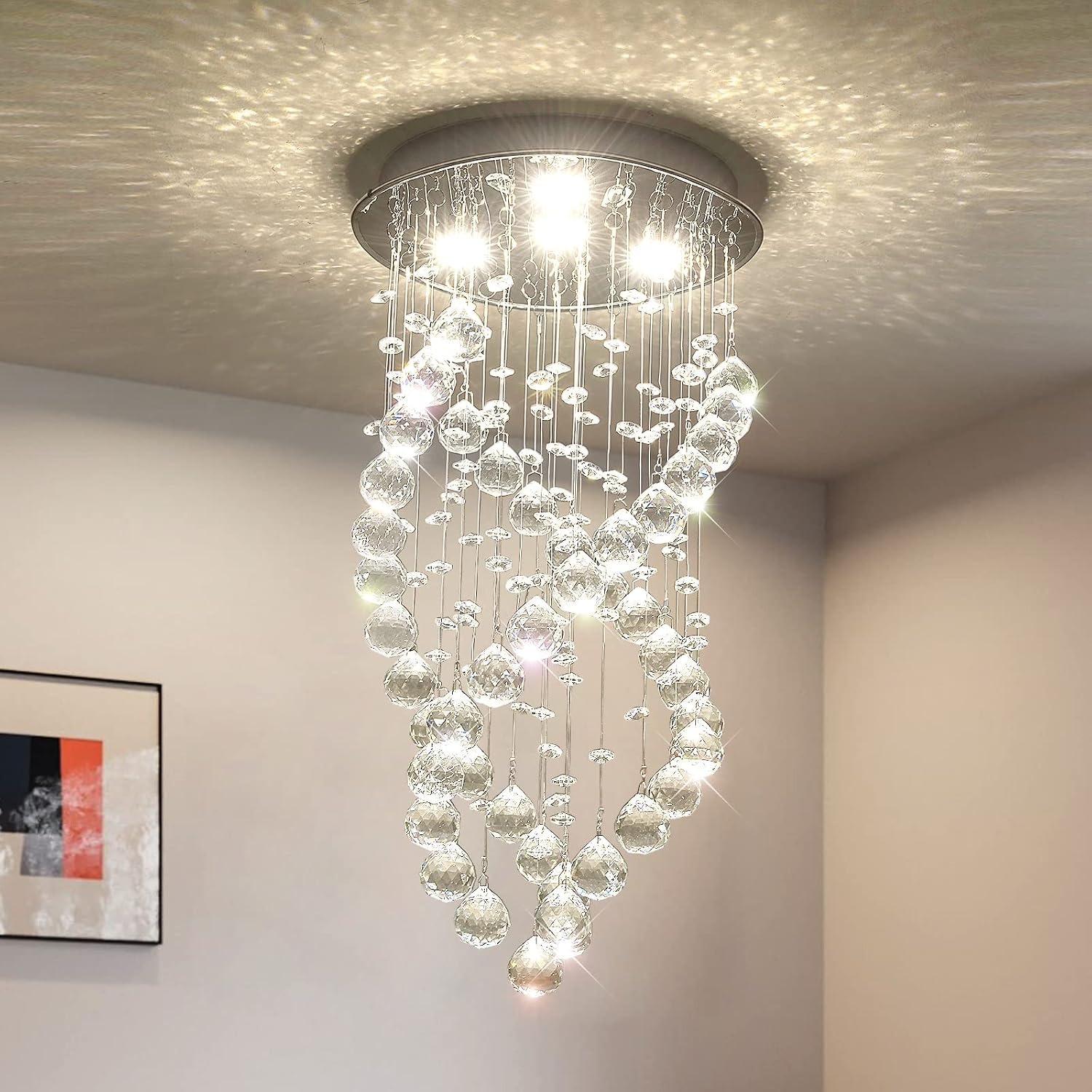
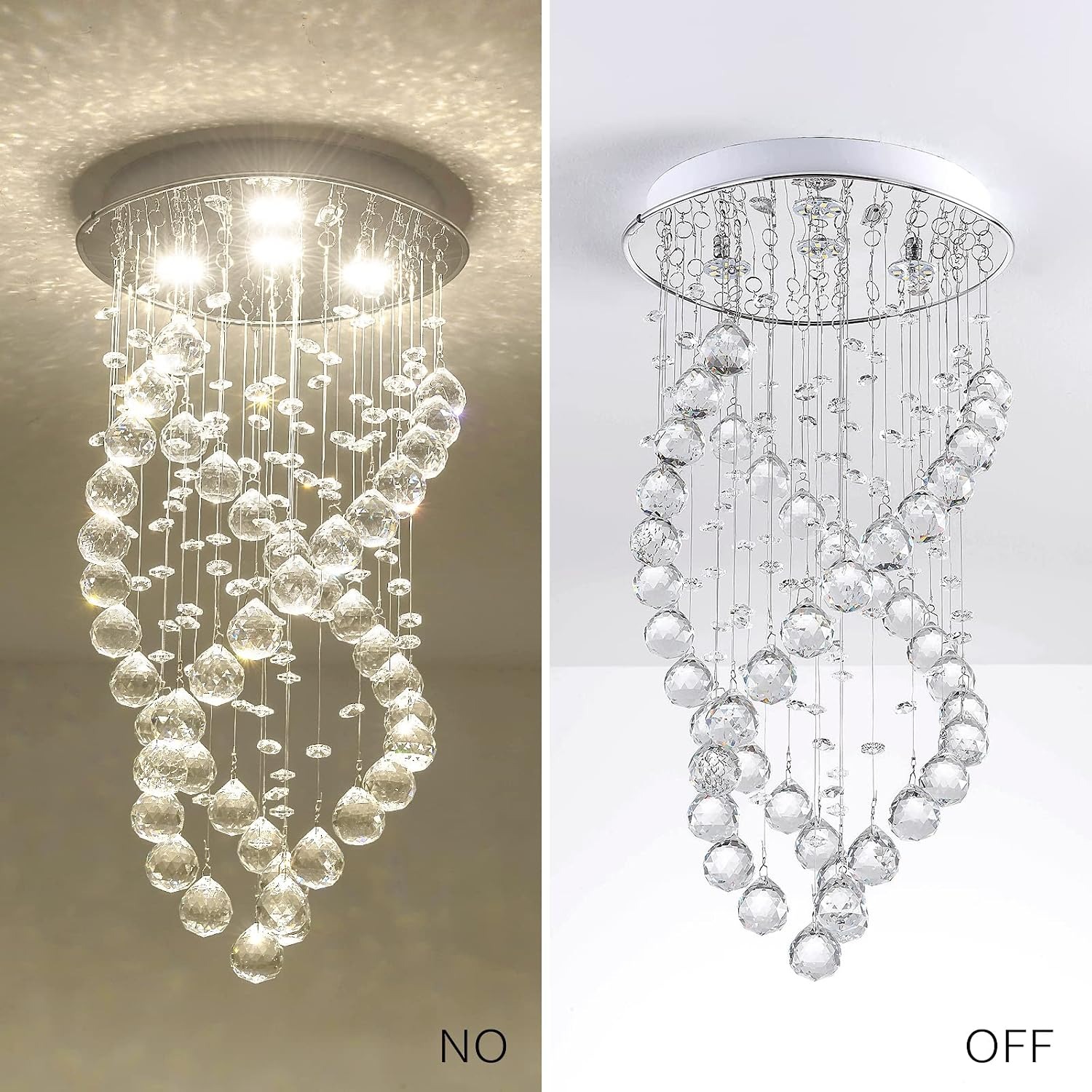
A mini crystal chandelier is the direct fix. It is sized for small spaces, it sits tight to the ceiling, and it does something a flat dome never does. It breaks a single light source into a lot of small bright points and scatters them across the walls.
How a small crystal fitting actually works
The mechanics are simple. Behind the crystals sit four LED light sources, rated at 12 watts in total, with a maximum output listed at 1000 lumens in a warm white tone. The crystals are clear faceted glass. The canopy is polished chrome.
Each of those three parts has a job. The LEDs supply the raw light cheaply, which matters in a hallway that stays on half the evening. The faceted glass takes that light and splits it, so instead of one bright patch on the floor you get dozens of small points thrown onto the surrounding surfaces. The chrome reflects rather than absorbs, pushing light back out instead of soaking it up the way a dark fabric shade would.
That is why a small fixture can hold its own in a room. You are not relying on size, you are relying on reflection and refraction. A well-made small crystal ceiling light often reads brighter and livelier than a bigger fitting with an opaque shade.
Warm white is the right choice for this kind of room. Cool white light can look sharp and a bit office-like against chrome and glass. Warm white softens everything and makes the sparkle look golden rather than icy.
Why flush mount matters more than people think
The single biggest mistake in small-room lighting is hanging something that drops too low. Standard ceilings do not leave much room to play with, and a pendant that hangs even twenty centimetres too far becomes something you duck around or knock with a laundry basket.
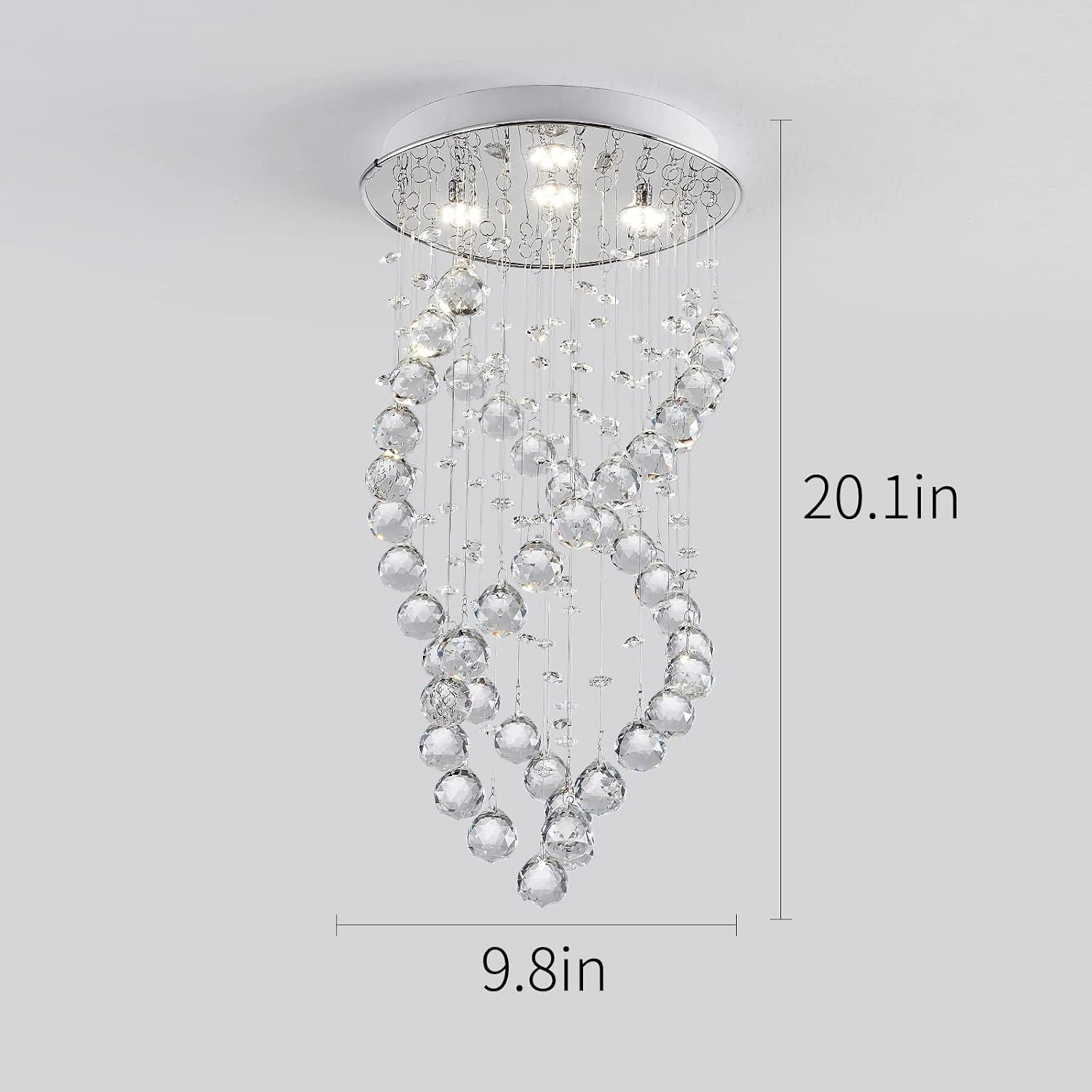
This fitting mounts flush. The body sits against the ceiling, with the crystals hanging below the canopy rather than below a long rod. That keeps the whole thing compact, which is exactly what you want in a corridor, a stairwell landing or a bedroom with a standard ceiling.
It also means less movement. Pendants swing when a door slams or a fan runs. A flush mount does not. In a kids room or a busy hallway, that stability is worth having.
The trade-off is honest enough. If you want a dramatic low-hanging focal point over a dining table, a flush mount will not give you that. It is a fitting for ceilings, not for the space below them.
Which rooms suit it
The maker's description covers a wide set of rooms, and most of them make sense in practice.
Hallways and entries are the strongest use. A hallway crystal ceiling light turns a narrow corridor from a blank passage into something with texture on the walls. In longer runs, spacing two or three of them out works better than fighting to light the whole length from one point.
Bedrooms work well because warm white and soft refracted light are kind in a room you use at the start and end of the day. Kids rooms suit it for the same reason, with the added benefit that a flush mount has nothing hanging within reach.
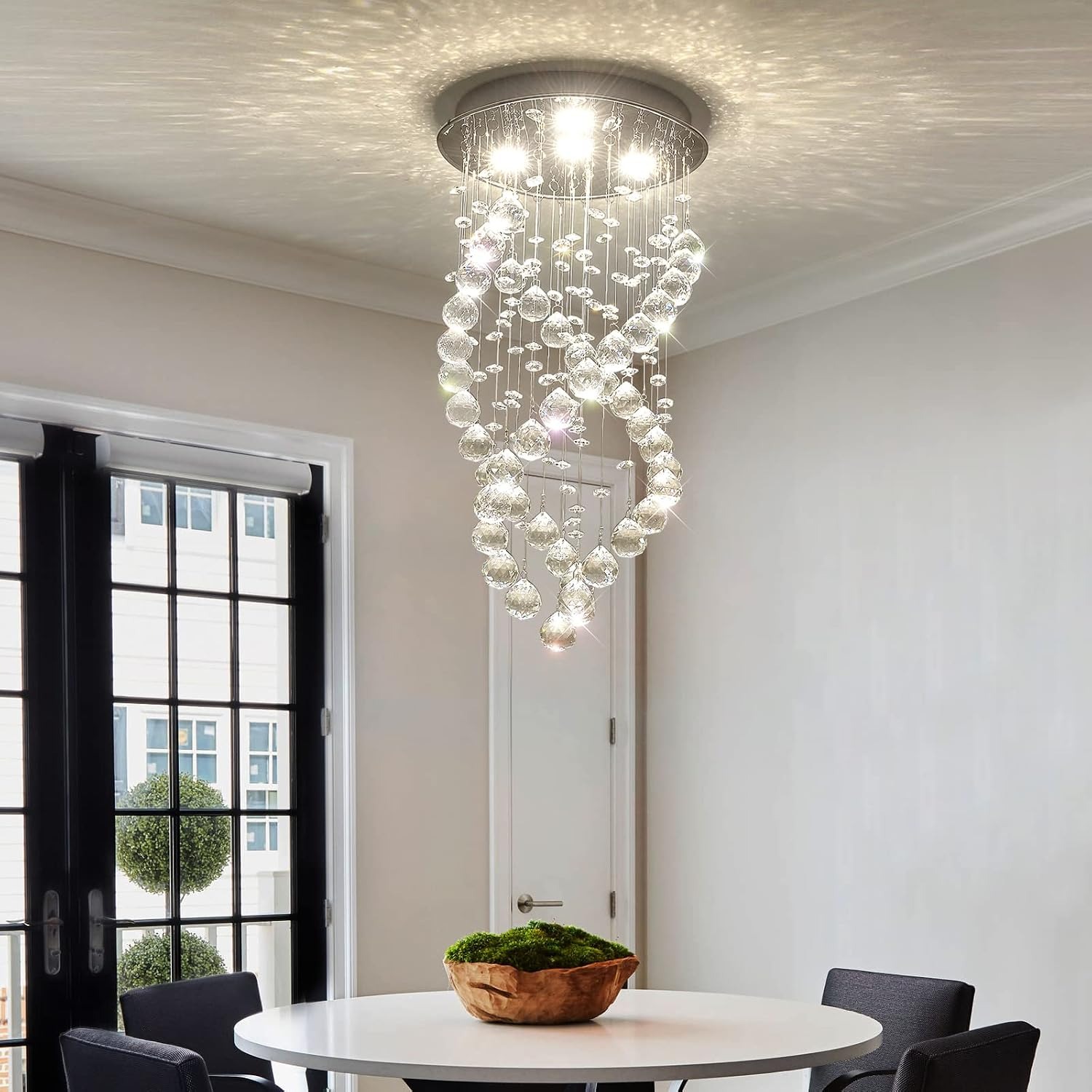
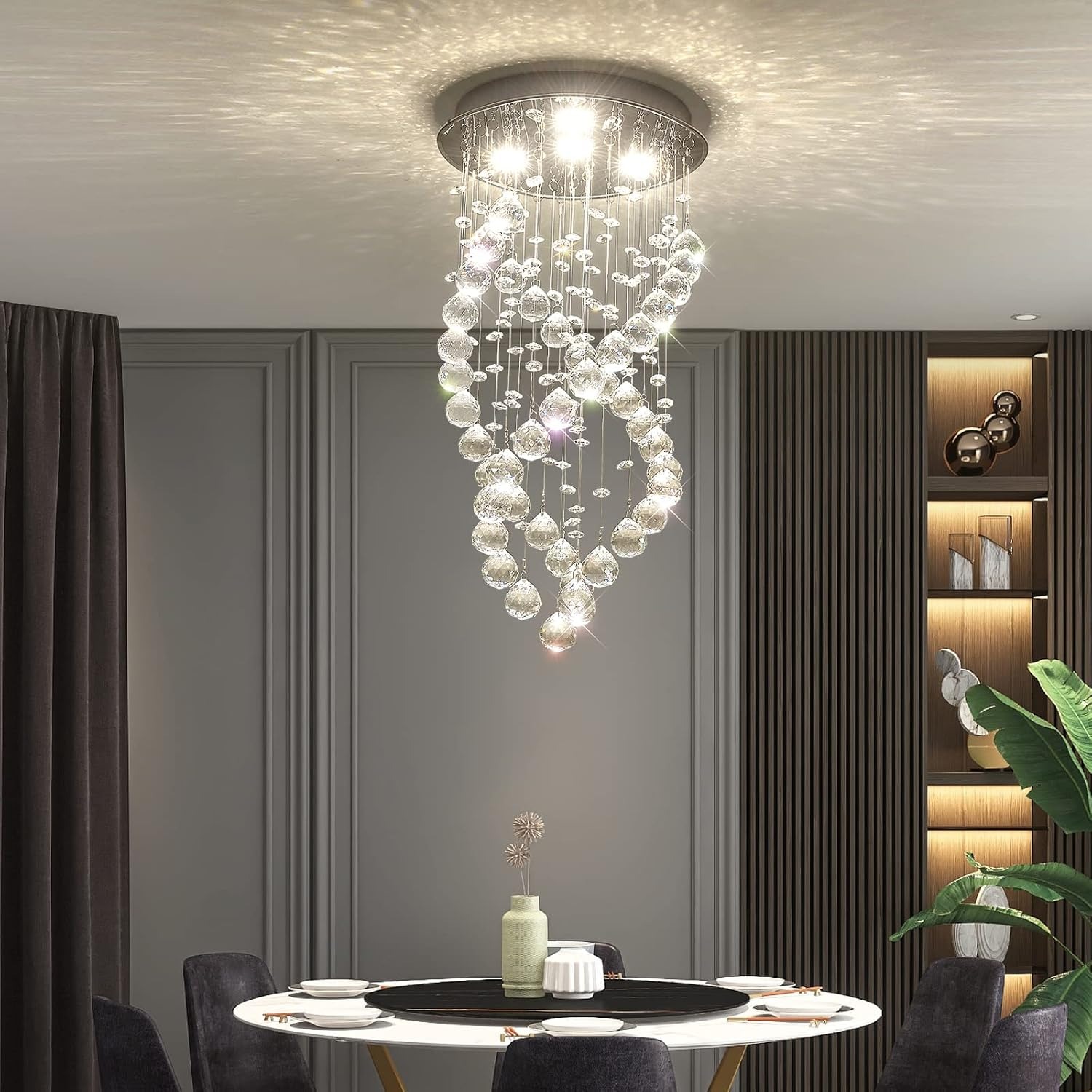
Small dining spaces and breakfast nooks are a good fit if you accept the light stays at ceiling height. Kitchens work as a general ceiling light, though you will usually want task lighting over the bench as well.
On the commercial side, bars, hotels and restaurants are listed, and small sparkling fittings repeated across a ceiling are a well-worn trick in those settings. One large chandelier can look pretentious in a small venue. Four small ones look intentional.
Where it does not belong is anywhere wet. The fitting is listed as not water resistant and indoor use only, so bathrooms, steamy laundries and covered outdoor areas are out. Use a sealed fitting rated for those zones instead.
Choosing well
Start with ceiling height. If you have less than about two and a half metres, a flush mount is almost always the better call, and that is where this fitting earns its keep.
Then think about scale relative to the room, not relative to the photo. A product shot gives no sense of size. Exact dimensions are not specified by the maker, so if the measurement is critical for your space, ask us and we will check the maker spec before you buy.
Next, consider the finish against what is already in the room. Polished chrome sits comfortably with brushed steel appliances, white and grey walls, glass and mirror. Against heavy warm brass or aged bronze it can look like it wandered in from another house. Matching metals across a room is one of the easiest ways to make a space look considered.
Brightness is the last piece. A thousand lumens is solid for a hallway, a bedroom or a small dining area. In a large open living room it should be one layer among several, working alongside lamps or wall lights rather than carrying the room alone.
The maker's description also notes dimmable and colour changing features with voice control. If those matter to you, confirm what controller or setup your unit needs when it arrives, and check that any existing wall dimmer is compatible before the electrician finishes up.
Installation, honestly
This is a hardwired 240 volt ceiling fitting with an E27 bulb base, and assembly is required. That means an electrician unless you hold the relevant licence where you live.
The good news is the design makes the job easier than it looks. The body and canopy go up first, and the crystal strands are hung onto the frame afterwards. Nobody has to hold a fully dressed chandelier overhead while finding the terminals. It also means you can hang the crystals yourself after the electrician leaves, which takes patience rather than skill.
Keep the packaging until the light is installed and tested. If something is cracked or missing, it is far simpler to sort out while you still have the box.
Keeping it sparkling
Crystal only works when it is clean. Dust sits on the facets and kills the refraction, and a dull crystal chandelier just looks like a cloudy glass fitting.
Switch it off, let it cool, then dust with a soft dry cloth or a microfibre glove. For fingerprints or marks, use a cloth lightly dampened with water and dry straight away so you do not leave streaks. Never spray cleaner directly onto the fitting, and keep abrasive pads away from the chrome.
Every few months is enough in a bedroom or hallway. Kitchens and dining rooms pick up more airborne grease, so check those more often. While you are up there, give the mounting and the beaded strings a quick look to make sure everything is still secure.
The short version
This is a small, flush-mounted crystal chandelier with four LED lights, 12 watts of draw, up to 1000 lumens of warm white output and a polished chrome body with clear glass crystal shades. It is listed as dimmable with colour changing and voice control, and it is for indoor use only.
It suits hallways, bedrooms, kids rooms, small dining areas and compact commercial spaces, especially where ceiling height rules out a hanging pendant. It needs an electrician to install and a soft cloth every few months to stay bright.
If you have a room that has been stuck with a flat plastic dome for years, this is a straightforward upgrade. Measure the space, check the height, and ask us if you need the dimensions confirmed before you order.