
The complete guide
How to Choose a Gold Linear Chandelier for a Table or Island
The problem with lighting a long table
Most ceiling lights are round. Most dining tables and kitchen islands are not. That mismatch is the reason so many kitchens end up with a bright spot in the middle of the bench and two dim ends where nobody wants to sit or chop.
People try to fix it in all sorts of ways. They add a lamp at one end. They install downlights that stare straight into your eyes when you look up from a plate. They hang three small pendants in a row and then spend an afternoon arguing about the spacing.
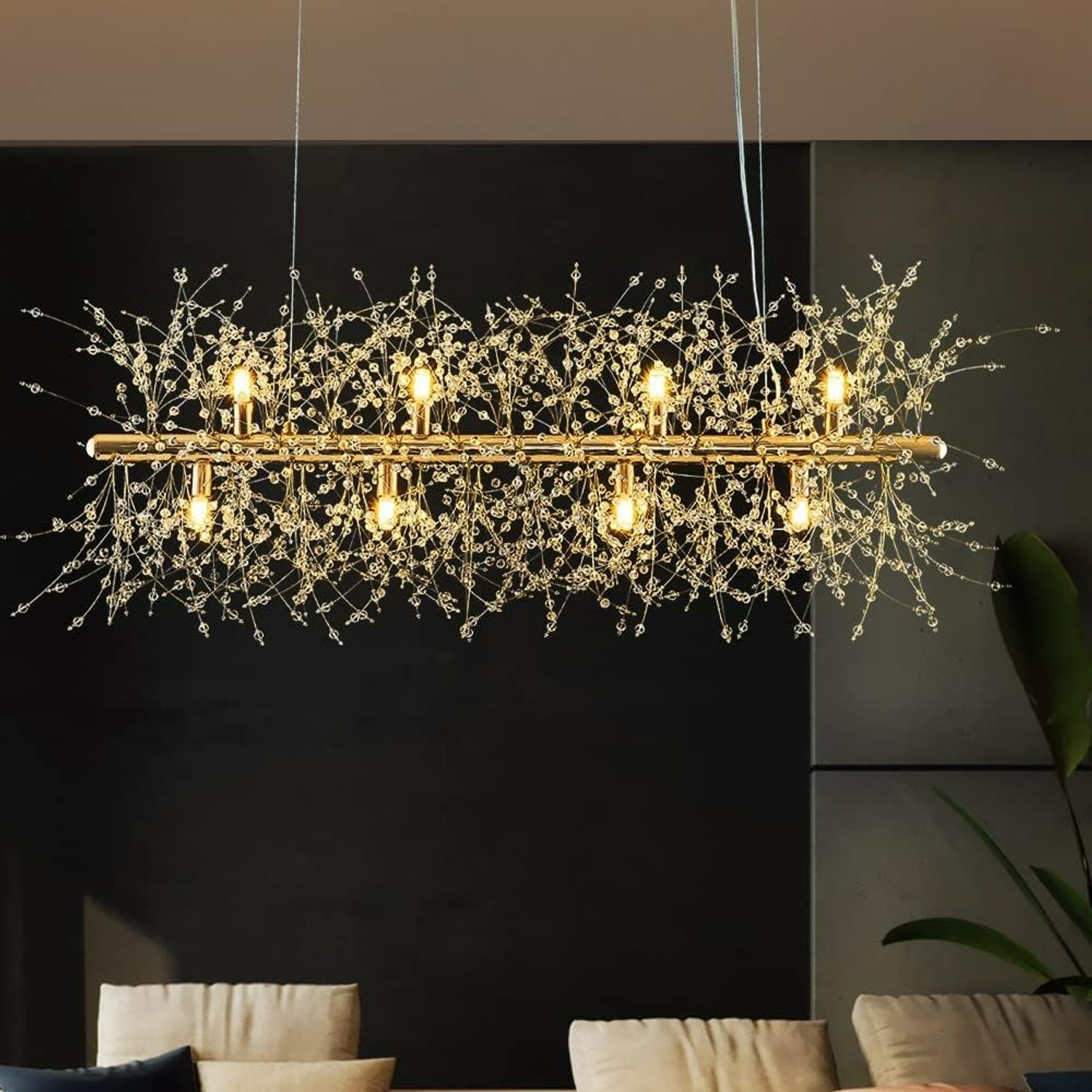
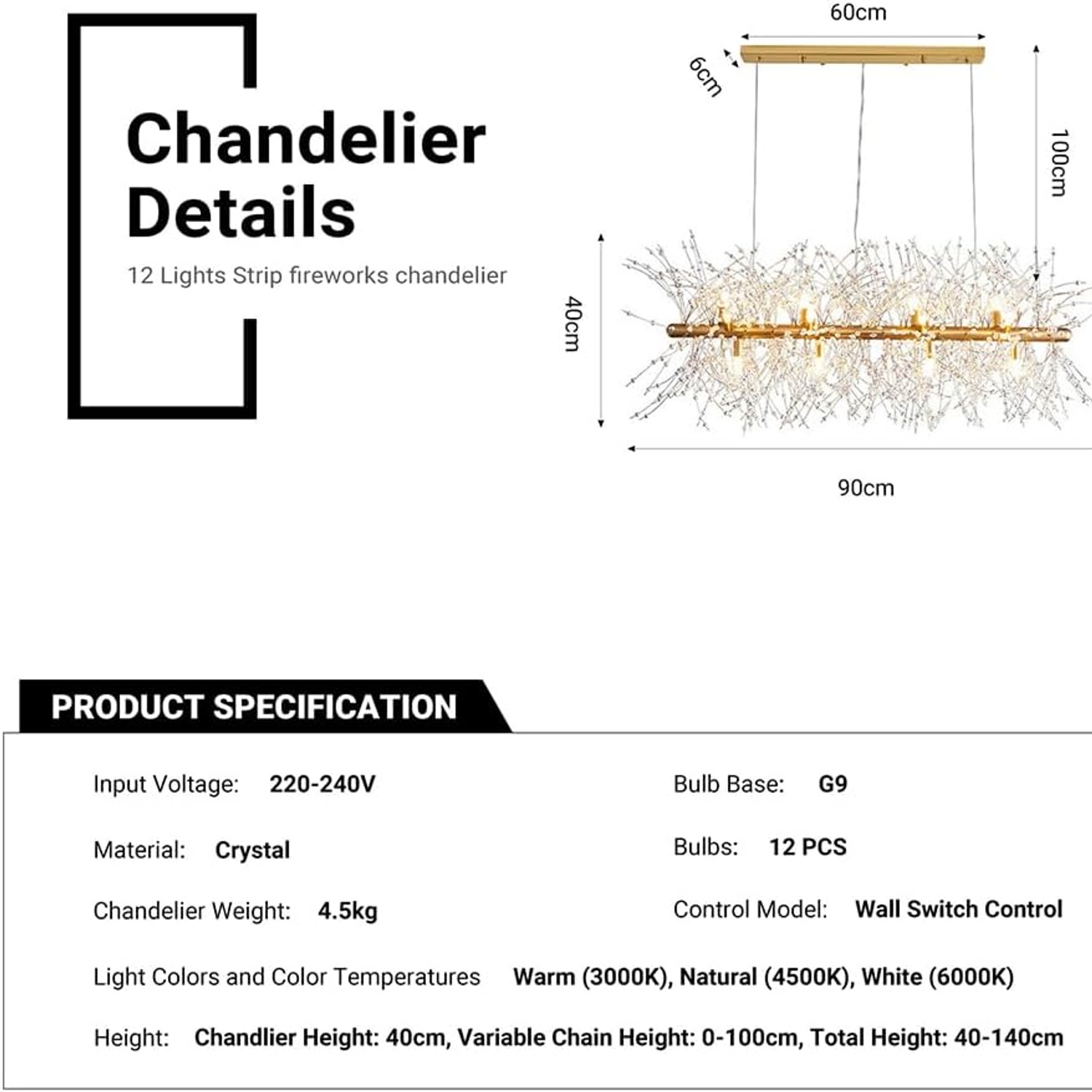
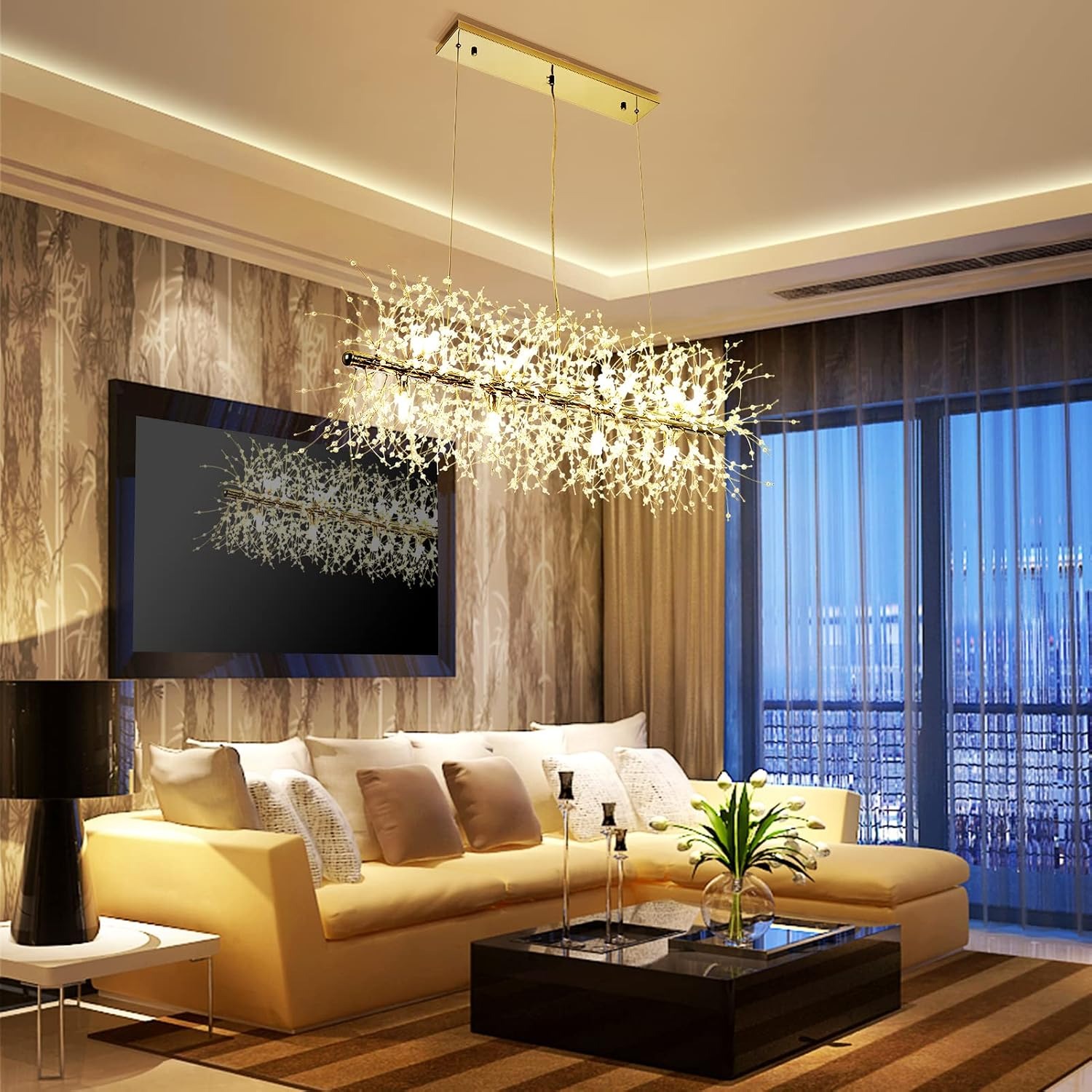
A linear chandelier takes a simpler path. It is shaped like the thing it is lighting. This one is 90cm long and 40cm high, with twelve light sources spread along that length, so the light falls the same way the table runs.
How this fixture works
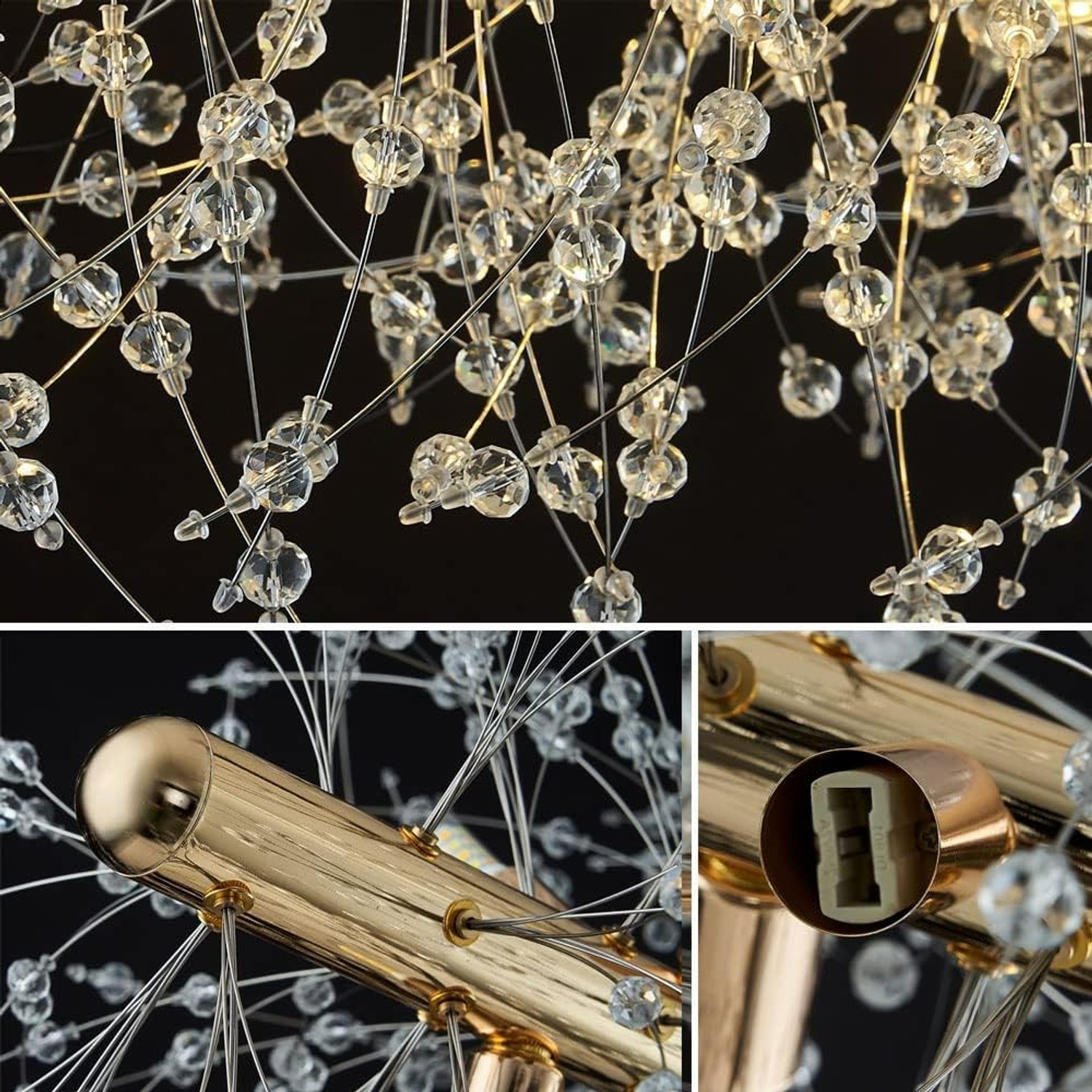
The body is stainless steel with a polished gold finish. Hanging from it are 83 bunches of clear crystal beads, and behind those sit twelve G9 LED lamps.
The crystal is not just there to look pretty, though it certainly does that. Crystal bends light. When a small bright source sits behind a cluster of beads, the output breaks up into dozens of smaller points instead of one glare. You get sparkle on the ceiling and a softer pool below.
Twelve sources rather than one or two also matters. More sources means fewer hard shadows. Lean over to serve something and you are less likely to cast a shadow right across the plate.
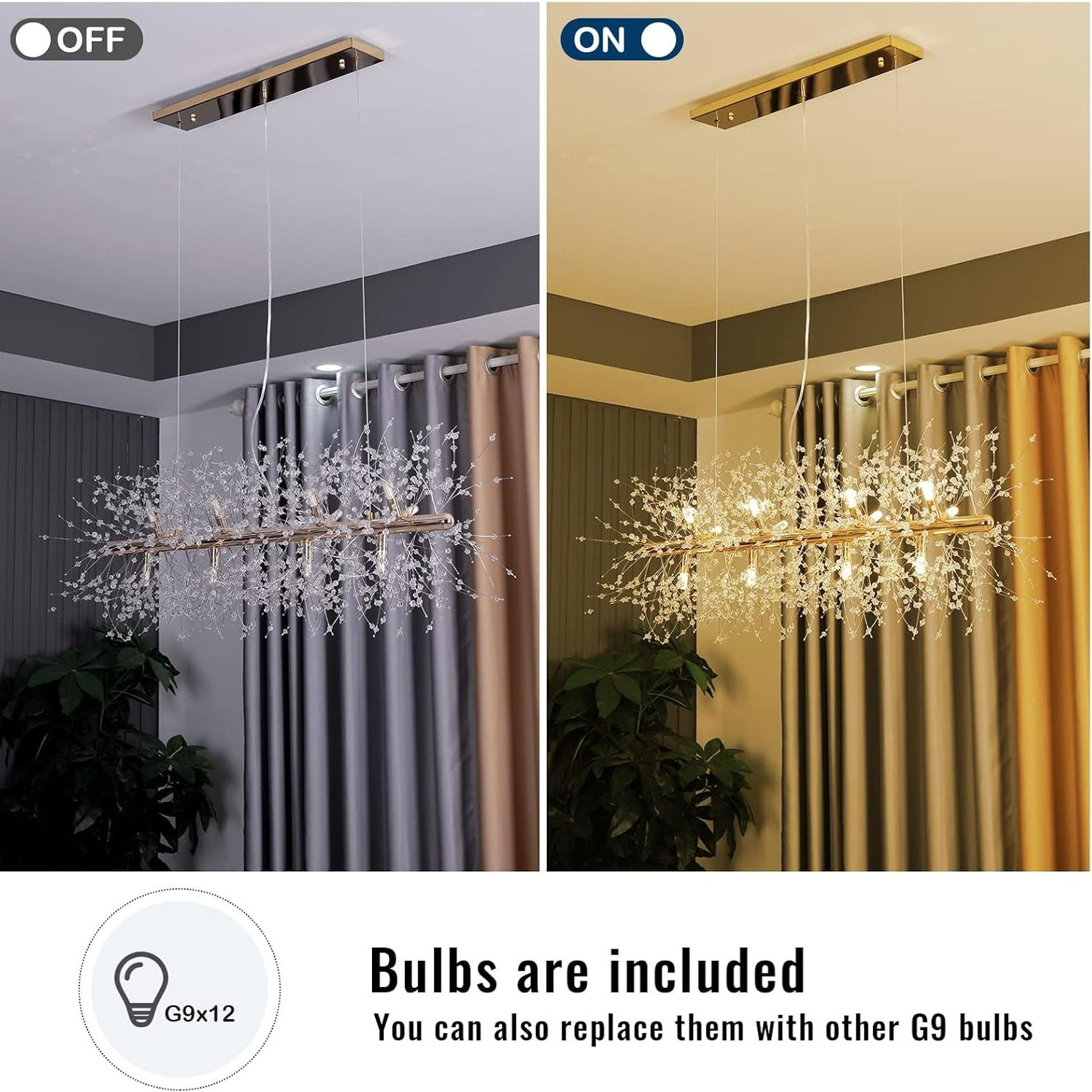
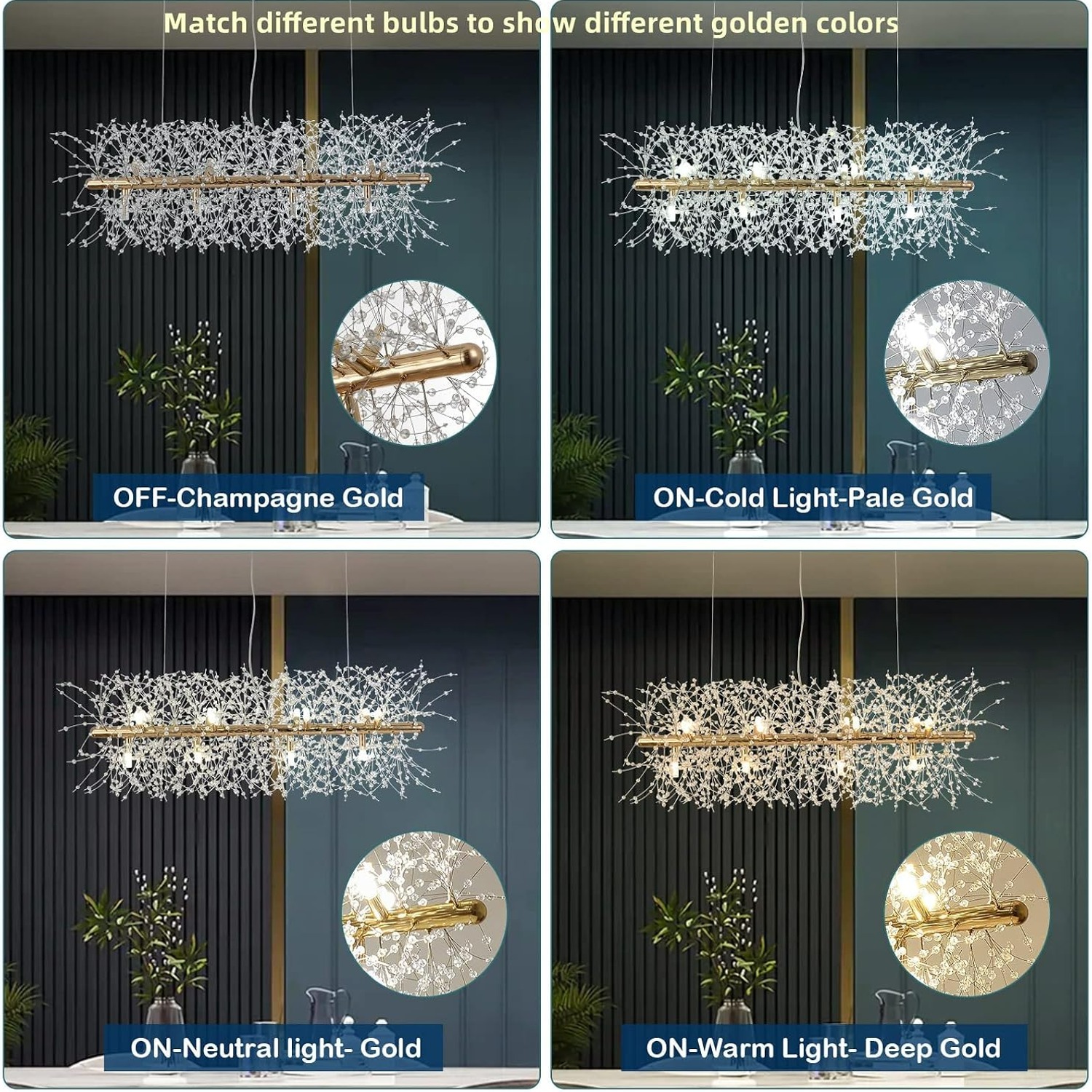
Then there are the controls. Three light colours are selectable, warm white, natural white and cool white, and the fixture dims. That combination is what turns a single light into a room that can change mood. Cool white at full brightness for unpacking shopping. Natural white for homework and recipes. Warm white, dimmed low, for the end of a long dinner when nobody wants to move.
Who it suits
This is a fixture for rooms with length. Rectangular dining tables, kitchen islands, wide entry halls and long corridors all suit a linear shape.
It also suits households who use one room for several things. If your dining table doubles as a desk, a craft bench and a homework spot, the colour and dimming options earn their keep daily. Anyone shopping for the best G9 LED chandelier for a multi-use room tends to land on something with those controls.
It is less suited to a small square room with a round table. In that case a round or compact fixture will look more settled. The maker's description itself notes it as indoor use only, not water resistant, so wet rooms and covered outdoor areas are out.
Getting the size right
Start with the table or bench. A reliable rule of thumb is that a linear fixture should run between half and two thirds the length of what it hangs over. At 90cm, this one sits comfortably over tables and islands roughly 1.4m to 1.8m long. A little longer is still fine. Much shorter and it will look like it is overhanging.
Next, the drop. Over a dining table, aim for roughly 75 to 90cm of clear space between the tabletop and the bottom of the fixture. That keeps sightlines open across the table while putting the light close enough to be useful. A 1m chain comes with the chandelier and the height is adjustable, so you have room to tune it.
In walkways and hallways the rule changes. There, clearance above head height is what counts. Shorten the chain so the lowest crystal sits well clear of the tallest person in the house.
Finally, think about the ceiling. The fixture mounts semi flush, which helps in rooms with standard ceilings. In a tall room, letting it drop further usually looks better than leaving it hugging the ceiling.
Installation, honestly
Two parts to this, and they are very different jobs.
The first is assembly, which is your job and takes patience more than skill. You fit the twelve lamps, then thread the crystal strands into the holes on each light head. With 83 bunches, this is slow. Do it on a table with a towel underneath rather than balanced on a ladder. Keep the strands grouped as you unpack so they do not tangle.
The second is the electrical connection, and that should go to a licensed electrician. The fixture is corded electric, rated at 220 volts, and hard wired ceiling fittings fall under wiring rules in most places. An electrician will also check that your ceiling fixing point can carry the load, which matters with a long fixture carrying crystal.
If you can, assemble the chandelier the day before the electrician arrives. It turns a two hour visit into a thirty minute one.
Keeping it looking good
Crystal collects dust, and dusty crystal loses its sparkle faster than most people expect. The fix is simple. Switch the light off, let it cool, and run a dry microfibre cloth or soft duster over the beads every month or two.
Over a kitchen island, check it more often. Cooking throws a fine film of grease into the air, and that film grabs dust. If marks will not lift with a dry cloth, dampen the cloth very lightly with water, wipe, then dry immediately.
What to avoid is just as important. Skip ammonia based glass cleaners, household sprays and anything abrasive. Polished finishes dull quickly under the wrong product. For the gold frame, a dry soft cloth handles fingerprints.
Once or twice a year, give the mounting and chain a quick check to make sure everything is still tight. It takes a minute and it is worth doing on any hanging fixture.
Choosing between the light colours
People often set the colour once and never touch it again, which is a shame. A quick guide.
Cool white is the brightest and crispest. Use it when you need to see clearly, like cleaning up or doing detailed work at the bench.
Natural white is the middle ground and the most honest for colour. It is the one you want for cooking, reading and checking whether the chicken is actually done.
Warm white is the soft, yellow-leaning setting. Dinners, evenings, winding down. Paired with the dimmer, it is the setting that makes a dining room feel like somewhere you want to stay.
If you are furnishing a room with a lot of timber and warm tones, warm white tends to flatter it. In a white or grey kitchen, natural white often looks cleaner.
Matching it to the rest of the room
Gold reads warm, so it plays well with timber, cream, deep green and charcoal. Against a stark white ceiling it provides a point of contrast that stops the room looking flat.
You do not need every metal in the room to match. A gold chandelier above a kitchen with black tapware looks deliberate, not accidental, as long as you repeat the gold somewhere else, maybe cabinet handles or a frame on the wall.
Keep the surrounding area simple. A fixture with this much crystal is the feature. It does not need a busy wallpaper or a cluster of pendants competing nearby.
The short version
If you have a long table or an island bench and the current lighting leaves the ends dim, a linear fixture solves a real problem rather than just looking nice. This one is 90cm long with twelve G9 LED sources, 83 bunches of crystal and a polished gold stainless steel frame.
Measure the table first and aim for a fixture around half to two thirds its length. Plan for roughly 75 to 90cm of clearance above a tabletop, using the supplied 1m chain to set it. Assemble it yourself on a padded table, then let an electrician do the wiring.
Use all three colour settings rather than picking one and forgetting. Dust the crystal every month or two. That is most of it.
If you are unsure whether 90cm is right for your space, send us the measurements and we will tell you straight.